
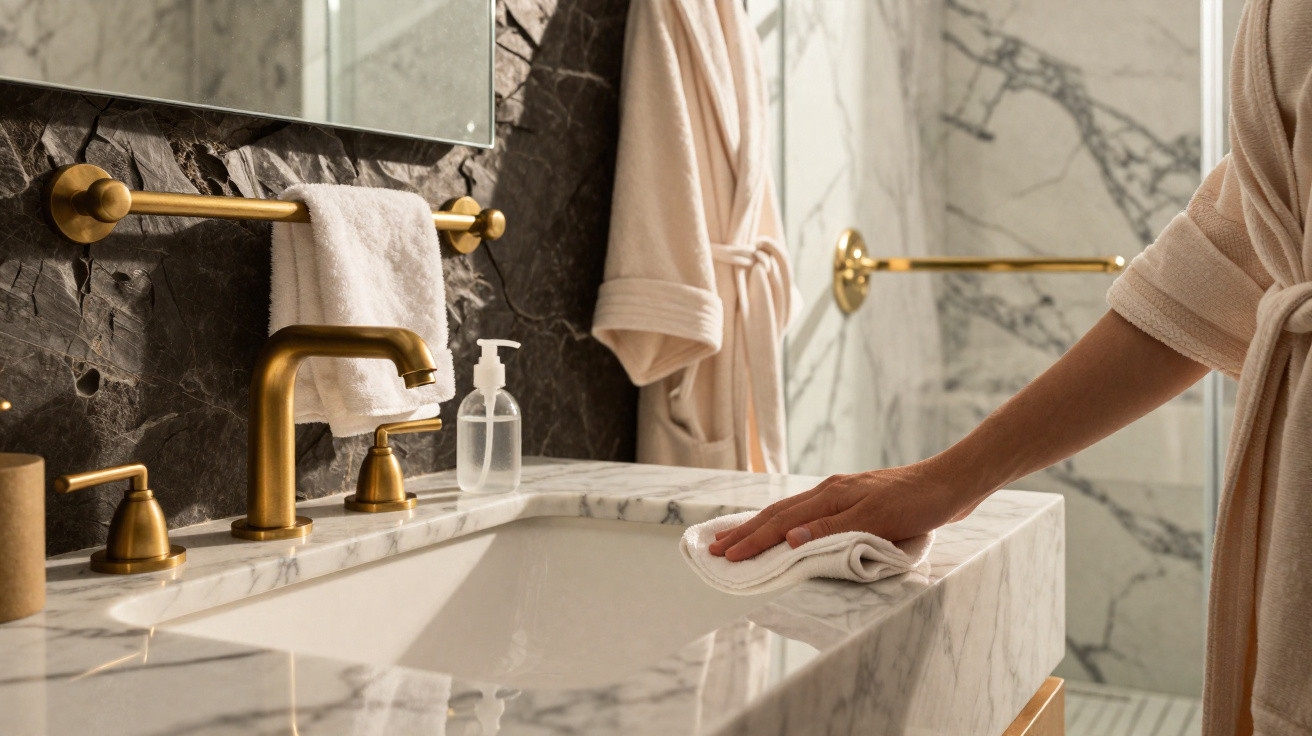
Planning or renovating a bathroom today quickly reveals the same trend: moving away from the cool, standard tiled look towards expansive marble surfaces. The natural-stone aesthetic appears in interiors magazines, on Instagram and in show homes – and is causing ceramic tiles to lose their once unquestioned status.
Why bathroom tiles are losing their appeal
For decades, tiles were considered the obvious choice: affordable, practical and easy to maintain. Yet this very sense of being ‘standard’ has now become the issue. Many bathrooms look interchangeable, more reminiscent of a clinic than a wellness space.
- Tile grout discolours quickly and can soon look dirty.
- Formats and designs are often generic, offering little individuality.
- The familiar ‘bathroom tile look’ no longer suits contemporary interior concepts.
At the same time, the bathroom has evolved from a purely functional room into a personal place of comfort. Anyone investing heavily in a renovation does not want a run-of-the-mill result, but a design that recalls a boutique hotel or spa. This is precisely where marble excels.
Marble in the bathroom: a luxury classic meets the current mood
Marble is far from a new material. Palaces, historic bathhouses and museum floors have featured it for centuries. What is notable now is that the stone is moving from the luxury sector into private everyday living.
Interior studies indicate that upcoming home trends are strongly shaped by the 1950s and 1960s: curved forms, refined materials and warm metals. Marble fits seamlessly into this blend of retro charm and pared-back design.
“Marble is like a bespoke dress for the bathroom: every slab is unique, and no two veins are alike.”
Choosing marble for a bathroom means selecting more than a material; it creates a stage. Basins, walls and ledges become visual features that make the room feel exclusive almost automatically.
More than appearance: how marble changes the feel of a room
Marble affects a space on several levels. Its tactile quality is the first thing that stands out: the surface feels cool, smooth and weighty. This conveys a sense of stability and calm, unlike many lightweight, glossy tiles.
Light also plays a major role. Marble reflects it softly and, depending on its finish and colour, may appear lightly polished or more satin-matt. Combined with indirect lighting, it can create bathrooms that feel more like a hotel spa than a functional wet room.
- A cool surface – ideal in warm summers, and still pleasant in winter with underfloor heating.
- Natural veining – visually breaks up large expanses without looking busy.
- A quality sound – even footsteps on natural stone feel different from those on hollow tiles.
Its exceptional lifespan is another benefit. With proper care, a marble floor can last for several decades. This significantly puts its higher purchase price into perspective, making it an investment for many self-builders rather than simply a passing design preference.
How designers use marble in the bathroom today
In the past, marble was often limited to a vanity unit, but the trend now extends much further. Designers are using the stone across large surfaces and pairing it more boldly than they did a few years ago.
Strong contrasts with dark tones
The combination of pale marble and black details is particularly sought after. A white marble wall alongside a matt-black shower mixer and dark vanity unit creates a look that is graphic, contemporary and crisp.
Warm metal accents instead of clinical chrome
Brass or copper fittings, mirror frames and lights produce a brilliant effect. These warm metals soften some of the stone’s severity. Particularly in smaller bathrooms, they create a homely atmosphere that can feel almost like a living room.
Soft pastel shades for a hotel-spa feel
Those who prefer a gentler scheme can pair light marble with pastel tones. Blush pink, sage green or a very pale blue on the walls or in the textiles makes the room feel calm and soft. The bathroom then becomes a private retreat rather than a utilitarian washroom.
“Trend 2026: Marble surfaces are increasingly being used throughout a room – not merely as an accent, but as a continuous design element from the floor to the shower.”
What marble in the bathroom really requires: care and protection
For all its appeal, marble remains a sensitive natural stone. It reacts to acids and can absorb liquids when left unprotected. Anyone using it in a bathroom should follow several basic rules.
A protective layer against water and cosmetics
Professional sealing is essential. Effective protection prevents shower gel, soap, shampoo and limescale from penetrating deeply into the stone. This treatment needs renewing at regular intervals, much like the care required for a high-quality parquet floor.
Gentle cleaning instead of harsh chemicals
Powerful bathroom cleaners containing citric acid or vinegar can damage the stone. Better options include:
- cleaners specifically intended for stone,
- mild soap solutions,
- soft cloths or sponges.
Wiping spills away promptly and not leaving stains for days helps prevent dull patches and discolouration.
Avoiding impact damage
Although marble appears hard, concentrated pressure – such as from dropped glass bottles or heavy cosmetic containers – can chip edges or cause cracks. In practice, this means keeping glass bottles in cupboards or on non-slip mats, and avoiding balancing heavy items on narrow ledges.
Costly but value-enhancing: what self-builders should allow for
Marble costs considerably more than standard tiles. Alongside the material price, it usually requires more complex cutting and professional installation by experienced tradespeople. Many homeowners accept these extra costs because they regard the bathroom as a long-term investment.
When selling a property, a high-quality bathroom design can noticeably affect the price. Estate agents regularly report that prospective buyers respond particularly strongly to photographs of natural-stone bathrooms. The impression of quality and durability contributes to the overall perception of the home.
Marble alternatives: when the budget is limited
Not everyone wants to, or can, pay for real marble. That does not mean sacrificing the look. Manufacturers now offer a range of alternatives:
- Marble-effect porcelain stoneware: ceramic slabs with remarkably realistic veining, durable and far easier to maintain.
- Quartz composite: an engineered stone containing natural-stone elements, more uniform and often more resistant to staining.
- Mineral surfaces: especially popular for vanity units, as they can be moulded without joints and resemble natural stone visually.
These options are well suited to families with children or rental properties, where durability matters more than absolute authenticity.
What is often overlooked when planning a marble bathroom
Anyone choosing marble should consider the whole design early on – not just the floor and walls.
- How does the material look in daylight and under entirely artificial lighting?
- How slip-resistant is the floor when wet?
- Do existing furniture and towels suit the new look, or will everything else suddenly appear dated?
Designers advise viewing colour samples and stone specimens directly in the room. Only there is it possible to judge whether a heavily veined stone might be too dominant, or whether a very pale stone could ultimately feel too cool.
Giving equal attention to features such as slip-resistant surfaces, sufficient storage ledges and well-planned lighting ensures that the new bathroom is not only impressive to look at, but also practical for daily use. This combination of aesthetics and functionality is currently making many tiled bathrooms look genuinely dated – while marble in the bathroom becomes the new standard for those with high expectations.




Comments
No comments yet. Be the first to comment!
Leave a Comment