
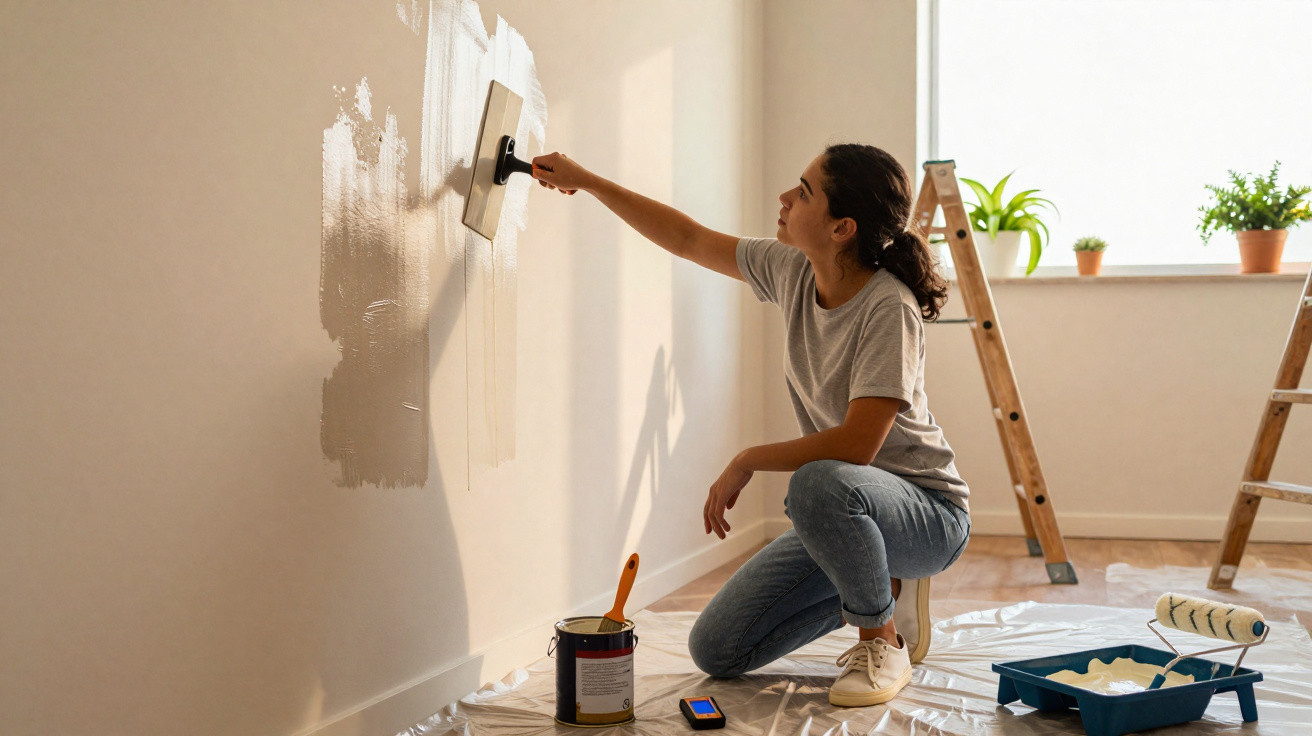
Damp on internal walls is among the most common issues in houses and flats, particularly in areas with heavy rainfall or changing temperatures. Dark marks, flaking finishes and lingering smells show that the building fabric has been affected for some time. Knowing how to repair a wall with damp is therefore essential for protecting the property and avoiding higher costs later on.
How does damp form and spread through walls?
Water ingress may result from cracks in external walls, damaged roofs, or defects in gutters and flashing, allowing water to reach the internal plaster. In other situations, rising damp from the ground travels up through the masonry, chiefly affecting the lower sections of walls and skirting boards.
Bathrooms and kitchens can also be affected by condensation. Steam from hot showers or cooking settles on cold surfaces, creating droplets that are absorbed by the paintwork. Over time, this can lead to blistering, mould, flaking and even crumbling plaster, damaging furniture and clothing and, in older buildings, structural components.
Watch a video on the YouTube channel O Pulo do Gato na Construção explaining the step-by-step process for treating walls affected by water ingress, flaking and damp before applying fresh paint:
https://www.youtube.com/watch?v=qMiwKIn0N7w
How to repair a wall with damp properly
Before any finishing work begins, it is vital to identify and resolve the source of the damp, whether it is in the roof, external façade, foundations or pipework. If the cause remains active, the marks will quickly reappear even after repainting, resulting in wasted materials and repeated work.
Once the source has been fixed, the internal repair should follow a process that greatly improves the durability of the work:
- Remove loose material: scrape away paint and plaster that is no longer properly bonded.
- Clean and disinfect: apply solutions that remove fungi, mould and staining.
- Use waterproofing products: apply primers, mortars or coatings that make it harder for water to pass through.
- Make the surface even: fill damaged areas, level the wall and sand it carefully.
- Choose suitable paint: select paints for damp areas that offer good resistance while remaining permeable to water vapour.
Which products are most commonly used to tackle damp?
When preparing the substrate, acrylic sealers and stabilising primers help strengthen the plaster and improve adhesion for subsequent coats. In high-risk areas, polymer-modified mortars, liquid membranes and reinforced cement-based products are used, with each coat allowed to cure properly.
At the final stage, anti-mould, waterproof or “breathable” paints are particularly useful for reducing blistering and flaking. For persistent salt deposits and mould stains, specialist cleaners and disinfecting agents may be applied more than once, always allowing the required drying time between stages.
How can you prevent further damp problems at home?
Following the repair, prevention becomes the best way to keep walls sound and clean for longer. A few simple habits can substantially reduce the likelihood of damp returning and help spot faults at an early stage.
- Ventilate rooms: open windows and doors, especially after showering or intensive cooking.
- Monitor early signs: look out for darkened patches, unusual smells and small flaking areas.
- Maintain roofs and gutters: clear leaves, check for blockages and inspect areas where water may overflow.
- Protect external walls: apply waterproof coatings to surfaces exposed to the weather.
- Use dehumidifiers when needed: particularly in closed bedrooms or rooms that are rarely used.
With a proper diagnosis, suitable materials and regular maintenance, damp is less likely to remain a recurring problem. In addition to preserving the property's appearance, this care supports residents' health by reducing mould, odours and the gradual deterioration of the building structure.





Comments
No comments yet. Be the first to comment!
Leave a Comment