
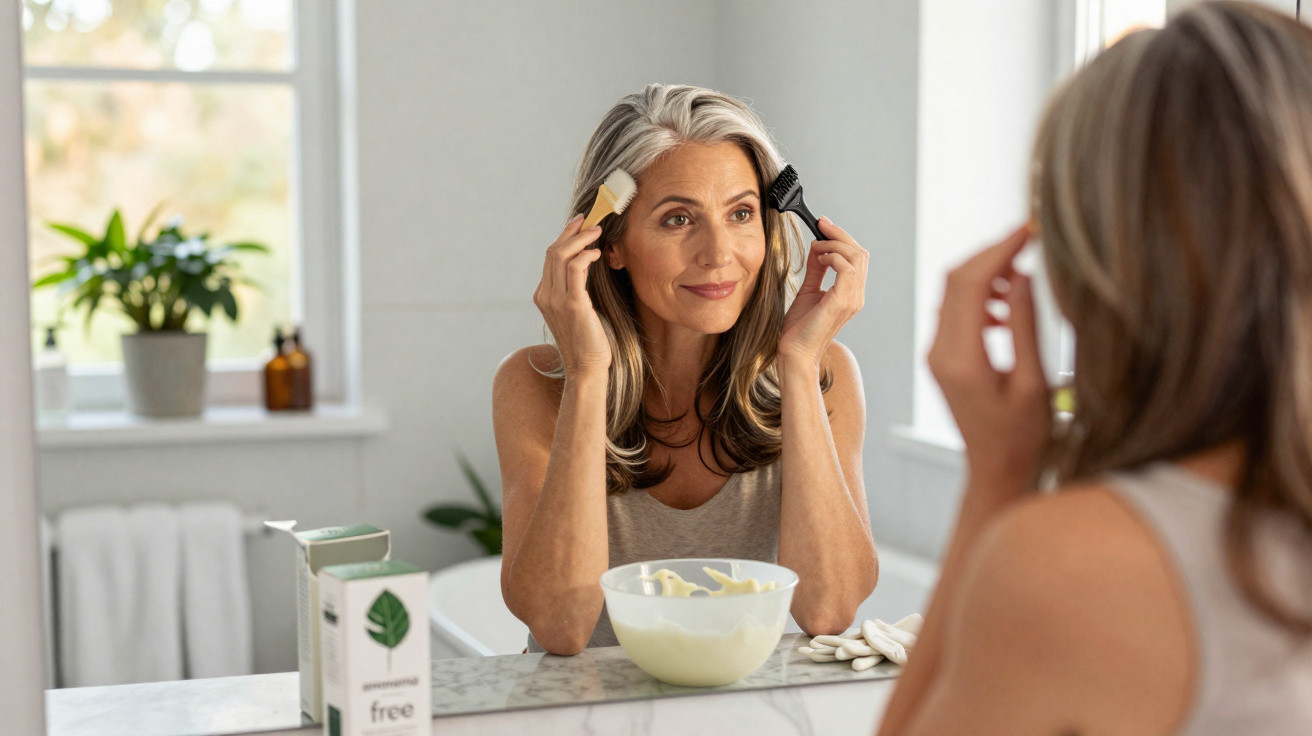
Ammonia-free hair dye is becoming increasingly popular with people who want to soften the appearance of grey hair without creating an overly defined root line. Its aim is to provide colour, shine and a natural-looking result with less visible harshness and lower-maintenance upkeep.
Why does ammonia-free hair dye help disguise grey hair?
Ammonia-free hair dye is often chosen by those wishing to cover or tone grey strands without the stark effect associated with some permanent colours. In many cases, it deposits colour more gently while maintaining shine and movement.
The finish appears more natural because the colour does not need to alter the hair completely. It can lessen the contrast between grey strands and the natural base colour, producing a subtler result for those seeking softness and evenness.
This technique stands out for the following reasons:
- Soft colour: minimises contrast without creating a heavy-looking finish.
- Shine: the result tends to enhance natural highlights.
- Hair-friendly approach: it is designed to colour the hair with a less harsh feel.
- ⏱ Less frequent touch-ups: gradual fading makes regrowth less noticeable.
- Patch and strand tests: these help prevent allergic reactions and unexpected results.
Who does this hair colour work best for?
This approach generally works well for people with scattered grey strands, regrowth that is not too noticeable, and a preference for a more natural look. It also suits anyone who does not want a dramatic colour change but would like greater harmony in the finish.
Where there is a high concentration of grey hair, achieving coverage may call for a different approach, such as permanent colour, professional toning or transitional highlights. It all depends on the percentage of grey hair, the base shade and the chemical history of the hair.
How should ammonia-free hair dye be applied correctly?
The first precaution is selecting a shade close to the natural hair colour, or slightly lighter, to prevent an artificial contrast. Next, section the hair into fine strands and focus the application on areas where grey hairs are most prominent and visible.
Gentle coverage for grey hair
The secret lies in choosing the right shade.
Colours close to the natural base make regrowth less noticeable.
The product needs to cover the roots, hairline and parting thoroughly.
Follow the manufacturer's processing-time instructions, without extending the time in an attempt to make the colour “take” better. Leaving the product on longer than recommended does not ensure improved coverage and may increase dryness, irritation or unwanted changes in the tone of the hair.
The safest step-by-step approach is:
- Carry out a patch test before using any hair colour.
- Test a hidden strand to anticipate the result.
- Choose a shade close to the hair's natural base colour.
- Apply the product first to the areas with the highest number of grey strands.
- Rinse after the stated processing time and finish with a hydrating treatment.
How long does it last, and how can you maintain the shine?
Longevity depends on the formula, washing frequency, porosity and sun exposure. Generally, this type of hair colour fades gradually, making upkeep easier and avoiding such an obvious root line.
To retain the effect, use a gentle shampoo, lukewarm or cool water, and products made for coloured hair. It is also worth cutting back on excessive heat from straighteners and hairdryers, as sensitised hair fibres lose shine more easily and quickly.
To keep the colour looking its best:
- Avoid washing your hair in very hot water.
- Use a hydrating or nourishing mask every week.
- Shield the hair from sun, swimming pools and excessive heat.
- Touch up only when fading or regrowth starts to bother you.
What is the difference from traditional hair dye?
When recommending ammonia-free hair dye to disguise and enhance grey hair, the main objective is to reduce upkeep without sacrificing a natural result. The intention is not to eliminate every grey strand at any cost, but to create blending and shine.
Traditional hair dye generally offers more intensive coverage, but it can make regrowth more noticeable as the hair grows. Ammonia-free hair dye, on the other hand, tends to be a gentler choice, delivering a gradual result, less demanding maintenance and a more natural appearance for everyday wear.




Comments
No comments yet. Be the first to comment!
Leave a Comment