
When freshly planted beds look as though they have been stripped overnight, many amateur gardeners become frustrated – yet the culprits can be kept under control with a few simple tricks.
In spring, the garden bursts into life – and so does the appetite of slugs and snails. Tender seedlings and young plants are particularly high on their menu. The good news is that there is no need to reach for harsh chemicals or simply watch helplessly. A handful of tried-and-tested grandfatherly tips can keep vegetables where they belong: in the bed, not in a slug’s stomach.
Why everything gets eaten bare in spring
Slugs and snails thrive in mild, damp conditions. Once temperatures stay reliably above about 10 degrees and the soil remains slightly moist, they head out at night. By morning, shimmering silvery slime trails reveal who has been around – and the damage is often already extensive.
Spring beds are a paradise for them: freshly worked soil, tender young leaves and barely any competition. Anyone who does nothing at this stage risks losing entire rows of lettuce, kohlrabi or courgettes overnight.
The sooner gardeners begin using simple slug deterrents, the less they will lose from their spring sowings.
Water in the morning, not the evening: a small change with a big effect
Many people water out of habit after work. That is precisely what turns the garden into a damp oasis when slugs and snails start their nightly rounds. Watering early in the morning is the better option.
- The soil is moist when plants need a drink.
- The surface can dry out slightly during the day.
- Slugs and snails encounter less favourable conditions at night.
Water deeply enough to thoroughly soak the top one to two centimetres of soil around the plants. Evening misting or constant little-and-often watering only keeps the ground unnecessarily damp for longer and attracts the slimy visitors.
Barriers around the bed: rough and uncomfortable
Slugs and snails crawl, which is exactly where one of the simplest methods works: the route to the lettuce needs to feel unpleasant. This can be achieved using dry, coarse materials arranged in a ring around vulnerable plants.
Suitable materials for slug rings
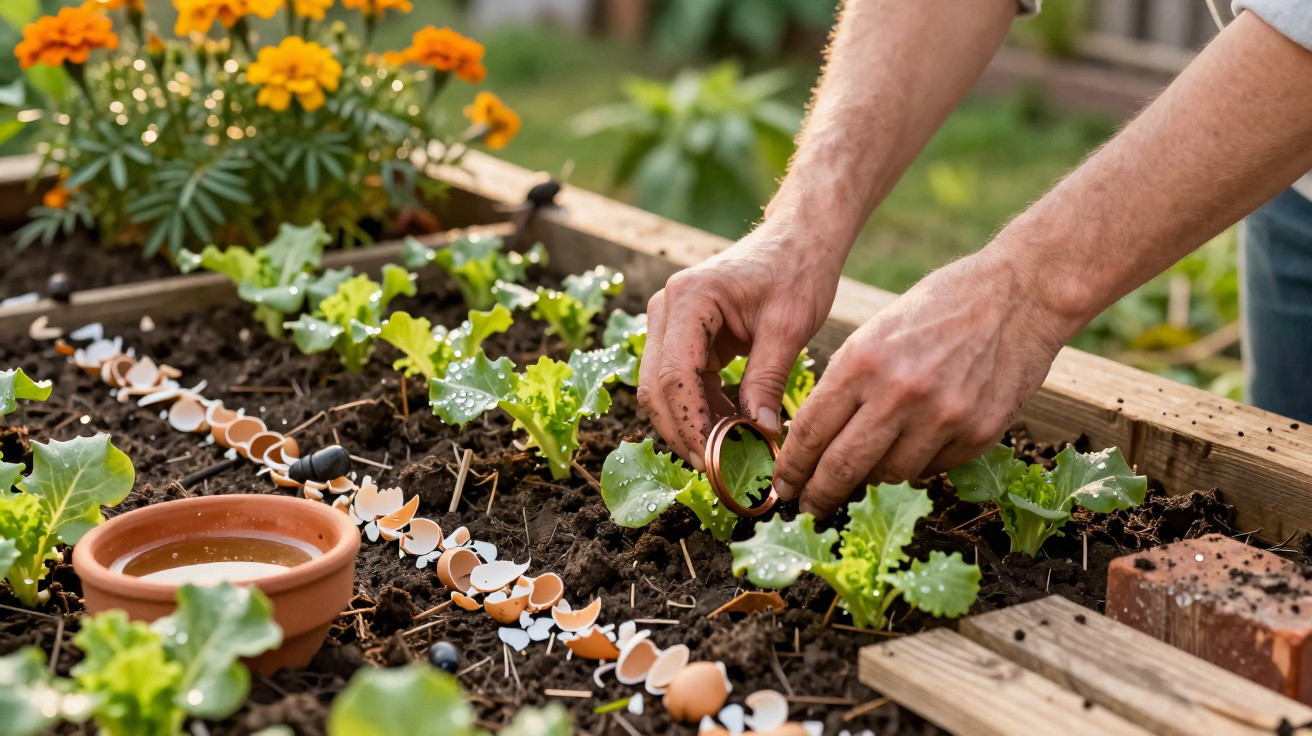
- Crushed eggshells: Crush them roughly and scatter them in a ring around every young plant, with a diameter of about 10 centimetres.
- Dried coffee grounds: Spread a thin layer over the soil, using around 150 to 200 grams per square metre.
- Coarse sand: Create a strip about one centimetre thick around the bed.
- Sawdust or wood shavings: Apply a dry, thin layer around rows or individual plants.
- Hair or fur: Place a small handful around the base of each plant – direct contact noticeably bothers slugs and snails.
These rings should be renewed after heavy rain, as soaked materials lose their effectiveness. Smooth, damp mulch layers made from grass cuttings or fresh leaves, on the other hand, are a slug magnet and should be used carefully near sensitive beds.
The classic method: using a beer trap correctly
The smell of beer has an almost magical attraction for slugs and snails. For this trick to work without drawing even more of them into the middle of the bed, a few details matter.
- Sink a shallow dish or plastic cup into the soil so that its rim sits at ground level.
- Fill it with about 200 to 300 millilitres of beer.
- Do not place traps directly among the seedlings; position them 30 to 50 centimetres away instead.
Anyone who does not want alcohol in the garden can mix a simple attractant solution:
- Dissolve 1 gram of dried yeast in 50 millilitres of lukewarm water.
- Stir in 1 tablespoon of sugar.
- Top up with 150 to 200 millilitres of water.
The liquid should be replaced every two to three days. It is worth doing a quick inspection in the morning: empty full traps, then set them out again with fresh liquid.
Use hiding places as traps: boards, cardboard and bricks
During the day, slugs and snails retreat into dark, damp spots. This preference can be used without chemicals or bait.
Suitable hiding places include:
- Flat roof tiles or bricks
- Wooden boards
- Pieces of moistened cardboard
Place these in several spots close to the bed. A damp microclimate forms beneath the cover, where slugs and snails like to gather. Lift the shelters early in the morning and collect the animals.
Anyone who does not wish to kill them should release them well away from their own garden – at least 30 metres away, preferably much further. If they remain nearby, they will soon find their way back to the lettuce rows.
Natural allies: garden creatures that help by eating slugs
A slug problem is often a sign of imbalance in the garden. Where there are hardly any shelters, hedges or water sources, helpful predators are missing.
The more natural enemies slugs have, the less likely an infestation is to eat its way through the vegetable bed.
These animals are on the gardener’s side
- Hedgehogs: They readily eat slugs and need leaf piles, brushwood and quiet corners.
- Frogs and toads: They favour damp areas, small ponds or water containers.
- Birds: Blackbirds, thrushes and others peck young slugs and egg clusters out of the soil.
- Chickens: Anyone permitted to keep them can let them roam over harvested beds from time to time.
A simple wooden hedgehog house is enough for many animals. A base measuring roughly 40 by 40 centimetres, an entrance about 10 centimetres wide and a filling of leaves and straw provide a safe refuge. Small wild areas with nettles, deadwood and leaves also attract insects, which in turn feed the predators of slugs and snails.
A fragrant protective wall: herbs and flowers as a natural deterrent
Some plants repel slugs and snails. They simply dislike certain essential oils and scents. Gardeners can use this to their advantage by planting a “scent belt” around vulnerable beds.
| Plant | Effect in the bed |
|---|---|
| French marigolds (Tagetes) | Strong scents protect bed edges and add visual interest |
| Garlic and onions | Deter many plant-eating pests and suit vegetable beds well |
| Mint | An intense scent; grow it in pots to stop it spreading |
| Thyme and rosemary | Tolerate dry conditions, season food and protect bed edges |
Planting these herbs and flowers every 20 to 30 centimetres along bed edges creates a noticeable barrier. Three to five strong plants per square metre are generally enough to build up a clear scented presence. As an added benefit, the garden becomes more colourful and beneficial insects such as bees and bumblebees can find food.
Combining methods: use several approaches at once
No single trick solves every slug problem. In rainy years, gardeners need to be much more consistent than during dry spells. Combining watering, barriers, traps, shelters and plants effectively takes away the slimy visitors’ appetite for their nightly meal step by step.
A possible weekly routine for badly affected beds could look like this:
- Water in the morning, then check traps and shelters.
- Refresh eggshell, sand or coffee-ground barriers once a week.
- Use beer or yeast traps at three to four locations in the garden.
- Protect new young plants immediately with rings and a herb border.
Those who inspect their beds daily during the first few weeks will spot damage early and can take corrective action. Over time, a stable balance develops in which slugs and snails are still present but no longer wipe out entire rows.
Useful additions: what else gardeners should bear in mind
Slugs and snails love dense growth and hiding places directly beside the bed. A narrow, relatively open strip around vegetables makes access more difficult for them. Thick layers of mulch are better applied with some distance from very young plants, or only once they have grown sturdily.
Seed selection and choice of varieties can also help: some lettuces and vegetables are considered less attractive to slugs and snails, such as firm-headed lettuces rather than delicate loose-leaf varieties. Where space allows, deliberately plant “sacrificial plants” such as Tagetes around the edge, as they attract the animals more strongly than the main lettuce row.
For households with children, collecting slugs and snails can become a short evening activity. It offers a direct view of life in the garden and, as a bonus, teaches children that not every animal is an enemy – the garden only works when eating and being eaten remain in a certain balance.




Comments
No comments yet. Be the first to comment!
Leave a Comment