
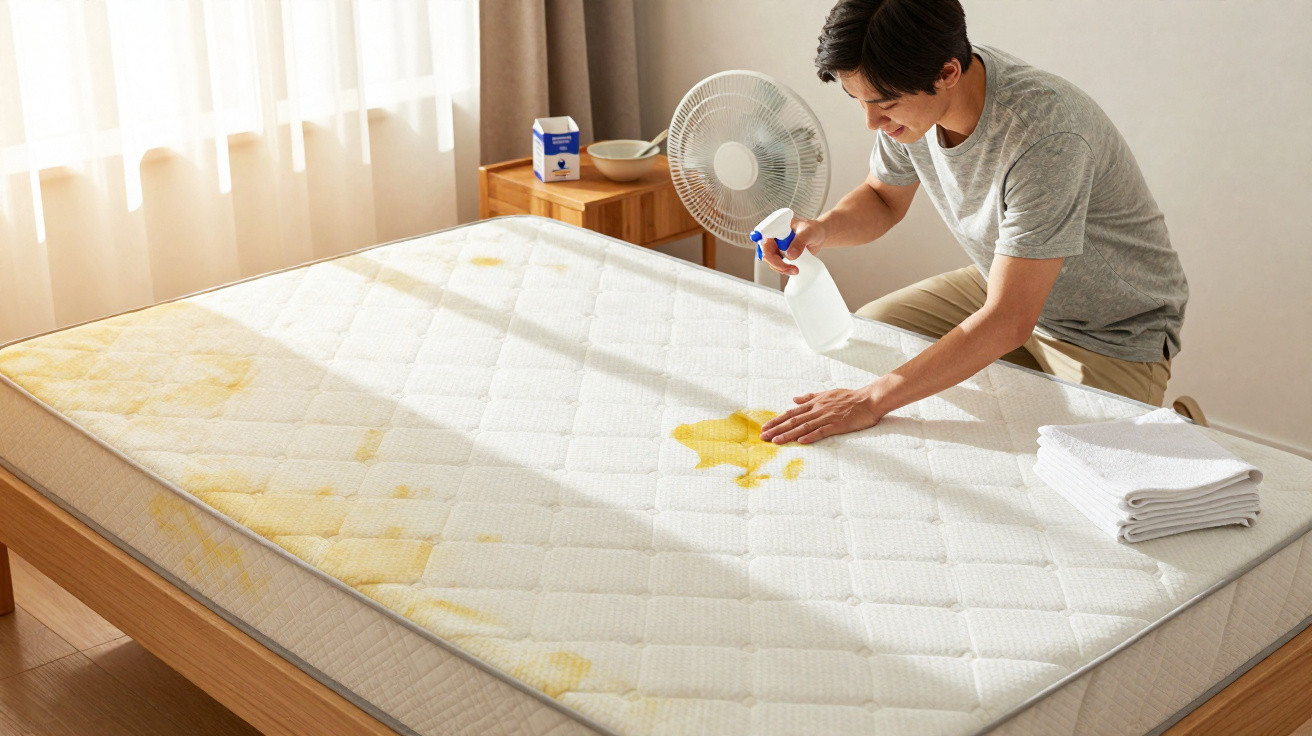
Yellow stains on a mattress usually develop when sweat, skin oils and moisture seep through the sheets over time. As a mattress cannot be immersed in water, it must be cleaned in small, targeted areas, using minimal solution and allowing it to dry fully so moisture does not become trapped inside.
Why does a mattress turn yellow over time?
While you sleep, sweat and natural skin oils come into contact with fabrics and may pass through bedding. Some of this moisture reaches the mattress and, over time, reacts with fibres, dust and organic residue, creating yellowed patches.
This is similar to the process that causes yellow stains on pillows, although a mattress requires greater care because its core is thick and takes much longer to dry.
How should you make the stain-cleaning solution?
A homemade cleaning mixture can contain low-strength hydrogen peroxide, bicarbonate of soda and washing-up liquid. The aim is to dampen only the affected area, without soaking the foam, springs or inner layers:
- Use 10-volume hydrogen peroxide or a 3% solution;
- Add a small amount of bicarbonate of soda;
- Mix in a few drops of neutral washing-up liquid;
- Transfer the solution to a clean spray bottle;
- Test it first on an inconspicuous area;
- Make only the amount needed for immediate use.
How to treat yellow stains on a mattress without soaking it
Spray a small amount directly onto the stain and leave it for a few minutes. Then rub gently with a cloth or soft-bristled brush, working from the outer edges towards the centre to stop the damp area from spreading.
Once finished, press a dry towel onto the spot to absorb the excess, then allow the mattress to dry completely in a well-ventilated room. A fan and good air circulation will help; only use the mattress again when there is no trace of dampness.
What can you do to stop the stains returning?
Prevention mainly involves preventing sweat and liquids from reaching the mattress fabric directly. The following steps can greatly reduce moisture absorption:
- Place a breathable waterproof mattress protector beneath the sheet;
- Wash the protector according to the manufacturer’s instructions;
- Change sheets and bedding regularly;
- Leave the mattress uncovered for a while to air it;
- Turn or rotate it in line with the manufacturer’s guidance;
- Avoid lying down with damp clothes or wet hair.
Why is drying the most important stage?
A mattress that stays damp internally can develop odours, stains and conditions that encourage mould growth. Moisture also creates a more suitable environment for dust mites, so using large amounts of water can turn spot cleaning into a bigger issue.
To keep a mattress free from yellow stains, the most effective approach combines targeted cleaning, ventilation and a barrier against liquids. Where permitted by the manufacturer, short periods in a bright, well-ventilated place can aid drying, but a waterproof protector remains the most effective way to stop sweat and skin oils from penetrating the inner layers again.




Comments
No comments yet. Be the first to comment!
Leave a Comment