
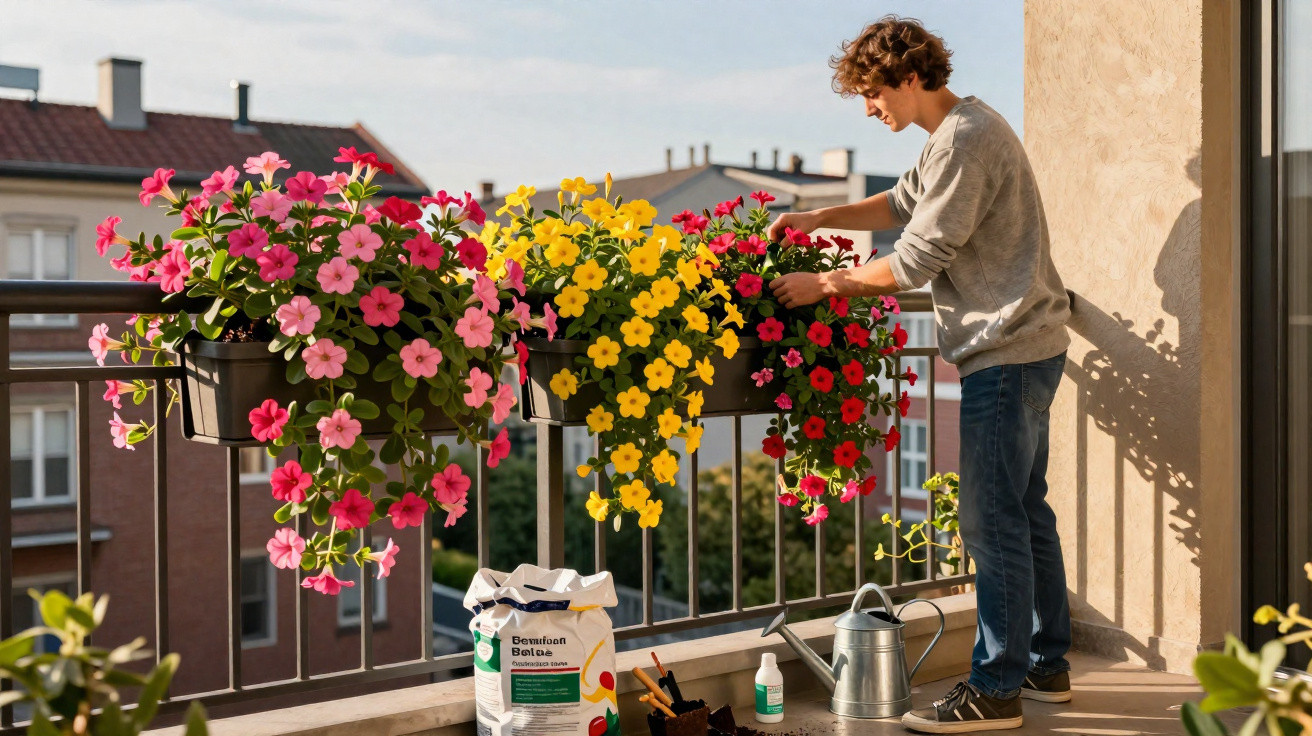
Most gardeners may still be deciding between geraniums and petunias, but one trailing plant is steadily taking centre stage. From June until the first frosts, it can turn window boxes into cascades of colour.
The tiny “bell” that behaves like a waterfall
The secret behind the overflowing balcony arrangements that regularly appear on Pinterest is calibrachoa, commonly sold as “Million Bells” or mini petunia. Though it has a delicate appearance, it is remarkably vigorous when grown in a container.
Each plant develops into a compact mound around 15–30 cm tall, producing stems that spill 30–60 cm over a pot or basket. These stems become covered in dozens of tiny, bell-like blooms.
One healthy calibrachoa can carry hundreds of flowers at once, creating the “overflowing basket” effect usually seen in catalogues.
Its colour palette runs from subtle pastels to neon pink, deep purple and vivid orange, alongside two-tone varieties. Newer “chameleon” cultivars can even alter colour as their flowers mature, moving from yellow to apricot before taking on a pink flush within the same basket.
In contrast with traditional petunias, calibrachoa is generally self-cleaning. Old blooms fall away without intervention, meaning you do not need to spend every weekend deadheading to maintain a neat display. This alone makes it particularly suitable for busy gardeners and beginners.
Why timing in spring matters so much
Calibrachoa thrives in warmth but dislikes cold conditions. It is only hardy in mild climates (roughly USDA zones 9 to 11), which is why it is grown as an annual across most of Europe and North America.
Success depends on avoiding planting both too early and too late.
The right window: once all risk of frost has passed and night temperatures stay above 8–10°C (around mid-April to late May depending on region).
Putting plants into cold, wet compost too early can check root growth and leave them struggling for several weeks. Delaying planting too long, however, shortens the flowering period and limits the full, trailing display you want.
When it is planted soon after the final frost, calibrachoa benefits from several weeks of gentle spring weather in which to:
- establish roots throughout the compost
- lengthen its trailing stems
- produce ample flower buds before the stronger summer sun arrives
By July, the stems should be long enough to pour over the container edges, concealing the pot beneath a curtain of flowers.
How many calibrachoa plants per pot for that “full” look?
Using too few plants is a frequent error. One calibrachoa can still give a good performance, but slightly closer planting helps to achieve the abundant, catalogue-style result.
| Container type | Approx. size | Recommended number of plants |
|---|---|---|
| Window box | 60–80 cm long | 3–5 calibrachoas, spaced evenly |
| Hanging basket | 30 cm diameter | 3–4 plants |
| Large patio pot | 35–40 cm diameter | 2–3 plants, around the edge |
In a mixed planter, position calibrachoa around the outer edge and use a taller specimen at the centre to add height, such as a dwarf dahlia, ornamental grass or scented pelargonium.
Soil, drainage and watering: what this plant really wants
Calibrachoa cannot tolerate “wet feet”. Heavy, waterlogged compost is the quickest route to losing the plant to root rot.
For hanging baskets and balcony planters:
- Select containers with plenty of drainage holes.
- Place a 3–5 cm layer of gravel or clay pebbles in the base.
- Choose a light, free-draining compost intended for pots or baskets rather than garden soil.
Let the top of the compost dry slightly between waterings, rather than keeping it constantly soaked.
At the beginning of summer, watering every two or three days may be sufficient. At the height of July and August, particularly for full-sun hanging baskets, watering may be needed daily and sometimes twice a day during heatwaves.
When water immediately runs off the compost surface, it may have become excessively dry and pulled away from the pot sides. Stand the container in a tray of water for 10–15 minutes to allow the root ball to absorb moisture from underneath.
Feeding for non-stop flowers
Calibrachoa is a nutrient-hungry plant, as its continual flowering needs regular nourishment.
At spring planting time, incorporate a slow-release fertiliser into the compost. From late May, maintain the display by applying a liquid fertiliser for flowering plants every two weeks.
Regular feeding keeps the foliage dense and prevents the centre of the plant from thinning out as summer goes on.
Should the plant appear weary by around mid-July, shorten the longest stems by roughly 1–2 cm. This gentle trim promotes fresh side shoots and another burst of blooms a few weeks afterwards.
Light and position: sun, shade and wind
For prolific flowering, calibrachoa requires ample light. A site in full sun or light partial shade is ideal. Against a very hot, south-facing wall, some plants may scorch, especially if they are in black pots that warm up rapidly.
On windy balconies, strong gusts may break the long stems and dry out the compost within hours. Where this is an issue, use more protected positions such as corners, or suspend baskets nearer to the wall.
Playing with colours and combinations
Its small yet plentiful flowers allow calibrachoa to carry bold colour pairings without the arrangement appearing untidy. Garden centres offer ready-made mixed pots, although it is easy to create combinations yourself.
- For a gentle, romantic effect: use pale pink, cream and soft yellow calibrachoas together.
- For a sunset-inspired display: combine orange, coral and red shades with a bronze ornamental grass at the centre.
- For striking contrast: match deep purple calibrachoa with white lobelia and silver-leaved helichrysum.
Chameleon varieties add further visual movement because their blooms change colour with age. One basket may display several shades simultaneously, from lemon through to raspberry, all on the same plant.
Common problems and how to avoid them
Several common problems can spoil the display unless they are noticed promptly:
- Yellowing leaves with green veins commonly signal an iron deficiency, particularly where hard water is used. Changing to rainwater and applying fertiliser containing trace elements will usually help.
- Sticky leaves and misshapen buds may indicate aphids. Frequent inspections and prompt treatment with a soft soap spray can control them.
- Sudden collapse of sections of the plant generally suggests root rot caused by excessive watering or inadequate drainage. Cutting back on watering and improving drainage, where possible, may save the remainder of the basket.
For beginners: a realistic balcony scenario
Picture a compact urban balcony with space for one 80 cm window box and two hanging baskets. In late April, after night-time temperatures remain above 10°C, you plant:
- Five mixed-colour calibrachoa plants in the window box.
- Three plants in each hanging basket, with a chameleon variety selected for one basket.
Water thoroughly once planted, then keep the compost only lightly moist while the plants establish. Start applying liquid feed every two weeks from mid-May. By the time you go away for a brief holiday in late June, the stems will already be trailing and blooms will cover much of the plants.
After returning, a quick tidy and a light cut-back of the longest stems will encourage a further wave of flowers that lasts into late summer. Following this approach, even an inexperienced gardener can create the overflowing balcony display often associated with professionals.
Key gardening terms worth knowing
Two phrases regularly feature in guidance on calibrachoa:
“Well-drained soil” describes compost that allows surplus water to flow through readily. It should feel light and crumbly rather than dense or sticky. Perlite, sand or fine bark can be added to standard potting compost to improve drainage.
“Deadheading” means removing flowers once they have faded. As calibrachoa is mostly self-cleaning, this task is rarely necessary, making it a good choice for anyone who does not want a high-maintenance balcony routine.
For those preparing their first container-growing season, knowing these terms and understanding the spring planting period for calibrachoa can mean the difference between a thin, disappointing window box and a balcony worthy of a gardening magazine.





Comments
No comments yet. Be the first to comment!
Leave a Comment