
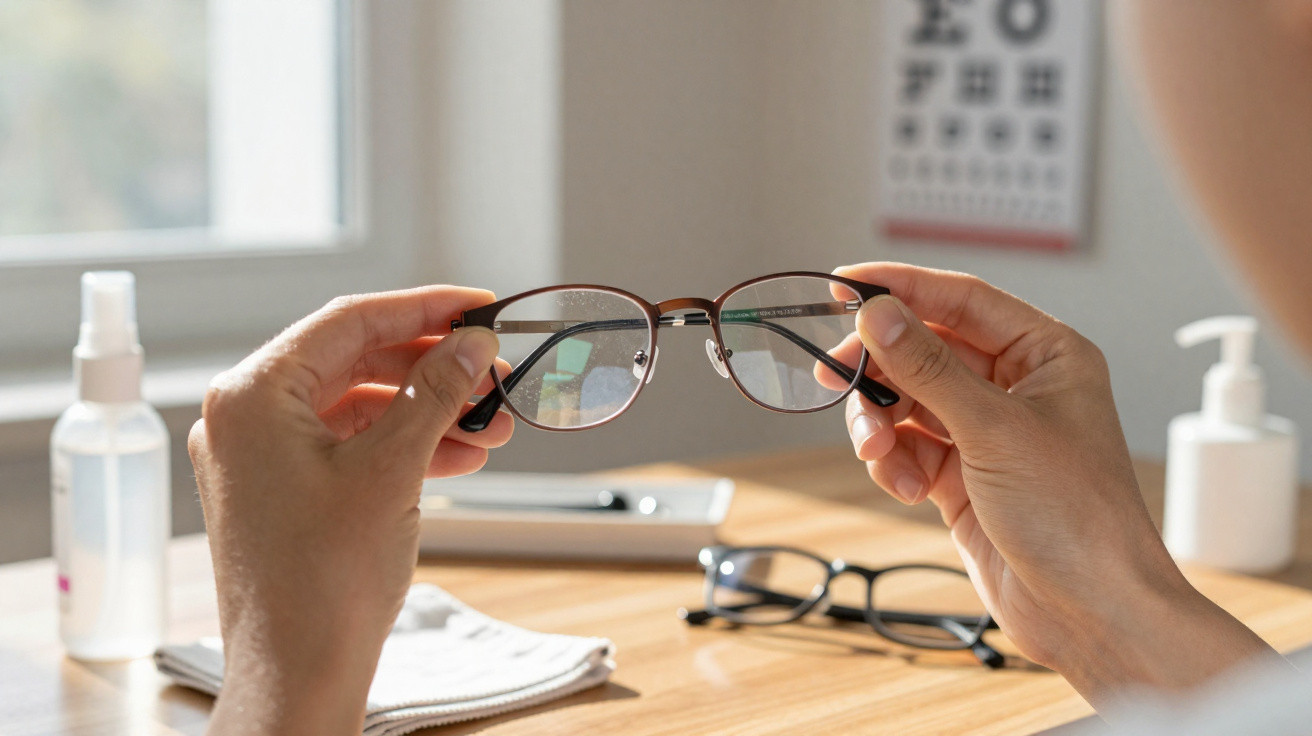
The smudge shows up just after you have cleaned your glasses.
You breathe on the lenses, wipe them with the edge of your shirt, and somehow another streak materialises. The harder you try, the worse it becomes. By the time you head out, everything is viewed through what feels like a bargain-basement Instagram filter set permanently to “hazy”.
In a busy town-centre optician’s, I saw three consecutive customers pass over their glasses wearing the same sheepish half-smile. “They’re a bit dirty,” they said quietly, as though poor lens hygiene were a personal shortcoming. The optician was not judgemental. With a composed, well-rehearsed routine, she had each pair looking new in less than a minute. There were no spray bottles, microfibre cloths or fuss.
Her method involved a subtle technique. It is not something found in the cleaning kits displayed beside the till, and you can recreate it at home with next to nothing.
Why your glasses never stay clean for as long as you want
Observe people dealing with their glasses in a café and the routine is remarkably familiar. Glasses off. A quick breath. A rub with a shirt. Glasses back on. Then comes the squint, a slight wince, and the whole process starts again. We behave as if lenses are windows that can be cleaned with a tea towel, with predictably poor results.
During a crowded morning commute, frames slip down perspiring noses, fingers tap them, and the lenses collect oils from hair, foundation and sun cream. Meanwhile, the air around you contains a haze of microscopic dust and droplets. Lenses attract it all. By midday, the crisp “new glasses” view you had at 8 a.m. has become a distant memory.
Most opticians will tell you, albeit discreetly, that your lenses are not exceptionally dirty. Rather, your cleaning routine is working against you: rough fabrics create minute scratches; partly evaporated cleaning products leave smears; and grease is spread around rather than lifted away. Once you notice this pattern, it is hard to miss. It also points towards a simpler, almost minimalist way to keep lenses spotless, without reaching for a bottle or cloth every hour.
The optician-approved no-cloth, no-liquid reset
The first no-cloth, no-liquid step happens before any cleaning begins. It concerns the way you handle your glasses rather than how you wipe them. Pick up frames by the bridge or the arms, never by the lenses. As one optician put it, “treat your lenses like raw eggs you’re not allowed to hold”.
This small adjustment prevents many fingerprints before they occur. The next step fits easily into everyday life. Whenever you remove your glasses at home or at your desk, lightly tap an arm using a clean finger. This shifts loose dust before skin oil or steam can make it stick to the lenses. No spray, no cloth: simply habit and gravity.
Next is the reset. Daily, or at least several times per week, carry out a contact-free clean with a compact portable air blower, like those photographers use on camera lenses. One or two brief puffs across each lens clear powdery dust, pollen and tiny particles of grit that could otherwise scratch the surface when you wipe it later. It is oddly satisfying, rather like blowing crumbs from a favourite book.
When the shop is quieter, many opticians make a quiet admission: they do not depend on cleaning sprays as much as the products on display might imply. Much of the time, they simply aim to stop abrasive particles reaching the lenses, so harsh scrubbing is unnecessary in the first place. This is where a glasses case matters-and not a soft pouch tossed into the bottom of a bag.
One Monday morning, I watched a student empty her tote bag across the counter. There were keys, coins, receipts, lip balm and, somewhere amid the clutter, her unprotected glasses without a case. Their lenses resembled a record played with a fork. She was not careless; she was simply living as many people do. The optician did not criticise her. Instead, she indicated a hard case on the shelf and said, “This will save your next pair.”
Research from several lens manufacturers quietly supports this. Frames stored in a hard case between uses require fewer intensive cleans and develop fewer micro-scratches over a year. They have less exposure to airborne kitchen grease, less rubbing against fabric fibres in pockets, and fewer desperate wipes with whichever napkin or tissue is nearest. The less punishment your glasses endure, the less you will want miracle liquids to put things right.
The reasoning is almost dull, which may be why it is so often missed. Dust and grit carve fine lines into lens coatings, while oil causes smears to spread rather than disappear. Clearing dry dust with air instead of friction, while avoiding new fingerprints through better habits, means fewer cleaning interventions. When you do want perfectly clean lenses, there is a method that feels reassuringly low-tech and old-fashioned, yet remains fully endorsed by professionals.
The “hands-only” clean opticians quietly recommend
One of the simplest methods opticians use at home may sound almost too straightforward: wash lenses beneath lukewarm running water using bare hands, without any cleaning product. No bottle, no cloth-only water and the soft pads of your fingers. Performed properly, it is much more than a quick rinse.
First wash your hands thoroughly, ensuring you do not transfer additional grease to the lenses. Under a light flow of lukewarm water, hold the glasses at the bridge and gently “polish” both sides of each lens with two fingers. Use small circles, apply no pressure and keep nails away from the surface. Water lifts loose dust, while your fingers guide it off rather than pressing it in.
For coated lenses, many opticians favour this over repeated use of chemicals. It is comparable to rinsing a wine glass instead of using scented washing-up liquid on it every time. The approach is brief, regular and gentle, rather than relying on an emergency deep clean once dirt has become embedded.
The part that catches most people out is not washing the lenses, but what they do immediately afterwards. They shake off the water, then grab whatever is close by: a tissue, a sleeve or a paper towel from the bathroom. That is when streaks and micro-scratches begin. The optician-approved method is almost effortless: leave them to air-dry.
Set the glasses on a clean surface with the lenses at a slight angle so droplets run away, or hold them by an arm and allow the water to drip off for a minute or two. Let us be honest: hardly anyone does this every day. Even so, doing it several times a week makes a substantial difference. Once they are nearly dry, a very gentle puff from an air blower, or a soft breath near the edge, removes the final droplets without pulling fibres across the lens surface.
One optician expressed it in a way that has stayed with me:
“Most lenses don’t need stronger products. They need less violence.”
She did not mean it poetically. She was referring to fewer abrasive fabrics, fewer panicked shirt wipes in the car, and fewer paper napkins snatched at the coffee shop. These minor, automatic actions gradually damage modern coatings. The gentler you are with your lenses, the more effortlessly clean they remain.
For a practical version, here is a short list that you can almost hear her saying:
- Handle the frames rather than the lenses whenever you pick up your glasses.
- Clear dry dust with a small air blower instead of rubbing it away.
- Following a water rinse, air-dry lenses rather than wiping them with whatever fabric is nearby.
Living with clearer lenses instead of chasing miracle products
There is an unexpected sense of relief in no longer battling your glasses every few hours. The view is sharper, certainly, but there is also less constant irritation. You no longer need to wipe frantically before a meeting, hoping smears disappear before your camera comes on. Nor do you have to squint through an oily patch while driving late at night, promising yourself that you will “fix it tomorrow”.
At a human level, this means replacing guilt with small routines. A compact lens blower on a desk is as unobtrusive as a pen. Keeping a proper case in your bag quietly says, “these help me see, they deserve a spot”. On an exhausting evening, a one-minute clean with water and hands can feel like washing the day from your face-except you are washing it from your lenses.
We have all experienced finally cleaning our glasses properly and realising that the world had looked dirty for days. It can feel almost like receiving a new pair of eyes. Perhaps the aim is not to pursue that dramatic transformation once a week, but to make clarity the unremarkable, peaceful norm. No miracle foam, no expensive scented wipes-only habits that are gentle, repeatable and slightly more considerate towards the small transparent discs that support so much of daily life.
| Key point | Details | Why it matters to readers |
|---|---|---|
| Use an air blower instead of wiping dry dust | A small rubber air blower, of the type sold for camera lenses, removes pollen, dust and grit without touching the lens surface. Hold it a few centimetres away and use two or three short puffs on each side for a daytime “reset”. | Dry dust produces hairline scratches when rubbed with clothes or tissues. Removing it with air first protects coatings for longer and reduces the need for intensive cleaning. |
| Handle frames, not lenses | Lift and adjust glasses by the bridge or temple arms, never by the lenses. Make it a mental rule: “thumbs on plastic, never on glass”. It may feel unfamiliar for a week, but soon becomes automatic. | Fewer fingerprints result in fewer urgent wipes with whatever happens to be available. That means fewer streaks and scratches, plus clearer sight when there is no time for a proper clean. |
| Let lenses air-dry after rinsing | Once you have gently rinsed them beneath lukewarm water, shake away excess water and put the glasses on a clean surface or stand, with the lenses slightly angled. Let them dry naturally before putting them back on. | This prevents the concealed damage caused by paper towels, rough fabrics and napkins that seem soft yet scratch. Lenses can be clean and streak-free without requiring a special cloth or spray every time. |
FAQ
- Can I really keep my glasses clean without any cloth at all? Yes, when you prioritise prevention and gentle contact-free cleaning. A hard case, handling only the frame, blowing off dust and rinsing with water when possible will reduce how often you feel any need to wipe them. Many opticians use a cloth only now and then, not every few hours.
- Is breathing on my lenses and wiping with my T-shirt that bad? It solves the problem temporarily, but spreads skin oil and may grind minute particles into the surface. This is how micro-scratches develop, especially on coated lenses. Doing it occasionally will not ruin a pair, but as an everyday reflex it gradually destroys that sharp, “new lens” clarity.
- What kind of water should I use if I skip cleaning liquids? Lukewarm tap water suits most modern lenses, provided it is not extremely hot. Excessive heat may put stress on frames and coatings. A short, gentle rinse is sufficient; then leave them to air-dry without rubbing.
- Are tissues or paper towels safe if I don’t have a cloth? Not really. Although they feel soft to the touch, their fibres are fairly rough microscopically. Combined with dust, that roughness works like very fine sandpaper. If rinsing and air-drying are not possible, waiting is better than attacking the lenses with paper.
- How often should I do a “proper” clean if I mostly prevent dirt? For most people, a thorough water-and-hands clean several times a week is enough, particularly if glasses are kept in a case and an air blower is used during the day. If you work in a dusty or greasy setting, once daily is sensible, though the routine should remain gentle.




Comments
No comments yet. Be the first to comment!
Leave a Comment