
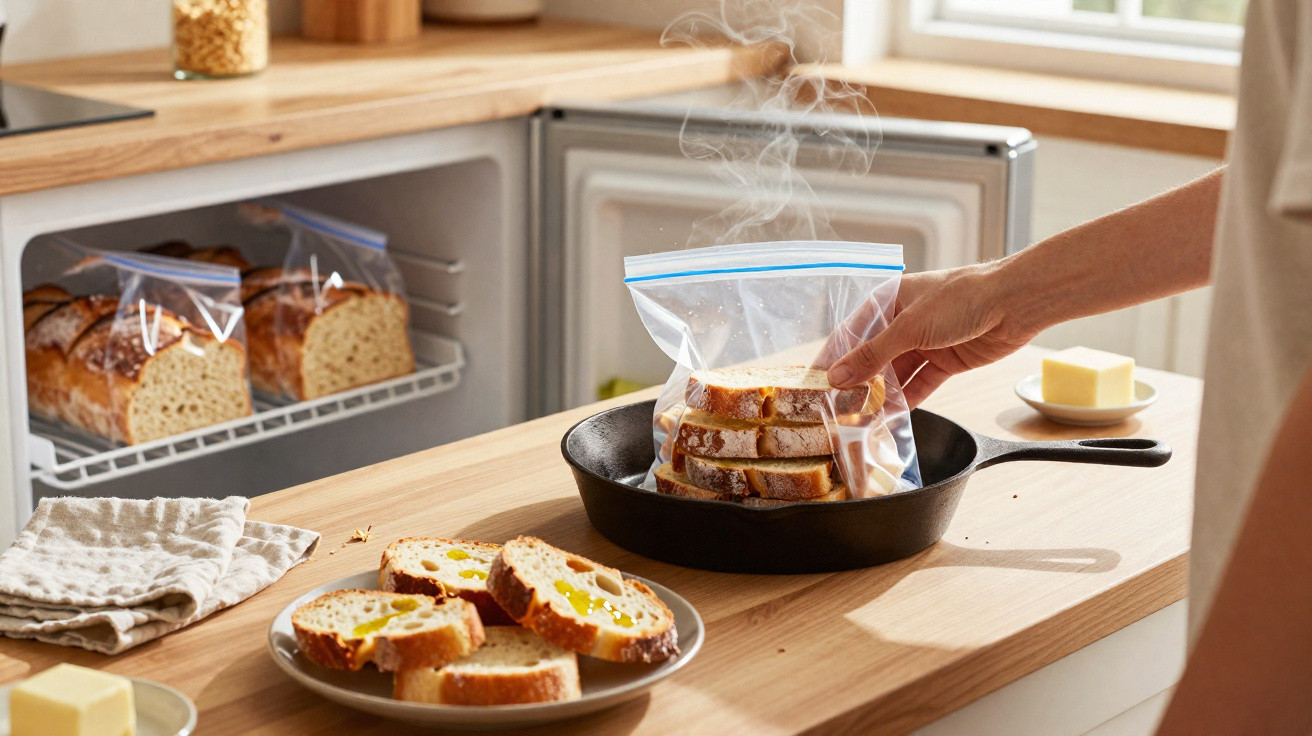
If you put bread in the freezer, it is easy to feel prepared: no mould, less waste and always a slice in reserve. Yet, once defrosted, it can often seem rubbery, dry or crumbly. The issue is not solely the freezer itself, but also the point at which the bread is put into it.
Why fresh bread goes stale sooner than expected
Bread starts ageing as soon as it leaves the oven, rather than only when its crust turns hard or its crumb appears dry. From the moment it cools, a chemical process known to specialists as starch retrogradation begins inside it.
During baking, starch molecules absorb water and ‘open up’. This gives the crumb its soft, springy and moist character. As the loaf cools, the molecules rearrange themselves. Its structure gradually becomes firmer, while the bread steadily loses elasticity and flavour.
“Anyone who freezes leftover bread only in the evening is usually preserving quality that has already noticeably declined – and will realise this immediately when defrosting it.”
Freezing halts this ageing process, but it cannot reverse it. If retrogradation has already progressed considerably, the bread may still be microbiologically safe after thawing, yet it will taste stale. This is what creates the familiar combination of a rubbery-soft crumb and a crumbly exterior.
The right time to freeze bread
The basic rule is simple: the fresher the bread is when frozen, the better it will be once defrosted. If you wait until the crust looks dull or the crumb has already become noticeably firmer, the opportunity has passed.
This difference is particularly apparent with very airy, highly risen loaves containing many large holes. Such breads are sensitive to the freeze-and-thaw cycle, losing moisture and structure more quickly.
Wholemeal bread, or bread with a high proportion of meal and whole grains, behaves differently. Its fibre retains more water, while its crumb is denser and more stable. Moisture therefore remains in the dough more effectively, meaning this type of bread copes better with freezing.
- White bread and baguettes: freeze while as fresh as possible, as they become stale quickly.
- Mixed-grain bread: slightly more forgiving, but it should still go into the freezer on the day it is bought or baked.
- Wholemeal bread: can sit for a little longer before freezing and is generally more stable.
When you collect bread from the bakery, you can plan as soon as you get home: eat one portion promptly and freeze the remainder early, rather than treating the freezer as a last resort.
Whole loaf or slices: what works best in the freezer?
The next decision is whether to freeze bread whole or sliced. Both methods offer benefits and drawbacks, depending on everyday kitchen routines.
Benefits of pre-sliced bread
Slicing bread before freezing gives you considerably greater flexibility:
- You can take out only the amount you genuinely need.
- Slices can go straight from the freezer into the toaster.
- There is less risk of leaving thawed bread sitting out, which also means fewer new leftovers.
This is especially useful for single-person or small households. Individual slices can also be quickly toasted in a frying pan with a little oil or butter, making them seem freshly baked.
When freezing a whole loaf makes more sense
A whole loaf protects the moisture inside more effectively. As long as its outer layer remains intact, the crumb is less likely to dry out. This is advantageous in households with several people, where an entire loaf will be eaten quickly.
The disadvantage is the thawing time. To defrost evenly without damp, ‘soggy’ patches, a whole loaf needs several hours, often an entire night at room temperature.
“For families that need plenty of bread in the morning, it can make sense to take a whole loaf out of the freezer in the evening and leave it to defrost in the kitchen overnight.”
How to defrost bread for maximum crispness
Simply leaving bread at room temperature rarely restores it to its original standard. The crust stays dull and the crumb can seem lacklustre. The crucial step comes afterwards, in the oven.
The following method works well:
- Allow the bread or rolls to defrost completely, or almost completely.
- Lightly moisten the surface with water, using a spray bottle or damp hands, for example.
- Bake in a preheated oven at around 150 to 180°C for 5 to 8 minutes.
The water on the surface briefly turns to steam, reviving the crust and restoring crispness. Meanwhile, the crumb warms through and its structure loosens slightly. The bread will soon seem considerably fresher, even though it can never fully return to the state it was in straight from the bakery.
White patches on frozen bread: mould or merely freezer burn?
Many people are alarmed when they open a container of bread from the freezer and spot pale patches. Their first thought is mould. In many cases, however, the cause is something else: freezer burn.
Freezer burn develops when bread has not been packed airtight, or when the freezer undergoes significant temperature fluctuations, such as from frequent opening. Parts of the bread dry out, water moves from the crumb towards the surface and freezes there.
“Freezer burn appears as pale, often slightly ‘bleached-looking’ areas that are dry but have no musty smell.”
These patches may look unappealing and often taste slightly dry, but they are generally not harmful to health. Genuine mould is different: it involves greenish, grey or distinctly discoloured spots, usually accompanied by a characteristic unpleasant smell.
How to prevent freezer burn
- Let bread cool completely before freezing so that condensation cannot form.
- Seal packaging as tightly as possible, using freezer bags with clips or airtight containers, for instance.
- Leave as little air in the bag as possible, ideally squeezing it out beforehand.
- Avoid opening the freezer constantly in order to reduce temperature changes.
If necessary, lightly dried patches can be cut away generously, or the bread can be used for croûtons and breadcrumbs if its flavour has suffered somewhat.
Freezing bread to reduce food waste - with a plan
Used properly, freezing bread can noticeably reduce the amount of food thrown away. Many households buy loaves that are too large because they worry about not having enough at home. A clear plan helps:
- When buying bread, decide which portion will be eaten straight away and which will be frozen.
- Once cooled, divide large loaves into portions and freeze them separately.
- Write the date on the packaging so older supplies are used first.
Anyone who freezes bread regularly can also adapt their choice of loaf: mixed-grain and wholemeal breads usually retain their quality in the freezer better than extremely airy white breads. Pre-sliced bread is suitable for spontaneous snacks or quick evening meals, while a whole loaf briefly reheated in the oven is better suited to Sunday brunch.
How long bread can be stored in the freezer
Bread remains microbiologically safe for a long time at consistently low temperatures. The key question is less whether it will ‘go off’ than how much its flavour and texture will deteriorate. The following provides a rough guide:
| Type of bread | Recommended storage time in the freezer |
|---|---|
| White bread, baguette | 1 to 2 months |
| Mixed-grain bread | up to around 3 months |
| Wholemeal bread | 3 to 4 months |
| Bread rolls | 1 to 2 months |
After this period, bread is not automatically inedible, but it will often become increasingly dry and bland in flavour. If good quality matters, use up frozen supplies regularly instead of storing them in bulk ‘forever’.
Practical ideas for defrosted bread
Even if bread is no longer perfect after thawing, it can still be put to good use. Many kitchen classics actually rely on slightly dried bread:
- Crisp croûtons for soups and salads, made from cubed toasted bread.
- Eggy bread or French toast made with slices soaked in a milk-and-egg mixture.
- Breadcrumbs from fully dried bread, processed either coarsely or finely.
- Bakes and gratins in which bread slices form the base.
Keeping such recipes in mind means even less-than-ideal bread can still be used well, reducing waste further.
Why the freezer is not a time machine
Freezing bread is worthwhile, but only if you choose the right moment and packaging. The freezer preserves the condition the bread is in when it is frozen. Act early and the result after defrosting will be close to fresh bread. Wait until leftovers feel hard in the evening and you will only preserve mediocrity.
A small change in routine is enough: do not freeze bread as a final rescue attempt at night, but deliberately freeze it while it still smells inviting and its crumb remains elastic. With suitable packaging, a short spell in the oven and a clear understanding of pale freezer patches, ordinary bread becomes a manageable store cupboard staple that requires hardly any compromise on enjoyment.






Comments
No comments yet. Be the first to comment!
Leave a Comment