
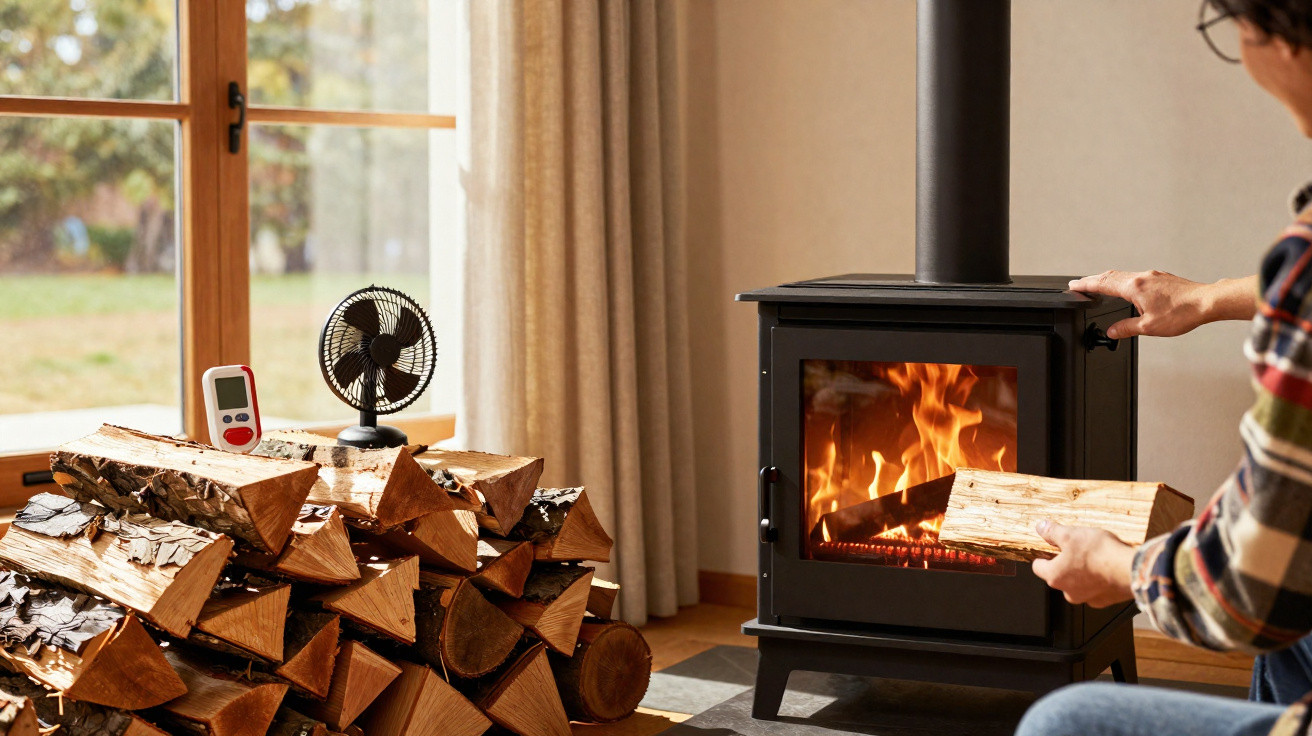
Anyone who uses a wood-burning stove or wood heating system wisely can make noticeable savings on firewood without giving up warm rooms. The stove itself is only part of the equation: wood quality, operation and the fabric of the house are especially important. A few targeted adjustments can reduce consumption, improve comfort and benefit both neighbours and the environment.
Why wood heating can quickly become expensive
Wood may seem inexpensive until winter properly sets in and the log pile rapidly starts to disappear. In many cases, this is not caused by a “harsh winter” but by avoidable mistakes:
- overly damp wood with a low calorific value
- an outdated or poorly maintained stove
- incorrect air supply while heating
- inadequate insulation in the house
- inefficient heat distribution
Keeping these factors in view can make the same wood supply last for substantially more heating days – while also keeping the air cleaner.
Tip 1: Choose the right wood quality
The first opportunity to save lies in the wood store. Different woods produce different amounts of heat, and not every type is suitable for a fireplace.
Hardwood outperforms softwood
Hard deciduous woods are particularly suitable for continuous use:
- oak
- beech
- ash
They burn more slowly, have high energy density and provide steady warmth. Softwoods such as spruce and pine ignite quickly and deliver plenty of heat for a short time, but burn away faster and need replacing more often.
Dry wood delivers the greatest savings
Moisture content is crucial. A value below 20 per cent is ideal. Freshly felled wood generally needs at least two years to dry sufficiently. During this period, it should be:
- stacked loosely with good airflow rather than tightly packed
- protected from rain from above by a roof or cover
- exposed to air from below and at the sides
- kept away from direct contact with the house wall
If in doubt, use an inexpensive wood moisture meter. Wood that is too wet causes excessive smoke and poor combustion, and it coats the stove in soot – wasting both wood and patience.
Tip 2: Maintain the stove and chimney regularly
A dirty wood-burning stove operates like a car with a blocked air filter: it still runs, but fuel consumption is poor.
Clean flue pipes and the chimney
Having the chimney swept is compulsory – at least once a year, or preferably twice for households that heat heavily with wood. Soot and tar deposits restrict the draught, leaving the flames short of oxygen and preventing the wood from burning completely.
The flue pipes between the stove and chimney should also be checked and cleaned regularly. Fewer deposits mean better efficiency.
Do not let the firebox “suffocate”
Ash acts as insulation. A thin layer in the firebox is fine, but a thick layer weakens combustion. Remove ash and loose soot residues regularly. While doing so, also inspect:
- seals around doors and flaps
- the viewing glass, as heavy sooting is a warning sign
- the controls for the air supply
The cleaner the inside of the stove, the less wood you need to achieve the same room temperature.
Tip 3: Set the air supply correctly
Air is the hidden control for wood consumption. Too little air makes the wood smoulder, creating lots of smoke and condensate. Too much air makes the stove draw like a chimney in a storm, sending heat straight up the flue.
The typical chain of mistakes
Many users restrict the air supply too early because they want to retain heat in the room. This results in:
- incomplete combustion
- more soot in the chimney
- glass that quickly steams up or becomes sooty
- more fine particulate matter
A strong air supply is best during the lighting stage and while the flames remain clearly visible and lively. Only when embers are all that remain should the air supply be reduced carefully.
Tip 4: Seal the house and reduce heat loss
Even the best stove achieves little if warmth immediately escapes through gaps and thin windows. Older properties in particular can be improved noticeably with straightforward measures.
Small insulation measures with a big effect
- Fit sealing strips to draughty windows and doors.
- Use door draught excluders or brush seals in cold hallways.
- Hang heavy curtains in front of windows and external doors.
- Put rugs on cold floors, especially on the ground floor.
Those willing to invest a little more could consider insulating the top-floor ceiling or replacing old single glazing. Every avoided thermal bridge reduces the heating demand.
Every degree of reduced heat loss is immediately reflected in the wood store: the stack shrinks more slowly.
Tip 5: Distribute heat around the room more effectively
Many wood-burning stove owners know the problem: it is T-shirt temperature in front of the stove, while the hallway calls for a jacket. These temperature differences are not just uncomfortable; they also increase consumption.
Simple aids: fans and airflow management
A stove fan that moves heat from above the stove into the room can often bring noticeable relief. Battery-powered models are available, as are versions driven by the stove’s own heat.
Anyone heating several rooms should open or close doors deliberately. Sometimes leaving the hallway door slightly ajar is enough to allow warm air to flow out and cooler air to return.
Tip 6: Light the fire correctly – from the top, not the bottom
How a fire is started determines smoke production and fuel efficiency. Many people place kindling at the bottom before building the stack above it. The reverse method is considerably more efficient.
How “top-down lighting” works
- Lay large logs crosswise at the bottom.
- Stack medium-sized logs on top.
- Place small, dry pieces and a firelighter at the top.
- Light the fire at the top and fully open the air supply.
The flame slowly works its way downwards. This produces less smoke, and the wood burns more cleanly and completely. Many users report saving several cubic metres of firewood per heating season as a result.
Tip 7: Invest in a modern appliance
Older stoves often have a charming appearance, but they burn far more wood than necessary. Stove technology has advanced considerably in recent years.
A new stove, greater efficiency
Modern wood-burning stoves and tiled stoves with optimised air management, some using secondary and tertiary air, achieve high efficiency levels. Models with double combustion use the gases produced for a second time, generating more heat from the same quantity of wood.
| Appliance type | Typical efficiency |
|---|---|
| older wood-burning stoves | around 50 per cent |
| modern stoves / inserts | often 75 per cent and more |
Buying one costs money, but over the years it lowers firewood demand, reduces emissions and improves comfort at home. Some regions offer grant schemes to replace old combustion appliances, so checking local rules can be worthwhile.
Wood heating, the environment and health – what many people overlook
Heating with good, dry wood in a modern stove creates considerably less fine particulate matter than using a sooty old appliance with damp fuel. Smoke that has a strong smell and pours visibly dark from the chimney is a clear warning sign.
Correct operation also protects your health. A chimney with a good draught that is inspected regularly, together with a stove that has intact seals, reduces the risk of flue gases backing up into the living space. A carbon monoxide alarm near the stove is now an essential item in heated homes.
Practical examples and useful combinations
Many households now combine their wood heating with other systems:
- wood-burning stove with an air-source heat pump for milder periods
- wood-burning stove with a back boiler to support radiators
- solar thermal energy for hot water in summer, and wood for winter
This can reduce the amount of wood needed even further without giving up the fireplace. Anyone who observes their heating habits for a few weeks will quickly spot patterns: Is the stove always lit too late? Does it run unnecessarily long in milder weather? Small changes often produce major results.
Anyone who considers wood quality, stove technology, airflow and insulation together can heat comfortably, protect their budget and reduce emissions – all without feeling cold.





Comments
No comments yet. Be the first to comment!
Leave a Comment