
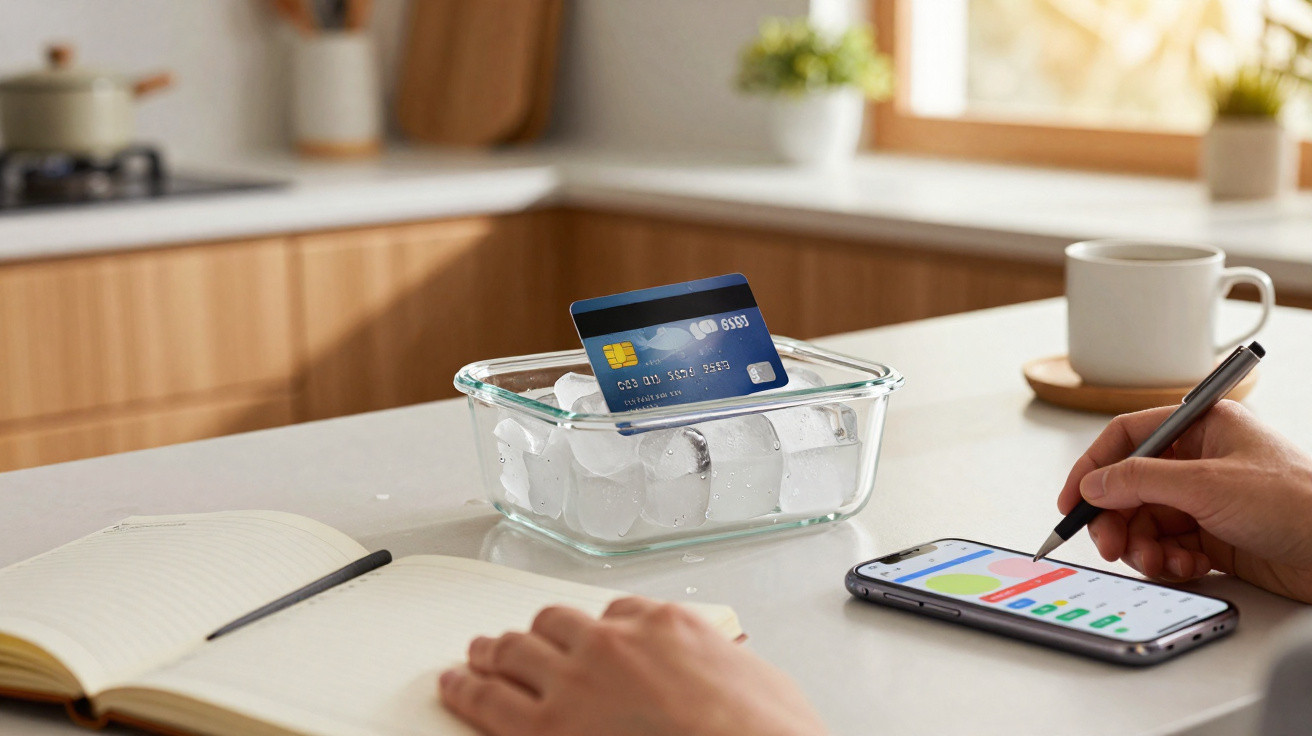
At first, putting a credit card in the freezer may seem pointless. Yet the habit has become known for two distinct reasons. First, it can be a financial self-control method, where someone literally freezes their card to prevent impulse purchases. Second, some banks use it simply as a metaphor for temporarily locking a card through their app. Physically freezing a card does not improve how it works or make it more secure.
Why do some people put a credit card in the freezer?
The idea emerged as a money-management strategy. By placing the card in a container of water and putting it in the freezer, it cannot be used for an immediate purchase. This creates enough of a delay for the person to think again before making an impulsive purchase. Financial education books and programmes have described this practice as a behavioural self-control technique.
Many financial institutions now provide a more convenient option: temporarily locking the card in the banking app, a feature that some people call “freezing the card”. The card can then be unlocked whenever it needs to be used again.
Does putting a credit card in the freezer really protect against fraud?
No. Low temperatures do not safeguard card data or prevent electronic scams. Security depends largely on the measures used by the bank, including two-step authentication, real-time notifications and immediate blocking if the card is lost or stolen.
Experts state that a freezer does not affect the chip’s operation or disable contactless payment technology. For greater protection, it is best to use the security tools provided by the financial institution and check account transactions regularly.
- Avoiding impulse purchases
- Creating time to reflect before spending
- Helping to manage a budget
- Reducing frequent card use
- Encouraging financial planning
- Choosing temporary blocking through the banking app
What is the safest way to control spending?
When the aim is to spend less, temporarily locking the card through the app is generally more practical than putting it in the freezer. Setting a monthly budget and enabling purchase alerts can also help track spending in real time.
It is also worthwhile to check the statement regularly and keep banking apps up to date. These steps provide more protection than any freezer-related trick.
- Set a monthly spending limit
- Turn on purchase notifications
- Check the statement regularly
- Lock the card through the app when needed
- Avoid impulse purchases
- Plan spending before using credit
Is it worth putting a credit card in the freezer?
As a psychological approach to cutting down on impulse purchases, some people find the method helpful. However, it does not improve card security or replace the tools supplied by financial institutions.
Using credit responsibly, together with the security features made available by the bank, remains the most effective way to protect your finances.
Financial planning remains the best ally
Developing habits that support responsible credit use matters more than storing a card in the freezer. Monitoring spending, using the bank’s security tools and planning purchases are all actions that help keep finances organised and lower the risk of future problems.
Small changes to everyday routines can make it easier to manage a budget and use a card more safely and responsibly.





Comments
No comments yet. Be the first to comment!
Leave a Comment