
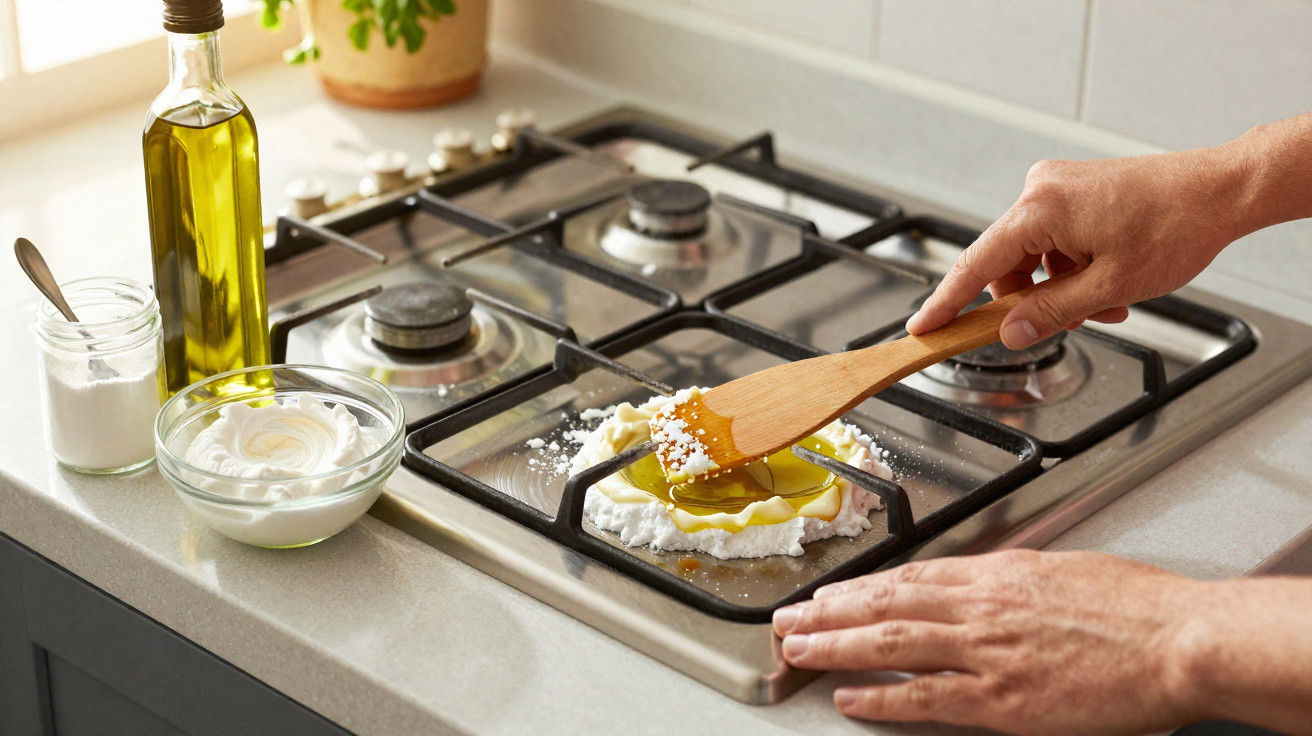
Two tablespoons of bicarbonate of soda, one tablespoon of olive oil and a few minutes of rubbing: this straightforward combination has been shared as a practical way to remove grease stuck to the cooker without using harsher chemical products.
The unexpected combination winning over kitchens
Olive oil and bicarbonate of soda are two cupboard staples in almost every home. Combined, they create a soft paste that can help lift built-up grease and grime.
The recommendation has become popular because it combines convenience with affordability, avoiding the need for abrasive cleaners. It tends to appeal to people looking for simpler ways to clean their homes.
- Simple ingredients: just olive oil and bicarbonate of soda, with no harsh chemicals.
- Twofold action: bicarbonate of soda helps loosen dirt, while olive oil softens grease without scratching.
- Easy application: all that is needed is a microfibre cloth or soft sponge.
- A good match for stainless steel: cookers, fridges and extractor hoods can regain their shine without being scratched.
- Low cost: both ingredients are already in most household cupboards.
Not all grease withstands this homemade paste
In practice, this paste of bicarbonate of soda and olive oil is generally used to tackle stuck-on grease on the outside of the oven and on stainless-steel utensils with more stubborn dirt.
Many people also use the mixture on stainless-steel fridges and the exterior of extractor hoods, as this material needs care that will not scratch or mark its surface.
The detail that changes the cleaning result
To make the paste, use two tablespoons of bicarbonate of soda for one tablespoon of olive oil, mixing until it has an even consistency that spreads easily.
Take note
Not every surface is suitable for this mixture
Using this paste on porous surfaces, fabrics or floors may cause problems, as olive oil can leave residue that is difficult to remove.
It is best to keep the mixture for stainless-steel items and avoid natural stone, unvarnished wood and carpets.
It is worth stressing that this combination works well on smooth, durable surfaces, but extra care is needed elsewhere to prevent damage to the material.
Is it worth trying on stainless-steel appliances at home?
If your kitchen has a stainless-steel cooker, fridge or extractor hood with greasy marks, this paste may be a quick option to try before turning to shop-bought products.
The method is straightforward: apply a small amount to a microfibre cloth, rub in circular motions, then remove any excess with a damp cloth followed by a dry one.
A trick alongside other homemade cleaning trends
Interest in this mixture reflects another wave of homemade cleaning recipes that use kitchen ingredients, such as vinegar and plain bicarbonate of soda, to replace more aggressive products in everyday use.
Ultimately, mixing olive oil with bicarbonate of soda is another simple trick showing that it is not always necessary to spend a great deal to keep the home in order.
Like the tip? Share it with anyone else who is always looking for homemade solutions to make day-to-day cleaning easier.




Comments
No comments yet. Be the first to comment!
Leave a Comment