
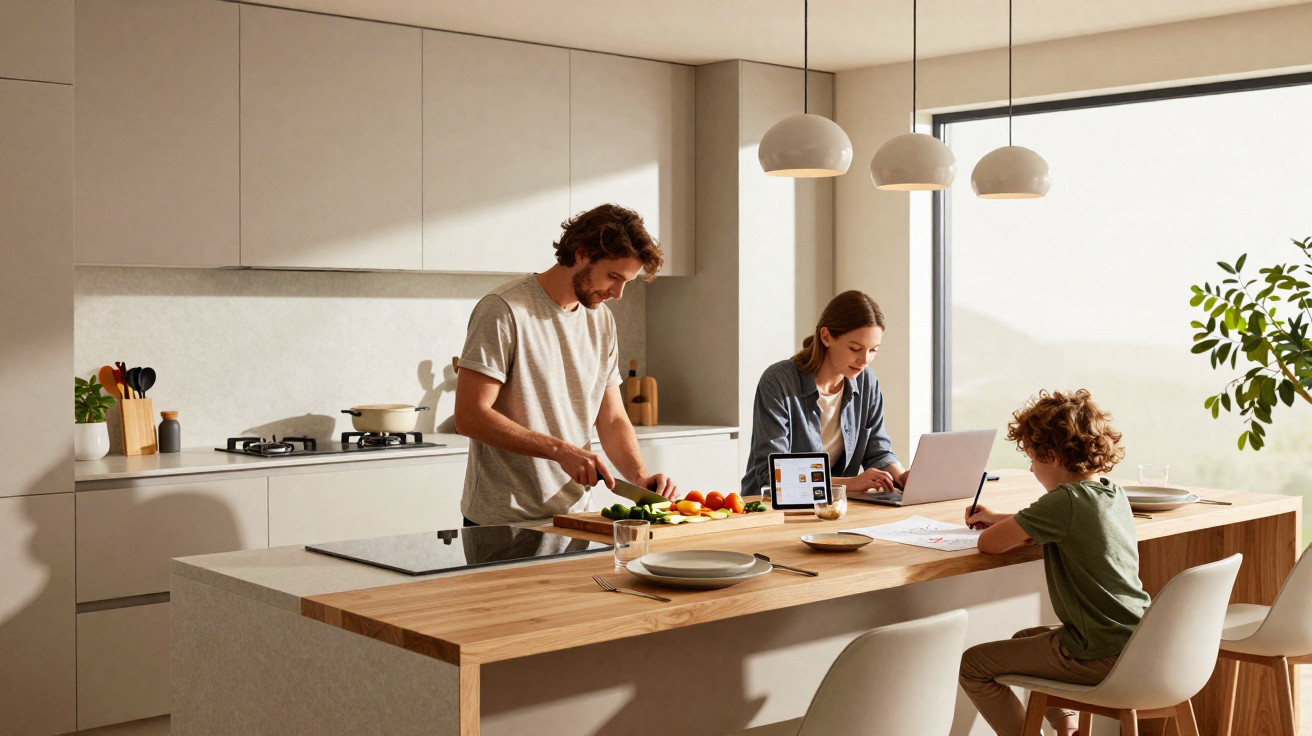
In 2026 interior design projects, the focal point of the home’s social area has shifted. The oversized dining table that once took up half the living room, despite rarely being used every day, is making way for more compact, practical solutions with a more “real-life feel”. The kitchen island is becoming the heart of the home, structuring the social space and acting as a meeting point for family and friends.
Why has the kitchen island become a focal point in 2026?
This prominence is directly linked to the preference for open-plan interiors, where the kitchen, living room and even home office share one space seamlessly. The highly formal dining room is being replaced by a more relaxed way of living, in which one piece of furniture can be used for eating, chatting, working, studying and setting down the food shopping.
The contemporary kitchen island takes on several roles: a food-preparation worktop, a spot for quick meals, a surface for a laptop and children’s homework, all without making the room feel visually heavy. In compact properties, it suits the pace of people living in large cities, with busy routines, limited room and a desire for a welcoming, practical home that is always ready to host guests.
How can an integrated kitchen island replace the dining table?
In many current designs, the integrated kitchen island becomes the home’s main dining area, freeing up the floor space formerly taken by a large table. Stools, high chairs or retractable units keep the room light, easy to clean and adaptable to everyday needs, without compromising on comfort.
To support so many functions, the island often incorporates built-in sockets, USB ports, concealed cable storage and carefully planned lighting. It therefore becomes a genuinely versatile element within the social area: suitable for a rushed breakfast in the morning, an improvised home office in the afternoon and informal evenings with friends.
- Daily meals: supports everyday use without requiring a separate dining room.
- Work and study: provides a temporary worktop for a computer, notebooks and tasks.
- Socialising: becomes a serving point for snacks and drinks, as well as a place to gather and talk.
- Organisation: can accommodate drawers, niches and even appliances, keeping the space tidier.
What everyday benefits does a bespoke kitchen island offer?
The chief advantage of a bespoke kitchen island is making better use of the available square metres, which is particularly important in today’s flats. Clear circulation around the unit, stools that tuck beneath the worktop and the lack of table corners in the middle of the living room make the layout more fluid, safer and more functional.
As well as connecting the person cooking with those in the living area, the island can house integrated bins, organisers, small appliances and even climate-controlled wine cabinets. In larger layouts, it can sit alongside a smaller folding or extendable table, reserved for more formal dinners and special occasions, balancing practicality with exceptional events.
How should you choose the ideal materials, shapes and dimensions for a kitchen island?
Material selection should take durability, ease of cleaning and visual harmony with the rest of the room into account. Surfaces such as Dekton, quartz, large-format porcelain tiles and natural stone are suited to intensive use, while timber details and stools bring a welcoming feel to open-plan spaces.
The shape and dimensions must allow for circulation: rectangular designs work well in narrow kitchens, while L-shaped versions or those with rounded corners help prevent knocks and improve flow. It is worth considering the height and depth of the worktop, planning storage below it and investing in pendant lights or track lighting. These features highlight the kitchen island without creating visual clutter, making it a strategic feature of the contemporary home.




Comments
No comments yet. Be the first to comment!
Leave a Comment