
Citroën Méhari, Fiat Panda and, naturally, the Multipla; Lancia Delta Integrale; the original Maserati Ghibli; and actor Christophe Lambert launching a 205 GTI over a ledge in the cult 1985 French film Subway… A Stellantis sizzle reel is playing, and it feels close to a fever dream. Yet it also underlines the extraordinary breadth of the company’s accomplishments across several eras.
Those names now sit beneath the same umbrella and are striving to stay relevant in a market that appears ever less concerned with heritage when a tech-heavy new Chinese car can be had for £250 a month. Against that backdrop, design matters more than ever – something Gilles Vidal, who directs the visual course of Stellantis’s European marques, understands well.
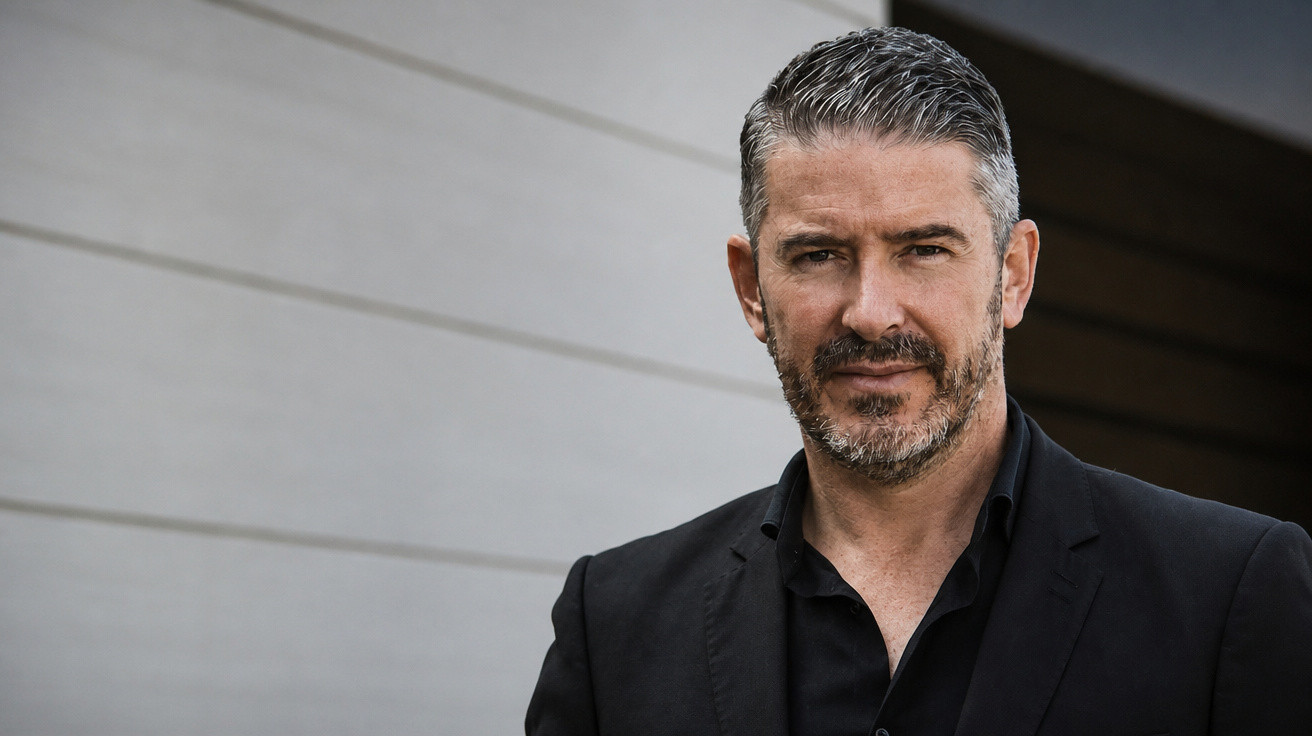
His name will be familiar. After 24 years with Citroën and Peugeot, Vidal moved to Renault in 2020, where he helped bring the 4, 5 and Twingo back to life with both critical and commercial success. They were EVs with character, appeal and meaning, even for customers unable to distinguish an original R5 from the Eiffel Tower. Newly appointed Stellantis CEO Antonio Filosa has now persuaded the personable French designer to return and work his magic once more. The first evidence of it is expected at the Paris motor show in October.
As the film ends, Vidal makes his position clear. “We’re talking about Stellantis as a company, but the general public doesn’t care so much about that, they care about the brands themselves,” he tells TopGear.com. “We need to be super sharp about what our brands stand for. They are the company’s biggest asset.
"What you saw there [on the film] was very pushy, very creative and very relevant for their brands and for the era they were in. What we want to do is push it as far as we can again. It’s a matter of finding the right balance, the sweet spot between shocking in a positive way with an execution that makes you want something the moment you see it.”
TopGear.com: What does it feel like to return to where your career began? Does it feel as though things have come full circle?
Gilles Vidal: Well, you know everyone and you know the place. However, the company is completely different now. It is enormous. I am arriving when everything is changing anyway, with Antonio Filosa as CEO and Emanuele Cappellano leading Europe. So it is all new to me, but also new to those who never left because there is a different mindset.
There is more openness. Antonio wants greater diversity in order to create more exciting versions of new products. For the sake of simplicity, optimisation and efficiency, a tonne of things had been prohibited, and that has now been reopened. It is not 100 per cent an open bar, but it is a return to some… normal behaviour.
Stellantis brands, differentiation and the wider plan
You have plenty to deal with. What is the overarching plan?
Stellantis will continue to create synergies by sharing platforms and components, but we must also manage differentiation between the brands. We will ensure that we compete more against actual rivals and less against one another. Branding is therefore hugely important, and we have to prevent the creation of clones – not only in design, but in every aspect of living with and experiencing the car.
Design is inherently subjective and based on taste, although perhaps it can be assessed without emotion too. We want to discuss emerging design and discover a breakthrough through surprising ideas – surprising in a positive sense, naturally – in a world where novelty is accelerating.
Can you offer examples of where this thinking might lead?
Peugeot is investigating steer-by-wire and the Hyper Square steering wheel. It is about powerful design, innovation and more breakthroughs, as represented by the Polygon concept. Citroën should be accessible and affordable while remaining inventive. DS is now arriving at a certain level of maturity. For Opel, we want to emphasise German quality and execution, while Lancia can become highly progressive.
There is a challenge, too, in the way cars are made in factories. Those processes could be transformed to become more efficient.
Electrification and autonomous driving place greater focus on interior design. You have always taken a progressive approach in that area.
When I began my career 30 years ago, there was simply a dashboard and a steering wheel to which we could add some styling. Today, we are genuinely designing a complete onboard experience: the ambience and shapes, materials, screen content, graphic design and user interaction. It is effectively a room in which you live while it moves around.
With 14 brands worldwide, you devote considerable care and attention to shaping the experience of each one: more driver-focused for Peugeot or Alfa Romeo, and more open and family-oriented for Fiat, Citroën or Vauxhall.
I am strongly opposed to putting everything on a screen. I believe we need more physical buttons and direct controls. We are working on all sorts of ideas, including some mad ones. The space you create can become another world. Services such as Lyft or Uber will have their own specific use cases. But privately owned cars can be genuinely crafted.
The success of Renault’s 4, 5 and Twingo suggests that a new Citroën 2CV could work. Or should Citroën remain firmly focused on the future?
It ought to be an intelligent blend of heritage, although we first need to ask some fundamental questions. Why did the original exist? What was its brief and context, and how can that idea make sense in today’s world?
There is room for many things in simple, affordable cars. If it is a proper car rather than a quadricycle, how light should it be? What is the minimum required to make it truly essential? There could be a car of around 3.8m, another at 4m and another with four seats. Those are three sizes in which you could deliver that sort of thing.
Alfa Romeo deserves to be shaken up a little bit
Could the ELO concept be considered closer to a modern 2CV?
The ELO monobox is centred on interior space and modularity. If we can deliver an interior like this – perhaps without placing the driver in the centre – it could be a success because it works as a product and is functional. But the exterior would need to create that love-at-first-sight response, and we do not have that yet because it is too experimental.
The force of what you see before any ‘thinking’ will outweigh everything else.
Higher up the range sits DS. There must be a temptation to create a ‘new’ version of the original.
Retro-futurism is a legitimate and relevant direction. But when the original DS arrived in 1955, it looked like a car from the future. Consider it in the context of that period. If we create a new DS, it must be a spaceship and break the rules as decisively as the original did. Not strange in a science-fiction way, but as if it had been designed by someone from 2100.
The circle has been completed with the present range, so we are now working on the next stage and considering where we want to take it.
Then there is Maserati…
Maserati is somewhat like DS. We need to establish the next generation of cars and the next two decades of Maserati design. I am not referring to the specific cars we will make, but to the design signatures inside and out. We require a breakthrough: a substantial move away from what exists today.
Every 20 years or so, you can see a total transformation in design language, yet it remains a Maserati. The undulating life of this brand is very interesting, so the question is what comes next, because the loop has now theoretically ended. I will not tell you today, but work has begun.
And Alfa Romeo?
For me, that is a different question. You know exactly what an Alfa Romeo ought to be. It is more coherent, although it perhaps deserves to be shaken up a little bit. It needs to be red, with muscle, sensuality and presence. We have presentations and discussions, but whatever we ultimately do must create the sense that this is something you want without having to intellectualise it.
That emotion can be created just as powerfully with a €20,000 car. That is what I mean by ‘iconic’, or whichever word you prefer. Instant desirability. It is easy to say, but that is what we want to achieve.


Comments
No comments yet. Be the first to comment!
Leave a Comment