
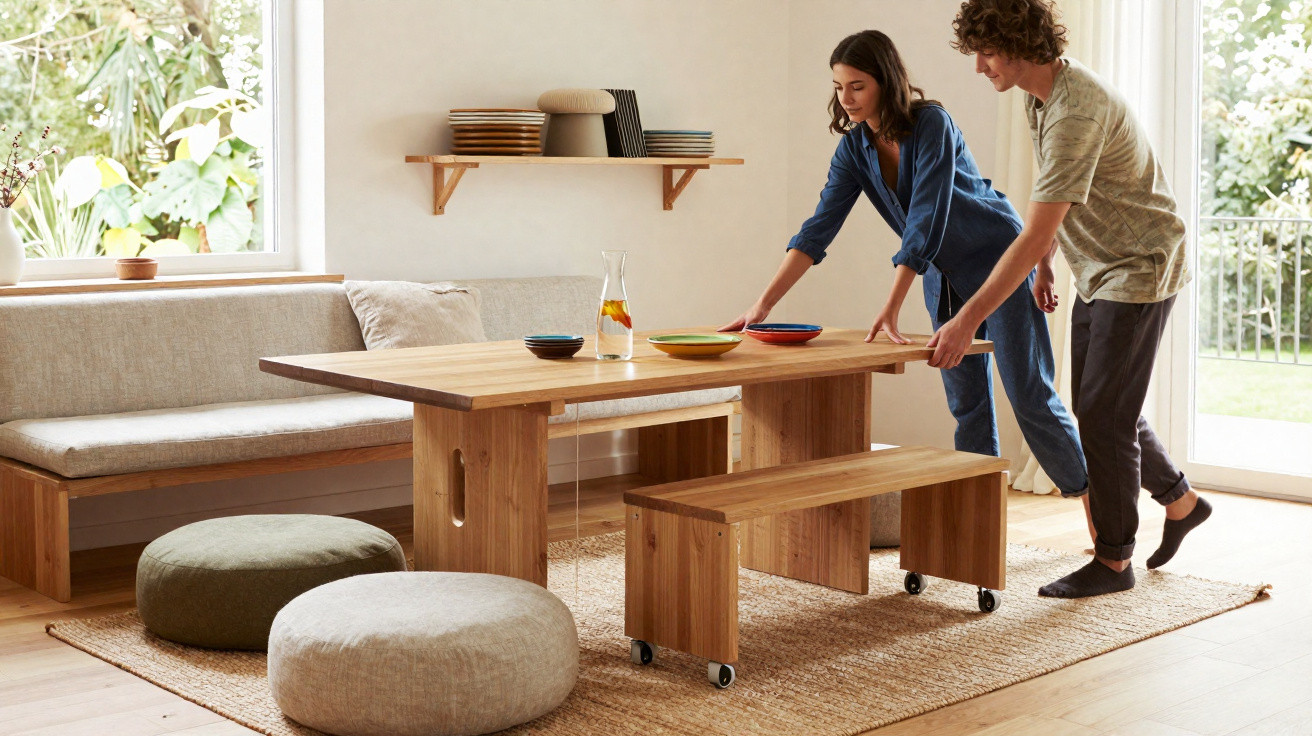
Interior design is undergoing a period of change and, by 2026, one of the most widely discussed shifts concerns how dining areas are arranged. Rather than relying on the classic table-and-fixed-chairs set-up, homes are increasingly adopting more adaptable spaces, with fewer permanent pieces and greater freedom of movement. This reflects faster-paced routines, compact homes and the desire to make every square metre work harder.
What is a dining room without traditional chairs?
A dining room without traditional chairs rethinks mealtimes by replacing bulky seating with lighter, more adaptable alternatives. Wall-positioned benches, built-in seating, pouffes and multifunctional surfaces make the room more practical and simpler to rearrange.
This approach often connects the dining area with other parts of the home, including the living, reading or working space. As a result, the place used for meals can remain open for everyday use, with additional seating brought in only for visitors or family gatherings.
Watch a video on Duda Senna's YouTube channel about using long benches and German corner seating at the dining table to maximise space and modernise the décor:
https://www.youtube.com/watch?v=L2Gj3pP_L1Y
Why is the flexible dining room popular in 2026?
The rise of smaller flats and remote working means that the table is no longer used solely for eating. It can also serve as a workstation, a study surface and even a worktop for hobbies, encouraging homeowners to reduce fixed chairs that take up room at all times.
In this setting, kitchen islands with bar stools and retractable tables are becoming key features. They allow for smoother circulation, bring in more natural light and make the room feel larger-qualities highly valued in contemporary interiors and open-plan layouts.
How can you adapt your home to a dining room without fixed chairs?
The change can be introduced gradually by rearranging existing furniture and adding versatile pieces. Ideally, every item should have a clear purpose and, where possible, more than one use, ensuring daily meals remain comfortable while freeing up room for other activities.
Several options can reshape the dining area without sacrificing everyday practicality or warmth:
- Wall-positioned benches: These replace several chairs, take up less visual space and can seat more people when required.
- Pouffes and freestanding modules: They can be moved according to the occasion, whether for sitting on or holding trays and books.
- Unobtrusive folding chairs: These can be stored in a cupboard or behind a door and used only for special occasions.
- Built-in joinery seating: This makes use of corners and window areas, creating compact places for dining or reading.
Which details enhance a dining area with fewer chairs?
Even with fewer visible seats, the dining area remains a focal point of the home and can be emphasised through well-chosen finishes. Timber, natural stone such as marble, and light-toned metals create a neat, airy foundation that complements the rest of the integrated space.
Large rugs can define the social zone, while pendant lights above the table or island and neutral colours help organise the room. Carefully placed colour in cushions, artwork or decorative objects visually marks where meals take place, keeping the home more open, multifunctional and in step with contemporary routines.



Comments
No comments yet. Be the first to comment!
Leave a Comment