
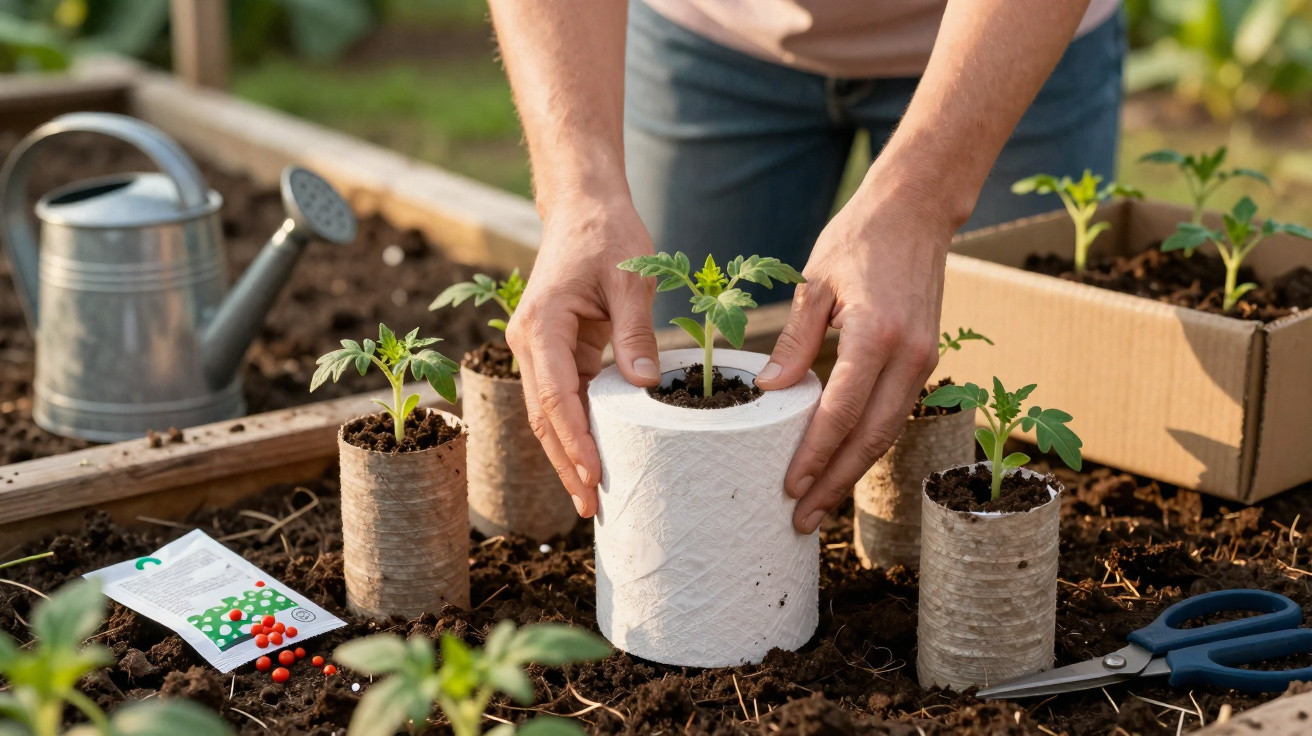
A hobby gardener demonstrates how an everyday bathroom waste item can become a small tomato nursery – using only the simplest materials.
Most people throw away toilet paper rolls without a second thought. One inventive gardener, however, turns them into tiny seed pots and has impressed tens of thousands of people on social media. The approach costs virtually nothing, cuts down on plastic and is ideal for a sustainable garden – even if you only have a balcony.
From the bathroom straight to the veg patch: the basic idea
The idea seems almost too straightforward to work: instead of being binned, empty cardboard tubes are placed in an ordinary cardboard box on the windowsill. Arranged tightly together and filled with seed compost and seeds, they become small biodegradable plant pots.
“Disposable cardboard becomes practical seedling containers that can later be planted straight into the ground.”
The method is based on three principles:
- free containers that are already produced in the home
- no plastic, with everything compostable
- a gentle move into the soil for seedlings, without root shock
Spring is often the time when plastic trays and single-use pots pile up while tomatoes, peppers, courgettes or herbs are started indoors. With this simple trick, almost the entire beginning of a vegetable garden takes place on the windowsill in recycled cardboard instead.
Step by step: turning toilet paper rolls into seed containers
1. Choose suitable rolls
For this gardening method, use only clean, dry cardboard rolls with no fragrance and as little printing as possible. Many brands already use plain inner tubes, making them well suited to the task.
- Allow the rolls to dry out completely.
- Discard heavily printed or glossy cardboard.
- Do not use rolls with leftover tape or plastic film.
Collect enough of them and, within a few weeks, you will have a whole supply of small planting tubes – free of charge and ready to use.
2. Cut the rolls to the right height
A quick cut with scissors helps the plants stand securely later on and prevents compost from spilling out. A height of around six to eight centimetres works well.
Many hobby gardeners simply cut each roll in half, creating two tubes of the same height. If preferred, the base can be made slightly sturdier:
- Make four small cuts at one end of the roll.
- Fold the resulting tabs inwards.
- Press the edge down lightly until a temporary base is formed.
This is not absolutely necessary, but it makes the small pots less likely to topple over and helps keep the compost inside.
3. The ideal box for a mini nursery
To keep every roll upright, use a simple box – such as a sturdy cardboard box with the tubes packed closely side by side. The closer they are positioned, the straighter they will remain.
A cut-out section on one side of the box is particularly useful. It makes watering from the front easier, without having to handle each individual container. There is another benefit too: the opening allows more light to reach the lower parts of the plants.
“An old delivery box is enough to create a small propagation station on the windowsill.”
Sowing seeds: which plants are especially suitable
In principle, this method can be used to raise many vegetables and ornamental plants. It works particularly well for varieties that will later be moved outdoors or into large containers:
- tomatoes
- peppers and chillies
- courgettes and pumpkins
- cucumbers
- herbs such as basil, parsley and dill
- annual flowering plants such as sunflowers or marigolds
Start by filling each tube with loose seed compost. As it is low in nutrients, it encourages young plants to develop stronger roots. Firm the compost gently, add one or two seeds, then cover them with a thin layer of compost.
Place the box somewhere bright and relatively warm, such as a south-facing window or a sheltered windowsill. The cardboard retains moisture for a little longer, but the compost will still need regular, gentle watering.
Stress-free transplanting: the major benefit for the veg patch
Once the seedlings have developed two to three true leaves, it is time for the next stage: moving them outdoors or into larger pots. This is where the cardboard-roll technique offers its greatest advantage.
Rather than easing a plant out of a rigid plastic pot, place the entire toilet paper roll pot in the soil. The cardboard gradually breaks down, while the roots can grow through it without difficulty.
“The plants do not need to be pulled from their pots – so the roots and compost remain almost completely undisturbed.”
Many gardeners say that this helps plants establish themselves more successfully. The risk of damaging the root ball is significantly lower, which is particularly noticeable with delicate young plants such as tomatoes or peppers.
Why this toilet paper roll method is so sustainable
Cardboard rolls are produced in almost every household, often by the dozen. Normally, they end up in the bin or recycling. Used as seed containers, they perform one more useful role first, saving money and conserving resources.
| Aspect | Plastic pots | Cardboard rolls |
|---|---|---|
| Purchase cost | must be bought | produced free in the household |
| Disposal | often general waste, long-lasting waste | compostable, breaks down in the soil |
| Handling when transplanting | root ball must be removed | entire pot can be planted into the ground |
Anyone raising lots of plants in spring can avoid dozens of single-use pots with this technique. On a balcony, it reduces the need for plastic trays, while in the garden it creates an almost waste-free start to the growing season.
Gardening as a stress reliever – why this small ritual feels good
The trend also fits the psychological benefits of gardening. Studies indicate that regular gardening can reduce stress and improve wellbeing. Checking the little cardboard box each day, noticing the first green shoots and smelling damp compost can all help many people unwind.
Watering, checking the seedlings and perhaps filling a few new rolls each day creates a small routine. Especially in cities with limited green space, a mini propagation station on the windowsill can provide a welcome contrast to everyday screen time.
Practical tips: how to improve toilet paper roll propagation
There are still a few potential pitfalls. These pointers reduce the risk of mould and weak plants:
- Do not keep the rolls permanently soaked, or the cardboard will soften too quickly.
- Turn the box regularly so that all plants receive equal amounts of light.
- Avoid sowing too densely – one or two plants per tube is enough.
- If mould appears on the surface, water a little less and improve ventilation.
- Move young plants into larger containers or the veg patch in good time.
If your windowsills are very damp, place a waterproof mat underneath the cardboard box. This keeps the surrounding area clean if any water spills.
Variations and extensions for craft enthusiasts
Kitchen towel rolls can also be used. Simply cut them into several pieces to make especially tall containers for plants with strong roots, such as sunflowers.
Creative gardeners combine the technique with other upcycling ideas: egg cartons, old cardboard fruit trays or unwanted plastic boxes can serve as drip trays or mini greenhouses. A transparent film cover over the box keeps moisture in for longer and increases germination rates – but it is then important to ventilate it regularly.
Children can be involved in the project too. They can paint the rolls, label them with plant names or attach small tags to the box. It becomes a clear, hands-on experiment showing how an unremarkable seed grows into a tomato plant.
This straightforward idea demonstrates just how much potential everyday leftovers can hold. With only a few simple steps, a typical item of bathroom waste becomes a useful tool for the vegetable garden – affordable, practical and surprisingly effective.


Comments
No comments yet. Be the first to comment!
Leave a Comment