
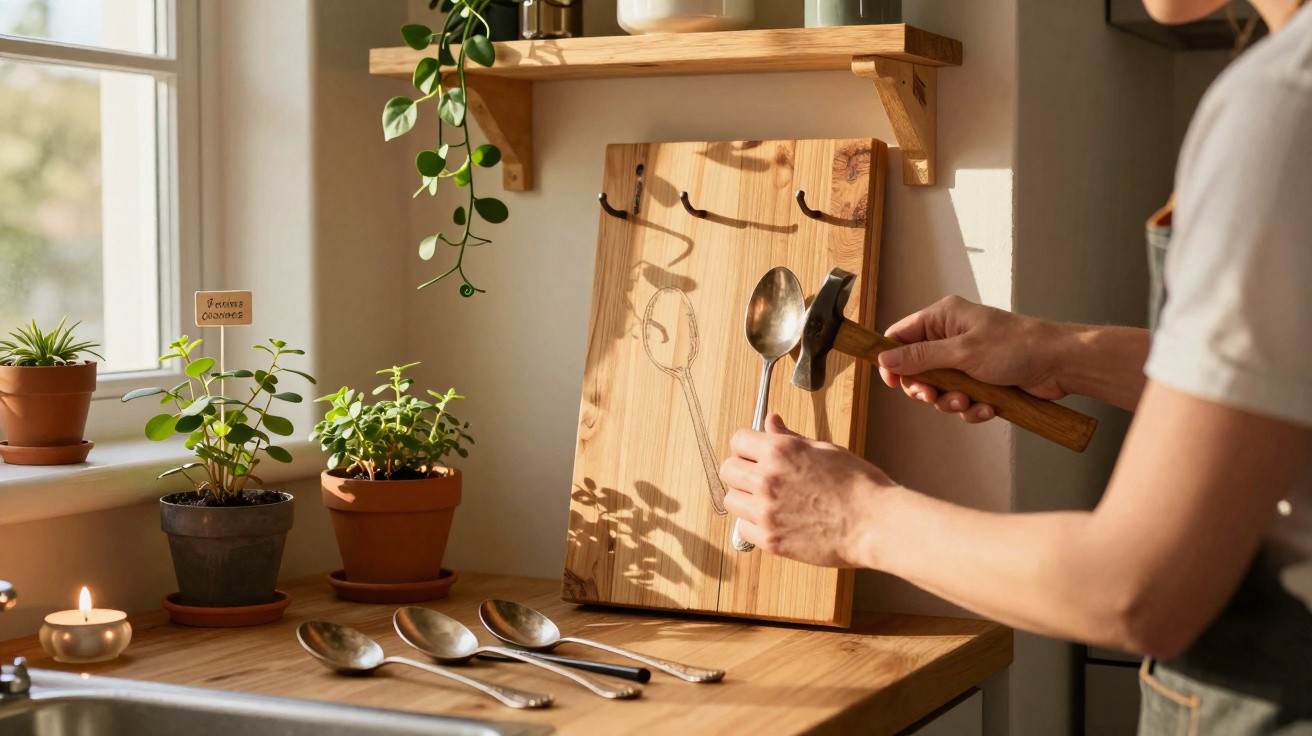
Old spoons from the flea market may look like clutter – until you view them through a crafter’s eyes.
If you have been walking straight past boxes of scratched cutlery in second-hand shops, you are overlooking inexpensive material for imaginative home projects. With a few basic tools and the confidence to experiment, old spoons can become striking features for the kitchen, hallway and garden.
Why old spoons are such an exciting material
Spoons are among the household items most often discarded. Sets are incomplete, patterns have gone out of fashion, and some pieces are slightly bent. As a result, many end up in donation boxes. That is precisely why they appeal to DIY enthusiasts: they are affordable, durable and available in countless shapes.
Discarded spoons are not rubbish, but inexpensive material for sturdy decoration, practical storage and personal jewellery.
Whether they are silver, stainless steel or wood, all types bring a distinct character. Silver is easy to shape and develops an elegant patina over time. Stainless steel withstands almost anything, making it suitable for hooks and handles. Wooden spoons take paint beautifully and are ideal for warm kitchen or country-style interiors.
Preparing flea-market spoons for crafting
Before starting, give your finds a thorough clean. Dirt, grease and tarnish not only look unattractive but also make them unpleasant to work with.
- Soak spoons in hot water with washing-up liquid.
- Clean them using a soft brush.
- Rinse well and allow them to dry completely.
For metal spoons, it is worth checking the alloy. Genuine silver spoons can be identified by hallmarks such as “800” or “925”, or by the fact that a magnet will not stick to them. They are softer, which makes them well suited to bending, stamping and jewellery projects.
Most households already have the tools needed for the work:
- A rubber or wooden mallet for flattening
- A hacksaw or sturdy side cutters for shortening pieces
- A drill with metal drill bits for making holes
- A vice or strong clamp to hold the spoon securely
Anyone working with metal should always wear safety glasses and gloves. Even tiny metal fragments can injure your eyes, while sharp edges can quickly cut skin.
Twelve creative upcycling ideas for home and garden
A little imagination can turn cutlery bought for pennies into remarkably versatile projects. Here are twelve particularly practical ideas for everyday use:
Wall hooks made from bent spoons
Screw the handle to the wall and bend the bowl forwards to create a hook for mugs, tea towels, coats or bags.Serving tray with spoon handles
Use a wooden board as the base, then screw longer spoon handles to each side as grips. It is ideal for breakfast in bed or serving on the balcony.Bird feeding station with a wooden spoon
A jar or small container holds the food, while a wooden spoon pushed through it provides a perch and feeding spot. Hang it from a branch or balcony.Wind chime made from spoon bowls
Cut off several spoon bowls, drill holes in them and attach them to a ring with wire or string. They gently chime in the wind and catch the light.Plant labels for beds and balconies
Hammer spoons flat and add plant names with letter stamps, an engraving pen or a permanent marker. They are sturdy, weatherproof and reusable.Painted wooden spoons as kitchen decoration
Paint the handles or entire wooden spoons in colour, adding patterns, dots or sayings. Arranged in a vase, they make a colourful focal point.Updated wooden spoons with a resin finish
Paint the handles and seal them with a transparent layer of epoxy resin. This gives them a refined appearance and protects the paint from wear.Necklace pendants made from spoon bowls
Remove the spoon bowl, hammer it flat, drill a hole and decorate it, perhaps with glued-on stones, stamped letters or engraved symbols.Rings made from spoon handles
Cut the handle to size, smooth the edges and bend it around a ring mandrel or suitably sized metal rod. Especially decorative patterns look particularly elegant here.Pulls for lamps or fans
Attach spoons to a chain or cord and fit them to pull switches. This makes the switch easier to grip and more visually interesting.Wall-mounted jewellery holder from old spoon display racks
Wooden display racks originally used for collector spoons can be painted white or in bright colours, then repurposed as jewellery holders.Personalised place cards for the table
Add names to flattened spoons and place them on plates. They are perfect for weddings, birthdays or family celebrations.
Finding the best pieces in a second-hand shop
When browsing, take a deliberate look through the overlooked rummage boxes. Mixed bundles are particularly worthwhile: a bag containing different sizes, patterns and metals is inexpensive and provides material for several projects.
Look out for:
- Decorative handles with ornaments or engravings for jewellery
- Large, sturdy spoons for handles and hooks
- Wooden spoons without deep cracks or signs of mould
- Metal without major hairline cracks that bends easily
A quick bend test on the handle will reveal how the metal behaves. If it cracks straight away or seems brittle, leave it behind. If it feels flexible without being extremely soft, it is a good choice for hooks or handles. Very soft pieces are better suited to jewellery or small pendants.
Tips for safe, neat results
A few simple rules will help ensure your crafting session does not turn into a frustrating project:
| Area | Tip |
|---|---|
| Drill holes | Centre-punch the metal, drill slowly, cool it regularly, then countersink and deburr the hole. |
| Edges | After every cut, smooth the edge with a file or sandpaper until no sharp points remain. |
| Surface | Lightly roughen surfaces before painting so that paint or clear varnish adheres better. |
| Installation | Choose suitable wall plugs and screws for wall hooks, and consider their load-bearing capacity. |
Why spoon upcycling is genuinely worthwhile
These projects not only save money but also reduce waste. Every spoon kept out of the scrap pile replaces a newly bought product. The difference in price can be substantial, particularly for hook rails, jewellery and gift ideas: flea-market materials costing one euro can be transformed into items that would cost ten to twenty times as much in shops.
There is also a personal element. An old spoon from your grandmother’s cutlery drawer, worn as a ring or used as a hallway hook, tells a story that no mass-produced item can offer. Even simple kitchen shelving looks different when fitted with bent spoons rather than standard hooks.
More ideas and what beginners should bear in mind
Once you enjoy the process, the projects can be combined in any number of ways. A set of spoon wind chimes, matching plant labels and painted wooden spoons creates a cohesive look for a balcony. In the hallway, a hook rail, a key tray with a spoon handle and a mirror framed with spoons can form a small upcycling collection.
Beginners should start with projects that do not require sawing or drilling, such as painted wooden spoons, plant labels made with marker pen, or straightforward hooks where spoons are simply bent and screwed in place. With time, confidence grows, and using a hacksaw, drill and hammer becomes more natural.
If children are involved, adults should handle demanding tasks such as sawing and drilling. Younger helpers can safely sand, paint, write words or plan patterns with an adult. A pile of old spoons can then become a shared afternoon project – and the kitchen or garden is guaranteed not to look the same afterwards.



Comments
No comments yet. Be the first to comment!
Leave a Comment