
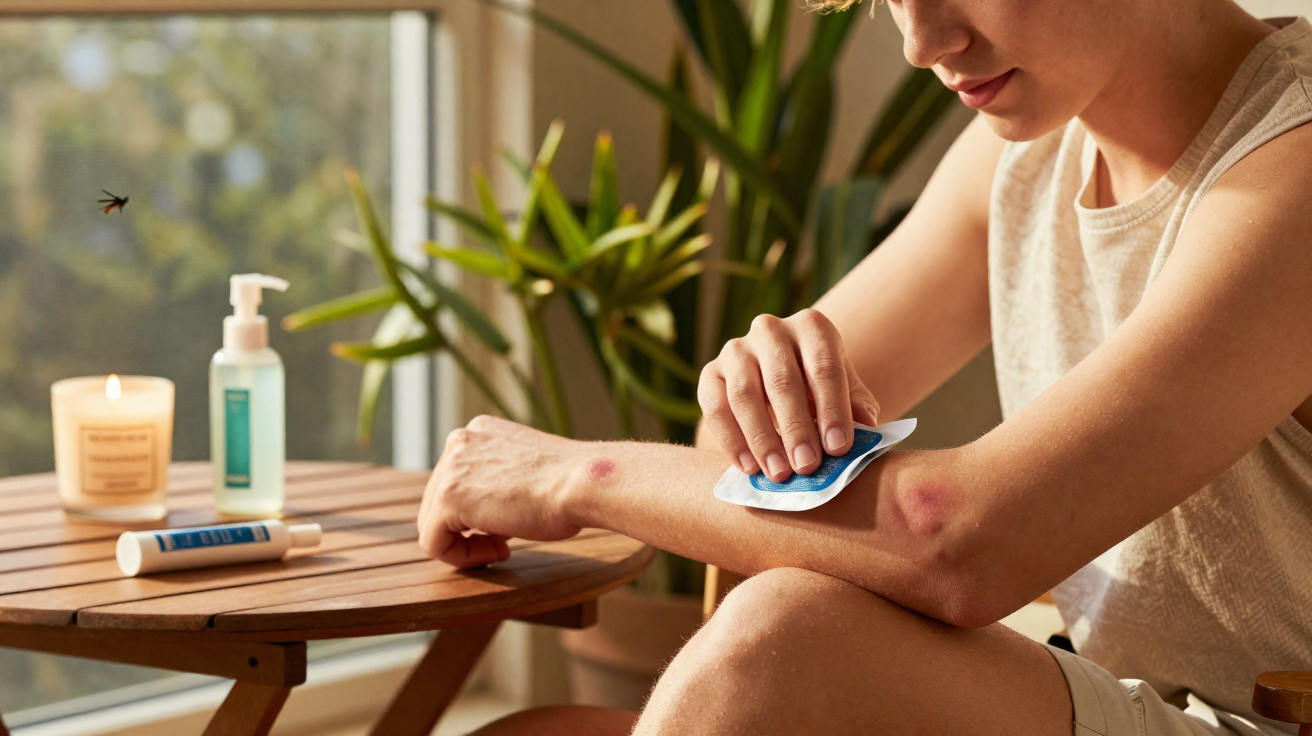
Mosquito bite itching occurs because the skin reacts to saliva left behind by the insect when it bites. Although the mark will not disappear immediately, a few straightforward steps can quickly ease the urge to scratch, limit swelling and stop irritation from worsening through friction or minor skin damage.
Why does a mosquito bite itch so much?
As a mosquito bites, it releases substances that prevent blood from clotting while it feeds. The immune system identifies these proteins as foreign and reacts by releasing histamine, a substance associated with redness, swelling and itching.
Responses differ between people. Some may develop only a small bump, while others get larger patches, warm skin and intense itching for several days, especially if they repeatedly scratch the area.
What to do straight away to relieve the itching
Start by washing the affected area with water and mild soap, removing sweat, dirt and any residue on the skin. Cold is then generally the quickest and safest way to soothe the itch without further aggravating the mosquito bite.
- Cold compress: apply it for 10 minutes, using a clean cloth or a cool pack wrapped in fabric.
- Protected ice: never place ice directly on the skin, as this may cause a cold burn.
- Mild soap: wash the area without rubbing hard.
- Gentle touch: pat dry rather than dragging the towel over the bite.
- Short nails: these lower the risk of damaging the skin when scratching without realising.
Which products help when mosquito bite itching persists?
If a cold compress is not enough, pharmacy products may be useful. Soothing lotions, calamine, low-strength hydrocortisone creams or anti-allergy medicines recommended by a professional can lessen inflammation and the urge to scratch.
- Use ointments only as directed on the label or by a healthcare professional.
- Avoid applying several different products at once.
- Do not use a steroid cream for many days without medical advice.
- Do not put alcohol, perfume or lemon on the bite, as they can irritate the skin.
- For young children, pregnant people or those with allergies, seek advice before using medicines.
Why does scratching make a mosquito bite worse?
Scratching may bring relief for a few seconds, but it increases local inflammation. Fingernails damage the skin, spread the irritation and can create small wounds, making it easier for bacteria to enter and extending the discomfort.
If the urge to scratch is very strong, press the area with your fingertips for a few seconds or apply another cold compress. Replacing the sensation in this way can help settle the itch without scraping the skin.
When does a mosquito bite need medical attention?
Most bites improve on their own within a few days, but certain symptoms require care. Seek medical attention if there is very extensive swelling, pus, severe pain, fever, red streaks on the skin, shortness of breath, dizziness, or swelling of the face and lips.
To prevent further bites, use an age-appropriate insect repellent, fit window screens, wear clothing that covers the skin when mosquitoes are most active, and remove standing water. Immediate relief begins with cold and cleansing, but prevention remains the most effective way to avoid recurring itching.





Comments
No comments yet. Be the first to comment!
Leave a Comment