
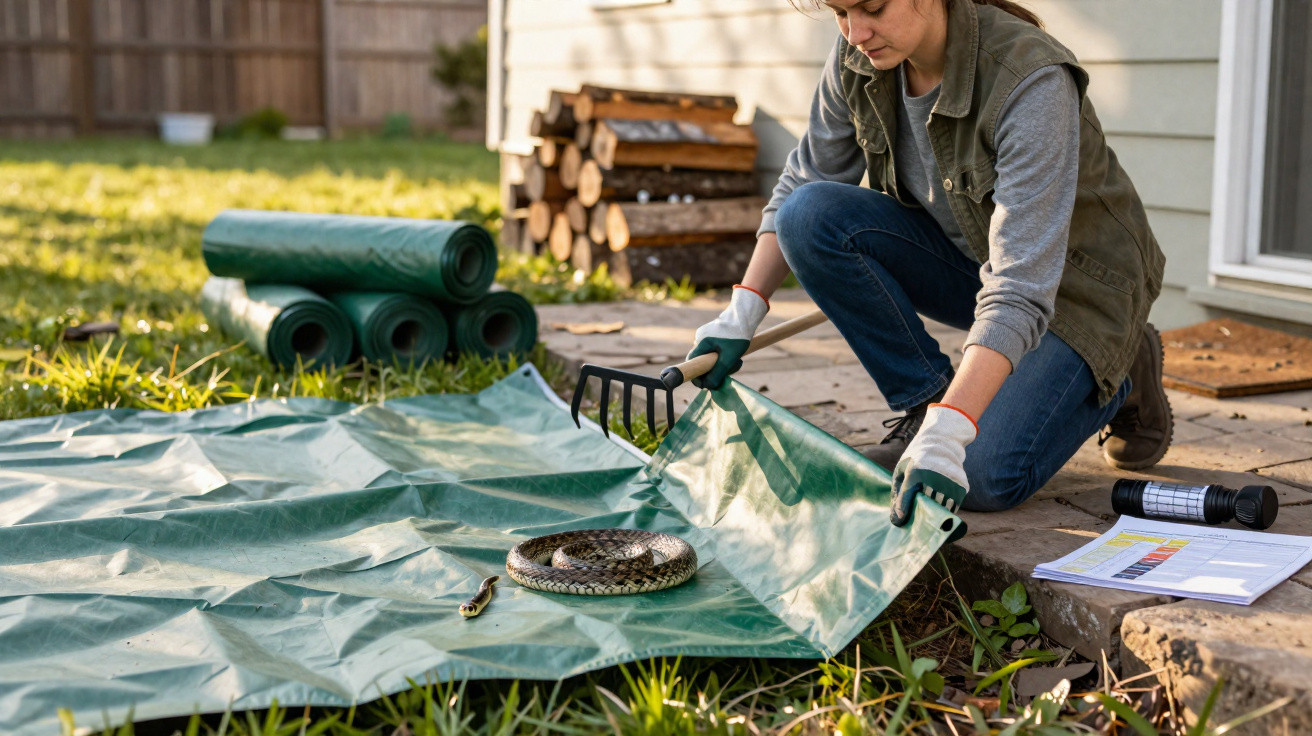
As soon as temperatures rise, attention turns to deckchairs and lawnmowers – yet an inconspicuous garden accessory can attract unwanted reptiles.
Among freshly cut lawns, patio furniture and play equipment, many gardens contain an easily overlooked item: a tarpaulin or old board laid flat on the ground. Snakes are particularly drawn to the space beneath it in spring, often just a few metres from the front door.
Why a garden tarpaulin attracts snakes like a magnet
Snakes are cold-blooded animals. They need outdoor temperatures of around 25 to 30 degrees to become active, so they seek out places that retain heat effectively. A dark plastic tarpaulin provides ideal conditions.
The material warms rapidly in sunlight, while the soil underneath holds that warmth and remains moist at the same time. Together, these factors create a small, sheltered microclimate: warm, slightly damp and protected from wind – ideal for reptiles emerging from hibernation.
Beneath a tarpaulin lying flat on the ground, a natural “radiator” is created, giving snakes a safe, warm place to retreat.
From above, the area appears harmless. It may be no more than a dark strip on the ground, perhaps partly hidden beneath a shrub. Underneath, however, a harmless grass snake or smooth snake may be lying there, slowly warming up to operating temperature. It is convenient for the animal, but can be an alarming discovery for homeowners.
Typical “snake nests” around the house
A tarpaulin is not the only issue. Many everyday garden items create warm, low-level hiding places. Anyone who uses their outdoor space purely for practical purposes and rarely tidies it thoroughly can quickly provide numerous such shelters.
Reptiles are particularly fond of:
- garden tarpaulins or weed-control fabric spread across the ground
- old corrugated sheets or other metal panels
- fibre-cement boards, roofing sheets or old building materials
- timber boards and pallets placed directly on grass
- woodpiles stored on the ground without clearance
- compost heaps covered with plastic sheeting
All these items have one thing in common: they lie flat, heat up and leave a narrow gap beneath them. That small space is enough for a snake to disappear into, hide and escape quickly when threatened.
Spring garden check: making the area around your home safer
Anyone who does not want snakes immediately beside the patio, sandpit or front door should focus on one thing above all: keeping ground-level areas tidy. Once the garden has been properly cleared, reptiles are far less likely to settle close to the house.
These steps can significantly reduce the risk
Remove unused tarpaulins or stretch them tightly
Roll up any tarpaulins that are not needed and store them in a shed or garage. If they must remain outdoors, keep them taut and securely fixed so that no cavity can form underneath.Raise woodpiles off the ground
Never store firewood directly on the soil. Raising it by at least 20 centimetres on pallets or a simple timber frame removes the gap between the ground and the wood that snakes favour.Clear away metal sheets and old building materials
Inspect property boundaries, the back garden and corners beside the shed. Old metal sheets, boards and building debris should either be disposed of or stored upright where they remain as accessible as possible.Keep the lawn short
Mow regularly around the house, along paths, around play areas and near water features. Tall grass close to the home provides cover and allows snakes to approach more easily.
The key is not chemicals or traps, but straightforward tidying that removes flat, warm cavities at ground level.
How to store tarpaulins correctly – and what never to do
To prevent a garden tarpaulin from becoming a reptile magnet, follow a clear routine after every use. Leaving a sheet on the grass after building work or after covering a pool is effectively an invitation to snakes.
Handling tarpaulins, wood and metal correctly
- Shake out the tarpaulin to ensure that no animals or insects are inside.
- Allow it to dry completely to prevent mould forming.
- Roll it up neatly and secure it with a strap.
- Store it at height in a dry place, such as a garage, shed or cellar shelf.
- Lean larger boards or metal sheets upright against a wall rather than leaving them flat on the grass.
This prevents a hidden gap from forming beneath the material that can serve as a secret shelter. It also makes the items easier to find and reduces trip-related injury risks.
Never do this: pull up tarpaulins blindly and strike
Anyone lifting an old tarpaulin in spring or summer should act calmly and carefully. Sudden movements and panic can create dangerous situations for both people and animals.
Recommended approach:
- Keep at least one step away.
- Carefully lift the tarpaulin using a long handle or broom.
- Stand to one side, rather than directly in front of a possible escape route.
- Watch the animal, then move back one or two metres yourself.
Trying to hit a snake with your foot or a tool creates several risks at once: threatened animals may bite, and many species are protected. In Germany, native snake species are strictly protected by law. Anyone who injures or kills them risks substantial fines.
Snakes in the garden: danger or useful helpers?
Most snakes that appear in central European gardens are harmless to people. Grass snakes mainly feed on amphibians and fish, while smooth snakes hunt small mammals. Both species avoid direct contact with people and usually flee as soon as they notice movement.
Snakes can even benefit the garden:
- They eat mice and other small mammals that damage plant roots.
- They regulate populations of amphibians and small animals, helping to maintain ecological balance.
- Their presence indicates that the garden is close to nature and offers habitats – a sign of healthy structures.
Anyone wishing to manage where they appear can keep the area immediately around the house tidy while deliberately allowing a wilder corner further back on the property, with leaf piles, dead wood and dense vegetation. This shifts shelter and resting places to an area where they cause less disruption.
What to do if a snake appears right beside the house
If a snake unexpectedly appears on the patio or near the front door, having a clear plan helps. First, keep your distance and bring pets and children indoors. Avoid quick movements directly in front of the animal, and do not try to corner it.
In many cases, the snake will move away on its own if the area remains quiet. If it stays close to the house for a prolonged period, or is trapped in a shaft or beneath part of a structure, local authorities or nature conservation groups may be able to help. In many regions, councils can put residents in touch with reptile specialists who can relocate animals properly.
Removing or sensibly reorganising the usual ground-level shelters made by tarpaulins, wood and metal this spring can greatly reduce unpleasant encounters. At the same time, there can still be space for a small wild corner at the back of the property – a compromise that allows people and reptiles to coexist comfortably.



Comments
No comments yet. Be the first to comment!
Leave a Comment