
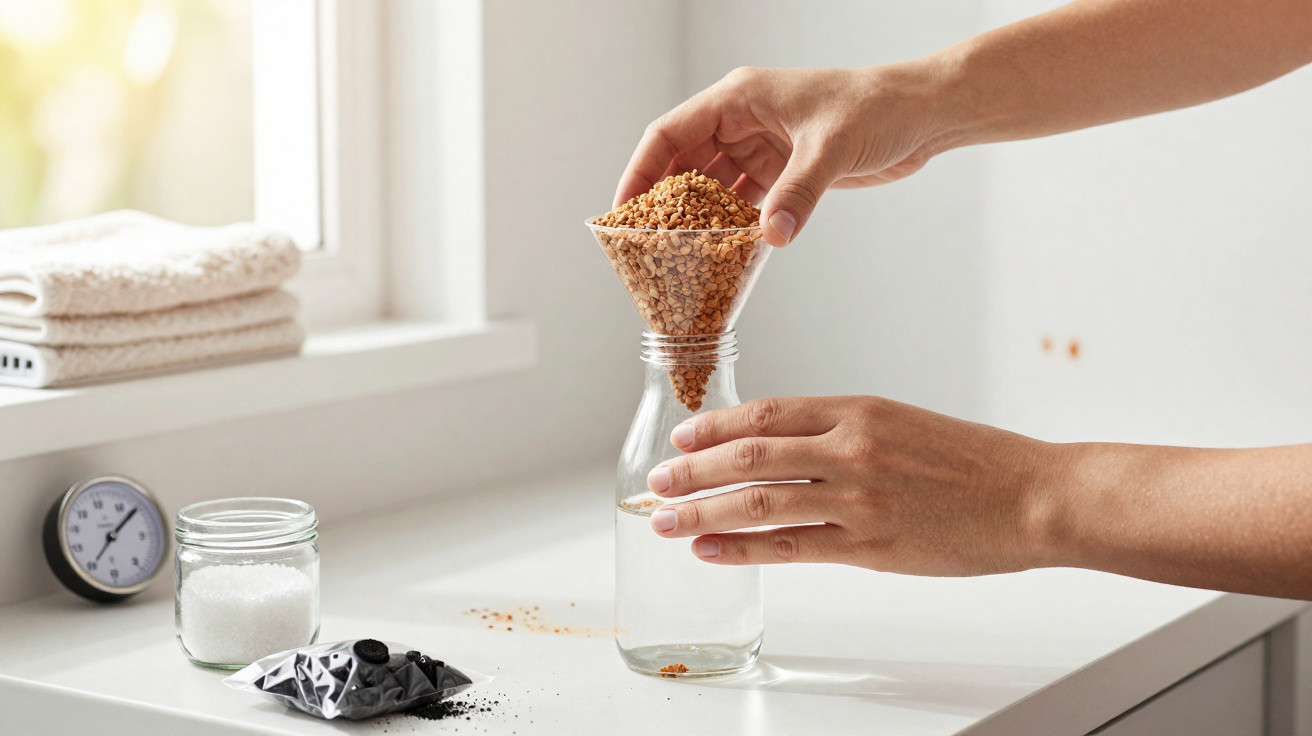
A remarkably low-tech solution then began to make a quiet difference.
As energy costs climb and insulation remains inadequate, increasing numbers of households in the UK and US are using homemade moisture traps. A basic combination of crushed clay and a plastic bottle, spread through social media and DIY forums, is beginning to rival plug-in dehumidifiers in compact homes vulnerable to damp.
The hidden cost of a damp home
Household humidity seldom attracts headlines, but it affects everyday comfort, lasting health and the durability of a property. Excess moisture can enter older homes-from London terraces to Midwestern basements-unnoticed, then linger there.
Routine activities make matters worse. Cooking without pan lids, showering in bathrooms without ventilation, drying clothes indoors and living with poorly insulated walls all add water vapour to the air. When warm, moisture-heavy air meets a cold surface, it condenses and encourages mould to develop.
Above 60% relative humidity indoors, experts link the environment to mould growth, respiratory problems and faster material decay.
A simple hygrometer, often costing about the same as a takeaway coffee, provides a fast indication of conditions. Many housing charities advise maintaining indoor humidity at between 40% and 60%. Yet winter measurements in rented flats are frequently much higher, particularly in rooms used for sleeping or drying laundry.
When damp becomes damage
After moisture has settled, it does not usually remain hidden for long. Dark areas around window frames, greenish staining behind furniture and black bathroom spots can all indicate active mould colonies. These organisms release spores into the air, where they can cause reactions in people who are sensitive to them.
Buildings and furnishings also deteriorate. Timber expands and distorts. Plaster breaks down. Paint bubbles and flakes away. Skirting boards pull away from walls. A barely visible tide mark may eventually lead to a complete redecoration bill, adding strain between tenants and landlords already facing pressure.
Health and everyday comfort in damp homes
Health agencies consistently caution that children, older adults and people with asthma or long-term lung conditions are particularly affected by damp housing. A winter spent inhaling spores and stagnant air can often be followed by ongoing coughs, sore eyes and sinus problems.
There is a practical comfort issue too. Moist air leaves bedding feeling chilly, makes towels slower to dry and gives rooms an “old” smell even after cleaning. To counter this, many households turn up the heating, increasing energy costs without addressing the underlying problem.
Dry air at the right level lets a room feel warmer at a lower thermostat setting, which matters when every degree has a price.
How the crushed clay dehumidifier works
In this setting, an unexpectedly simple device is attracting interest: a DIY dehumidifier made with crushed clay. It has no motor, filter subscription or illuminated display-only a bottle, cloth and granular mineral that absorbs airborne moisture quietly.
At a microscopic level, clay granules work like a sponge. They draw in water vapour and retain it, before allowing it to drip down once they are saturated. In a container designed to catch the liquid, clay forms a passive moisture trap that may operate for weeks with no attention.
- Low barrier to entry: materials available from supermarkets or garden centres.
- Quick assembly: five minutes using scissors and a plastic bottle.
- No energy use: helpful during price rises or in off-grid cabins.
- Modular: multiple small units can be used for wardrobes, bathrooms and window sills.
Materials needed for a homemade unit
The arrangement appears almost excessively simple, but thousands of online testimonials commend its performance in small areas:
- One large plastic bottle, holding at least 1.5 litres.
- A clean cloth or section of an old T-shirt.
- Crushed clay granules, enough to fill about three quarters of the bottle’s upper section.
- Scissors or a cutter for reshaping the bottle.
The clay is commonly sold in pet-litter products or eco-cleaning sections. Certain brands describe it as “granular clay” or “clay pebbles”. Porosity is what matters: greater surface area improves the absorption of moisture.
Step-by-step: turning a bottle into a moisture trap
Making a unit takes around as long as preparing a cup of tea:
- Cut the bottle about two thirds of the way up, creating separate top and bottom pieces.
- Invert the upper section and fit it into the lower section, like a funnel placed in a cup.
- Press the cloth into the bottle neck to form a plug that retains the clay while still allowing water through.
- Add crushed clay granules to the upper section.
- Set the device in an area prone to damp and let it operate.
As moisture is taken up by the clay, droplets appear and gradually gather in the base of the bottle. Once the water level builds up, empty it and replace or refresh the clay if required. There is no sound, lighting or cable to create a trip hazard.
This simple device targets local problems: the wardrobe that smells musty, the cupboard under the sink, the foggy bathroom corner.
How does clay compare with other moisture solutions?
Homes dealing with damp now have several choices, ranging from high-tech equipment to homemade methods. Each approach is better suited to particular circumstances.
| Method | Upfront cost | Energy use | Best for |
|---|---|---|---|
| Electric dehumidifier | Medium to high | Yes | Large rooms, severe damp, quick drying |
| Crushed clay bottle | Low | No | Small spaces, targeted spots, tight budgets |
| Charcoal in bowls | Low | No | Odours and mild humidity |
| Rock salt trays | Very low | No | Seasonal condensation, window sills |
Charcoal and coarse salt as silent helpers
Two other household basics frequently feature in advice for tackling damp: activated charcoal and coarse salt. Each draws moisture from the air, though they work at different rates and produce different effects.
Activated charcoal, generally available for water filters or air purifiers, can be placed in small bowls or fabric bags. It reduces odours while absorbing a degree of humidity, so it is widely used in shoe cupboards and enclosed storage spaces.
Coarse salt-from everyday table brands to larger crystals-strongly attracts water, but dissolves as it does so. Containers of salt beneath leaking windows or inside caravans can often develop a visible pool of water after several days of wet weather.
Used together, clay, charcoal and salt create a network of quiet, passive guardians against damp in vulnerable corners of a home.
A straightforward test for knowing when action is required
Before committing time to homemade devices, some people carry out an informal “ice cube” test. They put ice into a glass, leave it in a room and wait several minutes. If substantial condensation forms outside the glass and begins to run off, the surrounding air contains considerable water vapour.
This informal method is no substitute for an instrument reading, but it can help people identify recurring patterns: a bedroom that remains clammy, a kitchen that steams up after every meal or a window that drips every morning. These areas are strong candidates for clay traps and improved ventilation routines.
What experts still recommend beyond DIY solutions
Homemade dehumidifiers offer residents a measure of control, particularly renters unable to alter walls or fit new ventilation. However, they cannot resolve structural faults. Building surveyors continue to identify leaks, blocked gutters, absent ventilation grilles and cold bridges in poorly insulated walls as the first issues to address.
In many countries, health organisations encourage landlords and tenants to share responsibility: tenants control day-to-day moisture from cooking and showers, while landlords deal with defective extraction fans, single-glazed windows and rising damp. The clay bottle lies between these responsibilities: a low-cost personal response to a broader issue.
For households monitoring every watt, passive methods alter the calculation. Rather than operating an electric appliance throughout the day, several carefully positioned clay units-supported by regular airing and thoughtful laundry drying-can reduce humidity without affecting the meter.
There is an educational benefit as well. Creating a home-made device makes people consider where moisture accumulates, how air moves around their rooms and which habits make the problem worse. This awareness can prompt straightforward but effective changes, including opening windows after showering, leaving a small gap between furniture and external walls, or putting lids on pans.
Looking ahead, urban planners and public health specialists are observing these grassroots measures with interest. Although crushed clay and bowls of salt cannot replace suitable insulation or mechanical ventilation, they demonstrate a wider movement: residents testing ideas, exchanging methods online and declining to accept damp living conditions as an inevitable part of winter life.

Comments
No comments yet. Be the first to comment!
Leave a Comment