
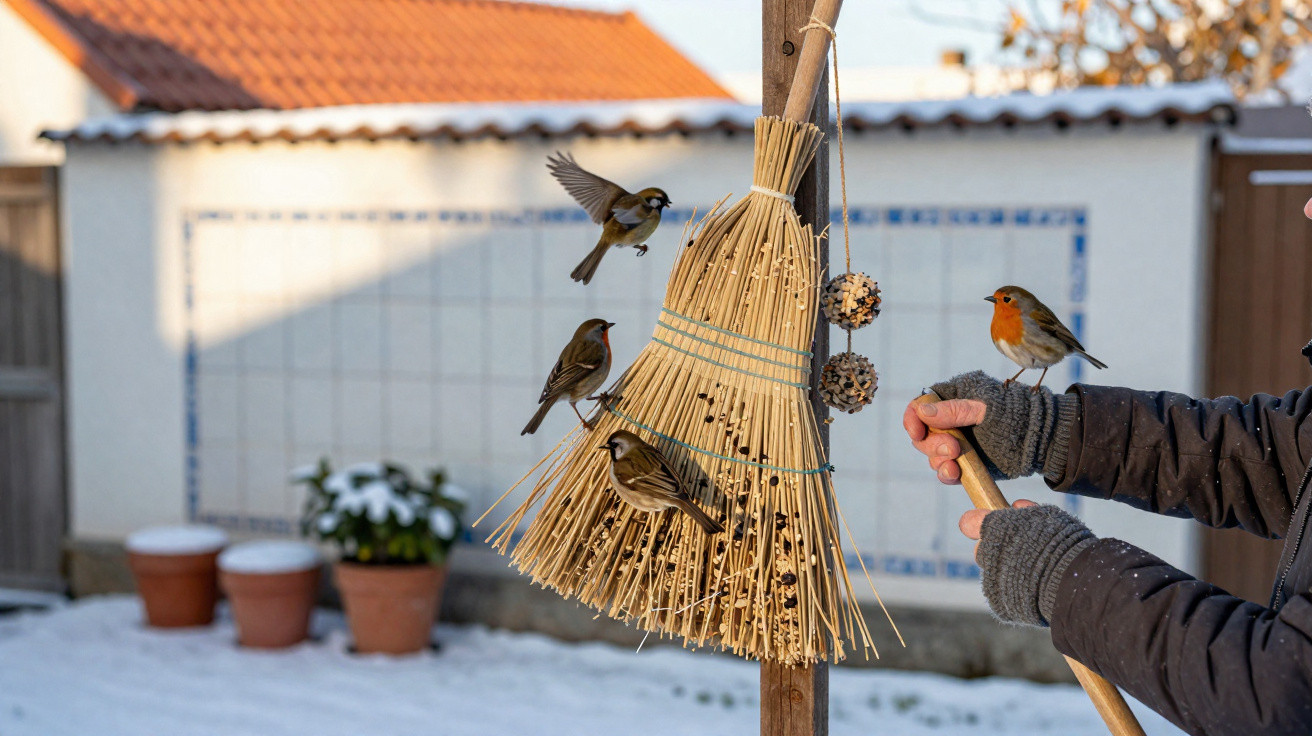
Across Europe and North America, garden birds are increasingly contending with longer, more severe cold periods and diminishing natural habitat. Although many households put out feeders or spread seed, an unexpected item tucked away in the shed could provide more useful support than a plastic accessory: an old, unused broom.
When an old broom becomes a lifeline in cold weather
On a frosty January morning, a broom standing beside a fence or resting near a vegetable patch can quickly become a feeding and landing spot for hungry birds. Tits, robins, finches and sparrows can use its coarse handle and tangled bristles for perching and cover, particularly when snow has buried the hedges and shrubs they usually rely on.
In a cold snap, small birds use up energy reserves at an alarming rate. To maintain a stable body temperature, they need to feed almost continuously. Snow and ice conceal seeds, insects and berries, while high winds remove many of the last available places to shelter.
In winter, a safe, raised feeding point can mean the difference between survival and exhaustion for small garden birds.
A broom can provide far more than somewhere to place food. Its textured, three-dimensional form creates perches, small spaces that protect birds from gusts, and pockets where food can remain above the snow. This combination becomes valuable when the wider landscape is exposed and unforgiving.
How to make an old broom into a winter bird station
A simple technique is quietly gaining popularity among wildlife gardeners: rather than throwing the broom away, use it as a hanging or upright support. No specialist tools, expertise or costly additions are required.
Step 1: select and position the broom
- Choose a broom whose firm natural or plastic bristles are still largely intact.
- Stand it upright in a weighty pot, press it into the ground, or secure it within a hedge.
- Keep it away from busy routes to limit disturbance, while placing it within view of a window if you would like to observe the birds.
- Ideally, site it close to a bush or tree, allowing birds to retreat rapidly if predators appear.
Another option is to suspend the broom horizontally from a branch, fastening both ends of the handle with wire or string. This makes a long, bristly strip for birds to perch on, while the downward-pointing bristles form a thatched cover into which food can be placed.
Step 2: add suitable winter foods
The handle and bristles work rather like a natural “pegboard” for homemade food. You may fasten on:
- Fat balls, suet blocks or homemade mixtures of lard and seed.
- Fine slices of apple, pear halves or bunches of unsweetened dried grapes.
- Sunflower seeds, oat flakes and unsalted crushed peanuts, placed in mesh or pushed between the bristles.
Avoid anything salty, spicy or processed. Bread has limited nutritional value and expands in birds’ stomachs, so offer only very small quantities, or leave it out altogether.
A broom keeps food above the ground, away from damp soil and many rodents, while remaining easy for small birds to grip and peck.
Step 3: consider safety and hygiene
The broom itself is helpful, but the conditions around it are equally important. Aim to:
- Set the broom at least 1.5 metres above ground level to discourage cats.
- Provide escape routes through nearby branches, thick shrubs or a hedge.
- Clean or replace fat balls every week or two to prevent mould.
- Regularly remove droppings and wet food from the bristles.
Brief, frequent feeding visits are less risky than prolonged, anxious pauses on a slippery, exposed feeder. A broom’s numerous small perches encourage exactly this quick-stop behaviour.
Why an old broom can outperform many elaborate feeders
Beside a shop-bought feeder, a broom may initially look unsophisticated. Yet many attractive tubes and platforms have similar drawbacks: they are smooth, exposed and frequently positioned too near windows or open lawns. Birds may have to cling awkwardly or feed in clear sight of predators.
The thick brush of a broom, in contrast, functions as a miniature shrub. It disrupts the wind, traps small pockets of marginally warmer air and lets birds move further into the bristles as gusts strengthen.
| Feature | Typical plastic feeder | Old broom station |
|---|---|---|
| Perches | Few, fixed bars | Dozens of flexible bristles and handle grips |
| Shelter from wind | Mostly exposed | Dense bristles create windbreak |
| Predator cover | Open sightlines | Birds can hide among fibres and near nearby shrubs |
| Cost and materials | New plastic, metal parts | Repurposed item, no new resources |
Its uneven outline can also make ambushes more difficult for cats and hawks. Rather than remaining on a conspicuous perch, birds can disappear into the tangle or make a rapid dash towards nearby cover.
Back-garden stories: when birds discover the broom
Wildlife forums and community gardens, from France to the UK, have begun reporting much the same winter experience. A person props up an old yard broom “just for a try”, threads several suet balls through the bristles and waits. A blue tit often appears within days, followed by a robin and then a small gathering of sparrows.
What begins as a recycling trick often turns into a daily ritual: refilling the broom, checking who visits, and comparing notes with neighbours.
The idea is especially appealing to children. Replenishing the broom is an easy job they can do independently: pressing sunflower seeds into the fibres, suspending half an apple and observing which species chooses each food. Retired gardeners often begin noting down their visitors, creating informal records of winter biodiversity in the local area.
These encounters become more than simple birdwatching. They draw people back into the colder part of the year, when many would otherwise remain indoors. The broom becomes a modest living weather indicator: busy on icy mornings and calmer during short thaws, when insects return.
From broom to wider winter support: reusing what is already available
The broom idea raises a broader possibility: how many neglected tools could also serve as wildlife supports? A quick look through most sheds reveals various objects that, with small alterations, could assist birds, insects and small mammals.
- Old rakes can be used as upright frames for ivy or honeysuckle, creating future nesting cover.
- Damaged shovel handles can support small bird boxes or seed trays above the snow line.
- Metal buckets, laid on their sides and partly filled with dry leaves, can provide shelter for hedgehogs or insects.
This type of reuse reduces waste and lessens the need to purchase new plastic accessories each season. It can also make garden care feel less like a shopping task and more like a creative undertaking.
What birds gain – and what gardens receive in return
Providing food and shelter during severe weather does more than relieve hardship for individual birds. Once spring arrives, many small species are highly effective pest controllers. Tits remove caterpillars, robins search for beetle larvae and finches eat weed seeds in their thousands.
Helping birds through the leaner months increases the chance that they will breed successfully nearby. In turn, this can limit the need for pesticides, particularly in vegetable patches and orchards where fruit buds need protection from insect damage.
A broom loaded with winter food can translate into fewer aphids, fewer caterpillars and healthier plants a few months later.
This kind of “service” can easily be overlooked because it develops slowly. However, long-term studies across Europe and North America demonstrate clear connections between greater bird diversity and reduced pest damage in gardens, orchards and even urban parks.
Going further: small changes that improve survival chances
After setting up a broom station, a few additional measures can make an outdoor area much more welcoming to birds without requiring substantial effort. Leaving one part of the garden untidy, with fallen leaves, old stems and seed heads, offers winter feeding and roosting opportunities. A shallow dish of unfrozen water provides somewhere for birds to drink and care for their feathers, which give better insulation when they are clean.
For a rough sense of the difference this can make, consider that one blue tit may need to consume up to a third of its body weight in food during a freezing day. Multiply this by a small flock using the broom over a week, and the additional calories become significant rather than merely symbolic.
There are, however, limits to remember. Supplementary food should not entirely replace natural foraging, and it must remain fresh enough to prevent disease outbreaks. Moving brooms and feeders between locations, cleaning them often and offering a varied diet can all help. During harsh winters, modest actions repeated across many gardens and balconies can become a real safety net for local bird populations.



Comments
No comments yet. Be the first to comment!
Leave a Comment