
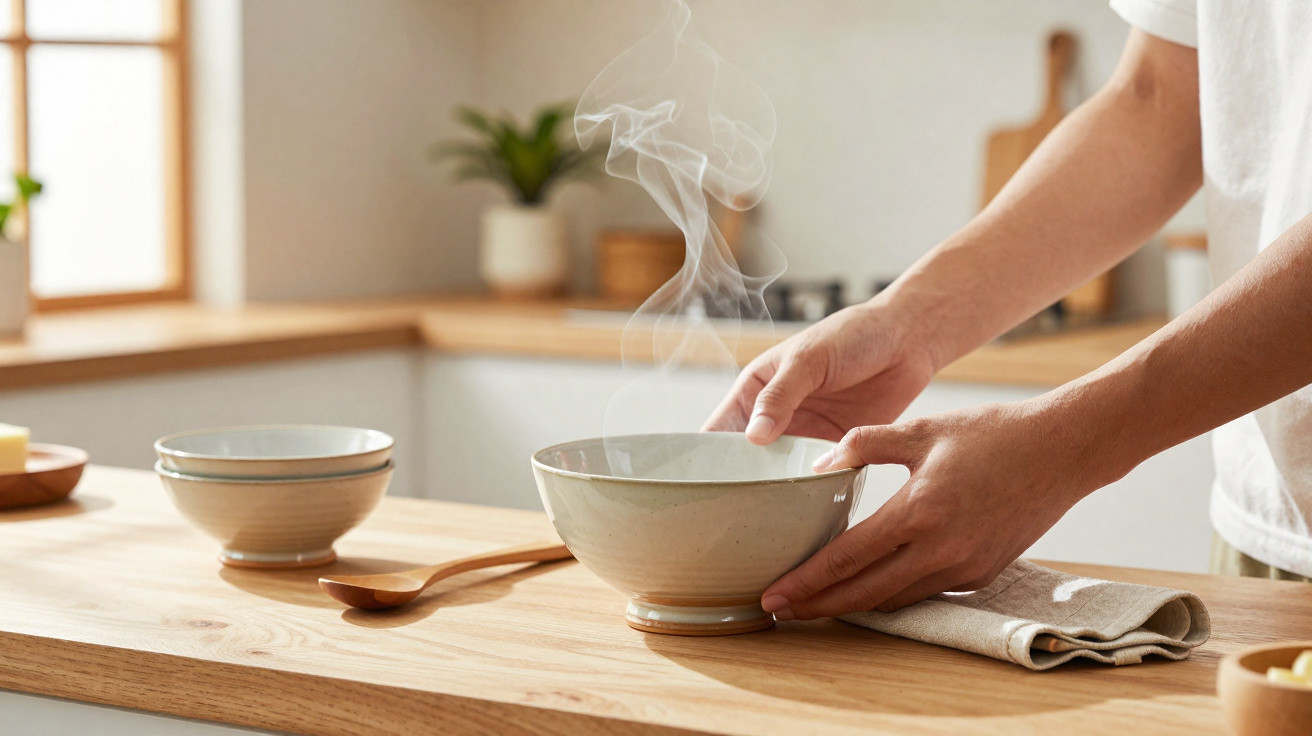
Many people use ceramic bowls every day without noticing the details built into their shape. That raised ring on the underside has essential technical purposes: it provides greater stability in use and helps prevent unpleasant accidents involving hot food at the table.
What is the real purpose of the ring on the bottom of bowls?
Technically called a foot ring or support ring, this circular ridge is primarily designed to provide a level, dependable base. During kiln firing, ceramic pieces undergo natural distortion, so the stability of their base is a crucial aspect of the finished product.
Without this raised rim, the centre of the bowl could sit directly on the table, allowing the crockery to wobble or slide easily. This straightforward piece of engineering compensates for ceramic imperfections, delivering excellent balance and helping to prevent unwanted falls in the kitchen.
What is the hole in the middle of a spaghetti spoon for?
This central opening helps drain water from pasta, but its main purpose is to accurately measure a… Read more
How does this raised section improve handling and safety?
As well as keeping the bowl supported on worktops, the lower circle provides an excellent place to rest your fingers. When serving very hot soups or broths, holding crockery by its sides can cause burns, making a grip from underneath much safer.
This recessed area lets your fingers fit naturally into place, creating an ergonomic hold that makes a full bowl easier to carry. You can therefore move the container around the home without spilling its contents, combining practicality and comfort throughout the meal.
Below, a video from the Mount Penn Art YouTube channel demonstrates the detailed shaping of this ceramic ring:
Why does this shape affect thermal insulation?
The gap formed by the ring also acts as a protective air chamber between the crockery and the furniture. This small separation reduces direct heat transfer, preventing very hot dishes from damaging the finish of your wooden table or causing permanent marks.
At the same time, this physical barrier helps keep food warm inside the container for longer. With less contact surface transferring energy to the table, the meal remains at the ideal eating temperature in a completely natural way.
Benefits of the raised base
Structural functions: The lower ring brings together advantages that improve the dining experience:
- 1: Better balance on smooth surfaces;
- 2: An ergonomic grip for safe carrying;
- 3: Thermal protection for sensitive surfaces.
What care keeps ceramic crockery in good condition?
Because the lower ring is usually left unglazed so that it does not stick to the kiln during firing, it has a rougher texture. For this reason, dragging bowls across glass tables or varnished wooden surfaces can leave scratches, so care is needed during daily use.
To maintain the appearance of your utensils while protecting furniture, simple care practices make all the difference. Storing items with soft separators prevents unwanted friction, keeping their finish immaculate and extending the useful life of the crockery.
To make your containers last longer and prevent premature wear, consider the following:
- Use placemats to prevent direct friction against furniture;
- Avoid stacking heavy bowls without protection between them;
- Dry the base thoroughly after washing to prevent moisture from building up.
How can small details transform everyday kitchen routines?
Looking closely at the construction features of utensils shows how functional design improves ordinary tasks. Subtle elements are developed to solve practical stability and safety challenges, making the dining experience much more pleasant and efficient on any occasion.
Understanding the purpose behind each shape helps us appreciate the work involved in every handmade or industrially produced item. Recognising these small details enriches everyday life, offering a fresh perspective on the objects we use so frequently.




Comments
No comments yet. Be the first to comment!
Leave a Comment