
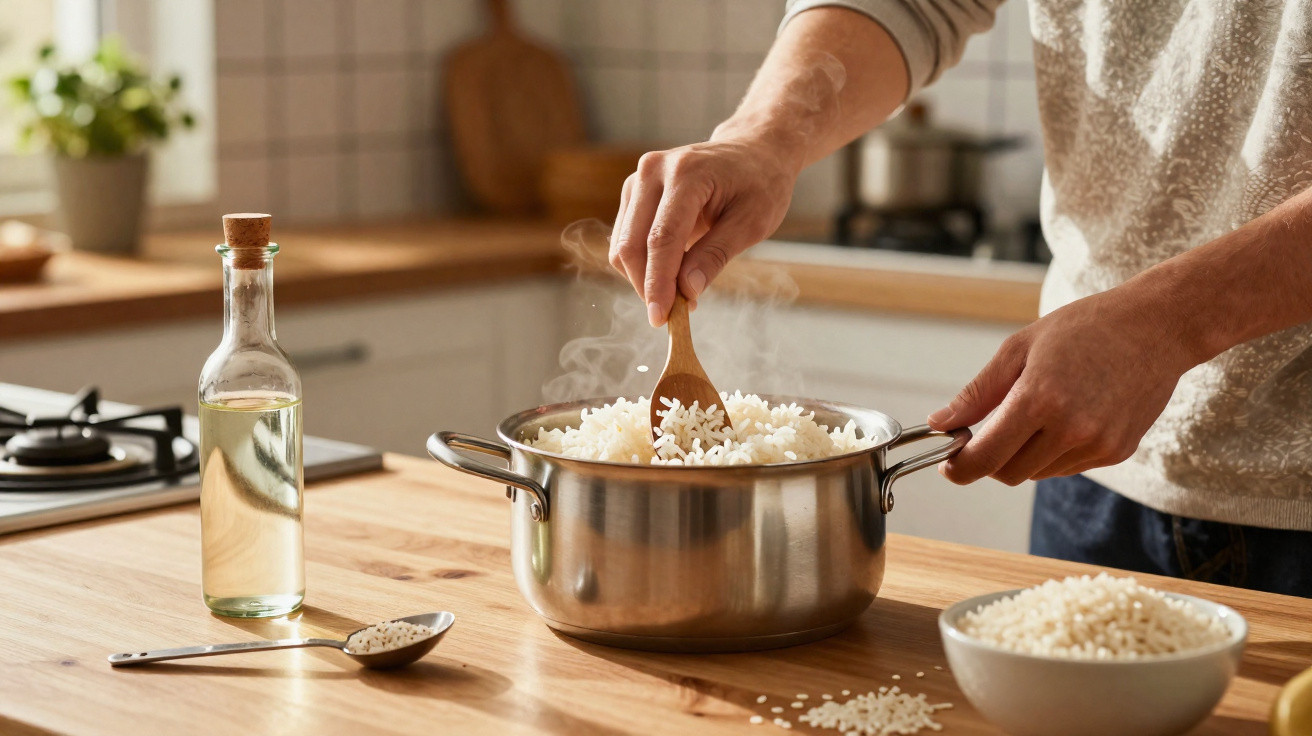
Using vinegar in home cooking is often regarded as one of those traditional tips handed down through generations. Adding it to the rice water while it cooks directly affects the texture, helping to produce fluffy rice that is lighter and more even on the plate.
This minor change to the method affects more than flavour: it also changes how the grains respond to heat. Vinegar’s mild acidity modifies the behaviour of starch, which can make the finished result easier to manage and more consistent in everyday cooking.
Why does vinegar change the result of rice?
During cooking, vinegar acts directly on the structure of the starch found in the grains. Used in a small amount, it limits the excessive release of starch into the rice water, preventing the grains from sticking together.
In practical terms, this means less of a compact mass and greater separation between the grains. This effect is particularly useful for straightforward everyday meals, where texture makes a noticeable difference to the dish served at the table.
Does vinegar really make fluffy rice?
The effect on fluffy rice is connected to the way vinegar influences cooking and the surface of the grains. It helps regulate the release of starch, reducing the formation of sticky clumps.
Although the adjustment is subtle, it can be noticed when the rice is cooked properly. The difference is most evident in simpler recipes, in which having few ingredients calls for greater precision in the method.
A few points help explain how this works in practice:
- Using small amounts of vinegar prevents excessive acidity;
- Adjusting the rice water directly affects the final texture;
- Controlling the cooking process produces more distinct grains;
- The type of rice also affects the outcome.
What is the role of rice water in cooking?
Rice water is the medium in which the grains undergo their full transformation during cooking. It carries the released starch and determines much of the final texture, particularly when combined with ingredients such as vinegar.
When properly balanced, this water helps keep the cooking process under control and prevents excesses that make rice soggy. The balance between quantity and time determines the final consistency.
- The correct proportion of water directly influences the outcome;
- Replacing part of the water can reduce excess starch;
- Using vinegar helps to stabilise the liquid during cooking;
- The type of pan also affects evaporation.
How can cooking be adjusted to improve texture?
Managing the cooking process is central to achieving good fluffy rice. Small changes in time and temperature completely alter how the grains behave in the pan.
When the process is monitored carefully, vinegar and rice water work even more effectively. Combining the right method with accurate measurements prevents waste and improves the final result.
Small adjustments that transform rice preparation
The balance between vinegar, rice water and cooking shows how simple details can alter the texture of the dish. Keeping starch behaviour under control reduces common problems, such as grains that are too soggy or too dry.
In everyday home cooking, paying attention to these points helps create a more reliable method. Fluffy rice stops being a matter of luck and becomes the result of technique, care and small decisions made at the right time.




Comments
No comments yet. Be the first to comment!
Leave a Comment