
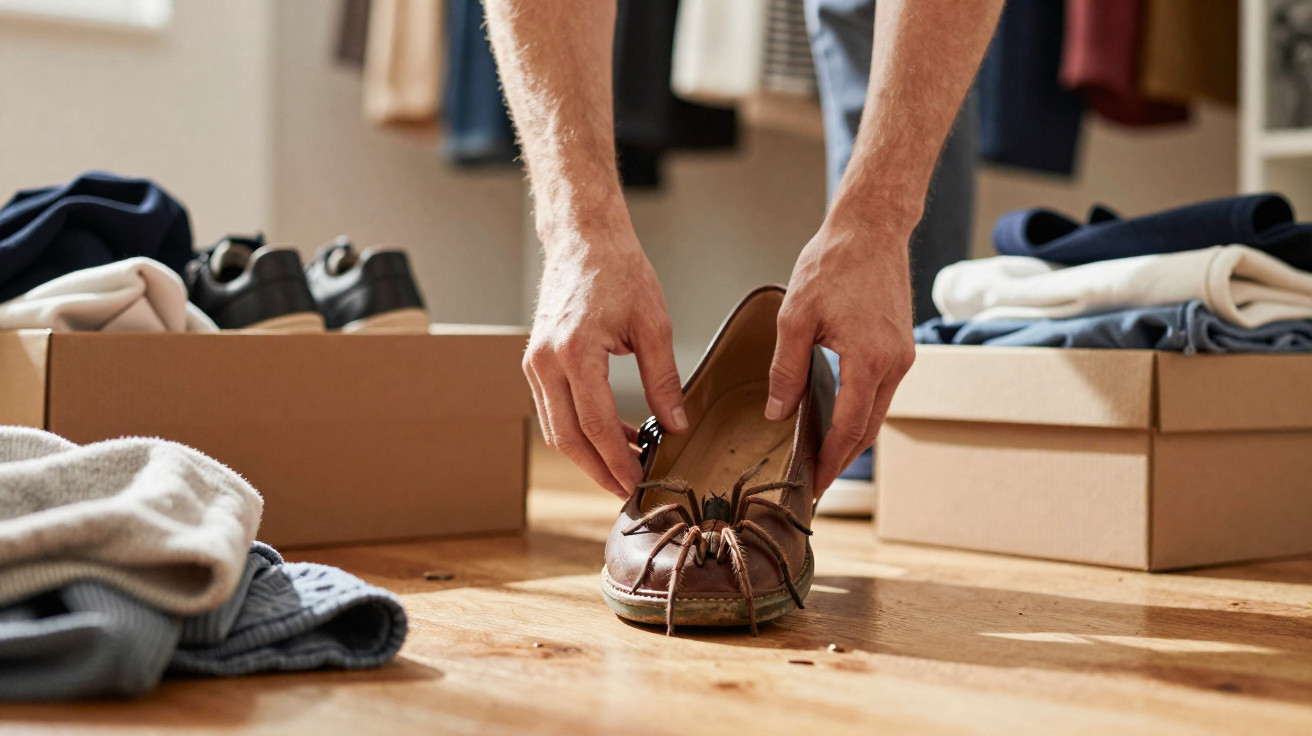
A shoe left in a corner for days, a box forgotten in a cupboard or an item of clothing put away can conceal a visitor that is hard to spot. The brown recluse spider, from the genus Loxosceles, has unobtrusive habits and tends to stay in sheltered places, helping to explain why so many encounters occur unexpectedly indoors.
Where does the brown recluse spider usually hide?
Small and inconspicuous, the brown recluse spider seeks out areas where it can remain protected and undisturbed. Furniture, clothing, shoes and even bed sheets are among the places in which it may hide. According to the Butantan Institute, Loxosceles spiders generally bite when they are pressed against the body.
This means the main concern is not always seeing a spider moving around the home. The danger can arise when someone puts on clothing, slips on a shoe or moves an object without realising the animal is sheltering there. For that reason, dark places that are rarely disturbed require particular care.
Why do clothes and shoes require attention?
A garment left on the floor, a towel stored away for a long period or footwear that is seldom worn can all provide sheltered spaces where a spider remains unnoticed. An accident may occur when fabric or a shoe presses the animal against the skin, causing it to react defensively.
Before wearing clothes that have been stored or putting on shoes that have been unused for some time, it is worth shaking them out and checking them carefully. This straightforward precaution takes only a few seconds, especially in places where objects have accumulated. The aim is not to cause alarm, but to prevent accidental contact with a concealed animal.
Boxes and stored objects can become hiding places
Cardboard boxes, stored materials and objects left untouched for lengthy periods create small protected areas inside the home. When sorting cupboards, storage spaces or rarely used corners, it is sensible to look first rather than putting your hands directly into spaces that have remained closed or forgotten.
- Shake out clothes and towels that have been stored for a long time before using them.
- Check inside shoes before putting them on.
- Inspect boxes and stored objects before moving them with your hands.
- Avoid piling up unused materials in dark, seldom-used corners.
Keeping these areas tidy also makes changes easier to notice and reduces the number of potential hiding places. Materials left piled up for months may go unnoticed in daily life, whereas regular cleaning makes it possible to move and inspect objects more often and with greater care.
Watch the video shared by the YouTube channel Jax Biologist, which shows details about brown recluse spiders and the precautions to take around them.
How can you reduce the risk indoors?
The Butantan Institute recommends preventive measures focused on keeping living spaces organised, including avoiding an accumulation of materials that could provide shelter for spiders. The institute itself classifies spiders of the genus Loxosceles as being of medical importance, as their venom can have significant consequences for human health.
It is also important not to attempt to handle an unidentified spider with your bare hands. If a bite is suspected and symptoms develop, the guidance is to seek medical attention. Health professionals are best placed to assess the incident, not least because accurate identification of venomous species should not rely solely on what a resident believes they have seen.
Paying attention to hiding places prevents dangerous encounters
The presence of a brown recluse spider can go unnoticed precisely because it does not need to move visibly around the home. An encounter may happen when someone reaches for a box, puts on clothing or places a foot into a shoe where the animal has been sheltered for some time.
Make checking items a routine, particularly for things that are rarely used or stored in dark places. Before wearing, putting on or moving something, check it first. A few seconds of attention can prevent accidental contact and reveal a silent hiding place before it becomes a problem.



Comments
No comments yet. Be the first to comment!
Leave a Comment