
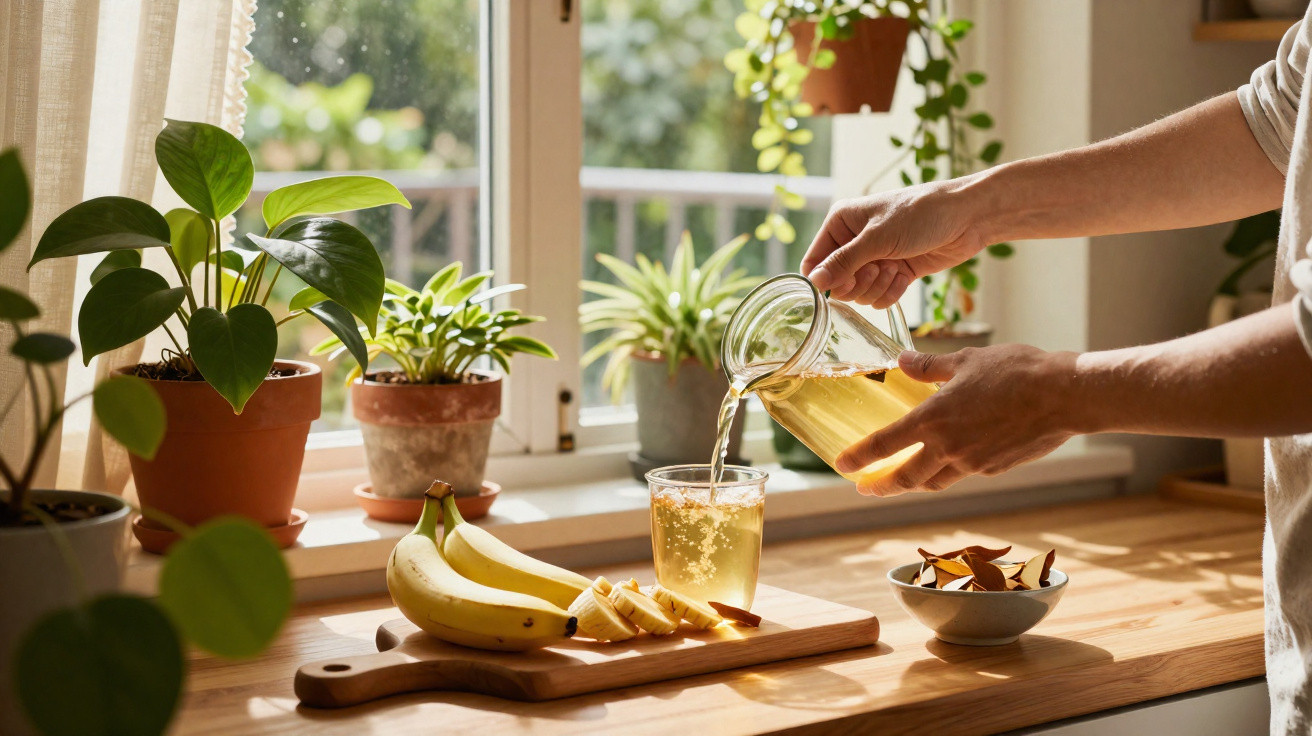
The first sign that something was amiss with my plants was not the yellow leaves. It was the quiet. My small indoor jungle, normally full of upright stems and fresh buds, suddenly seemed... exhausted. I thought I was doing “everything right”: premium fertiliser sticks, costly potting compost, filtered water and even a grow light set with minute-by-minute precision.
On the worktop, a small dish of kitchen waste was waiting to go into the compost caddy. There were eggshells, coffee grounds, a few onion skins... and a heap of limp, slimy banana peels.
Then it clicked. The item I had been dismissing as rubbish was exactly what my plants had been quietly asking for.
And they had been missing it for quite some time.
The kitchen scrap your plants crave but you keep throwing away
Step into the kitchen of almost any plant enthusiast and you will find familiar essentials: a watering can by the sink, a spray bottle and perhaps a jar holding propagation cuttings in water. Alongside all that care, there is usually a bowl of leftovers on its way to the bin. One discarded item appears in it nearly every day: the soft yellow skin of a banana.
Most of us throw it away without thinking twice. It is sticky, begins to smell when left out for too long and hardly seems connected with “plant care”. However, banana peel offers something many houseplants are quietly short of: a mild, gradual supply of potassium that they can use.
Imagine watering your monstera like the attentive plant parent you are, turning the pot and dusting its leaves. A month later, its new leaves emerge smaller. Their edges become brown and crisp, although the compost is damp and the light levels are suitable. You put it down to central heating, winter or a hectic routine.
At the same time, your fruit bowl is being emptied a few metres away. You eat bananas at breakfast, blend one into a smoothie and pack one in your child’s lunchbox. Every peel heads straight for the rubbish, or perhaps the compost, rather than reaching the plants that could benefit from what it contains.
Potassium is an understated powerhouse nutrient, supporting sturdy stems, flower production and general resilience. Shop-bought fertilisers contain it too, but it can be washed away quickly each time you water. As banana peels decompose, they gradually provide potassium, a small amount of phosphorus and trace elements.
If we repeatedly use high-nitrogen feeds while overlooking mild potassium sources, we can produce abundant but soft foliage on plants that are weak and under strain. They may look striking temporarily, then their growth slows. That pause is often not simply “bad luck”, but the result of one straightforward nutrient being absent from their diet for too long.
How to make banana peels into gentle plant food
The simplest way to use banana peels is not the elaborate Pinterest approach. It is the easy one. Once you have eaten a banana, use kitchen scissors to cut the peel into short strips. Leave the pieces on a plate for one or two days, until they feel leathery, then chop them more finely or whizz them in an inexpensive blender.
You will be left with coarse, slightly fibrous flakes. Scatter a small pinch over the compost surface around your plants, then lightly work it into the top centimetre of compost using a fork or chopstick. Water normally. There is no magic involved, no complicated chart of ratios-just a modest habit that gradually addresses a nutritional shortfall.
Some people steep peels in water for 24–48 hours to create what they call “banana tea” for plants. It may be effective, but it can quickly become unpleasantly smelly, draw fruit flies and irritate anyone else using the kitchen. We have all experienced that moment of opening a jar and immediately regretting our life choices.
Drying and crumbling the peels makes the smell almost unnoticeable while also slowing their breakdown. It gives you more control over the dose as well: a light pinch every few weeks is far preferable to pushing half a peel into one pot and simply hoping it works out.
There is one important warning. Whole, fresh peels pushed directly into a pot can go mouldy, attract gnats or rot before they decompose properly, particularly indoors. This is where many well-intentioned plant owners go wrong. Honestly, no one manages this every single day.
Using banana peels for your plants isn’t about becoming a zero-waste superhero; it’s about turning an almost automatic gesture - throwing them away - into a slow, steady gift of nutrients your soil has been missing.
- Dry before crumbling – This reduces odour and pests, while making the nutrients simpler to distribute.
- Use small amounts regularly – Light applications every few weeks are better than one large, untidy dose.
- Observe the leaves – More robust stems, richer colour and more consistent growth are your plants’ subtle green “thank you”.
When plants respond to the banana peels you save
Once you begin deliberately keeping banana peels, your perspective changes. Kitchen scraps stop being merely “waste” and become part of a continuing exchange with your plants. After breakfast, you look at the peel in your hand and, rather than walking to the bin, reach for the scissors. It is a very small, almost absurd gesture. Over the following weeks, though, your plants begin to respond.
Fresh leaves unfurl slightly larger. Flowering plants keep their blooms for longer. Those annoying brown edges ease and stop spreading. You realise that the difference came not from purchasing something new, but from noticing something you already had.
| Key point | Detail | Value for the reader |
|---|---|---|
| Banana peels contain plenty of potassium | As they break down in compost, they release mild nutrients gradually | Supports growth, stems and flowering without harsh fertilisers |
| Straightforward preparation is most effective | Dry and crumble the peel, then add a pinch to the compost every few weeks | A simple routine that works with everyday life |
| Steer clear of common mistakes | Do not bury whole fresh peels, as they may mould and attract pests | Keeps indoor plants protected while repurposing kitchen scraps |
FAQ:
- Question 1 Can I simply bury an entire banana peel in my plant pot?
- Question 2 How frequently should I use banana peel on my houseplants?
- Question 3 Can this fully take the place of standard fertiliser?
- Question 4 Might banana peels attract insects or leave my home smelling unpleasant?
- Question 5 Are banana peels suitable for every plant type, including succulents?



Comments
No comments yet. Be the first to comment!
Leave a Comment