
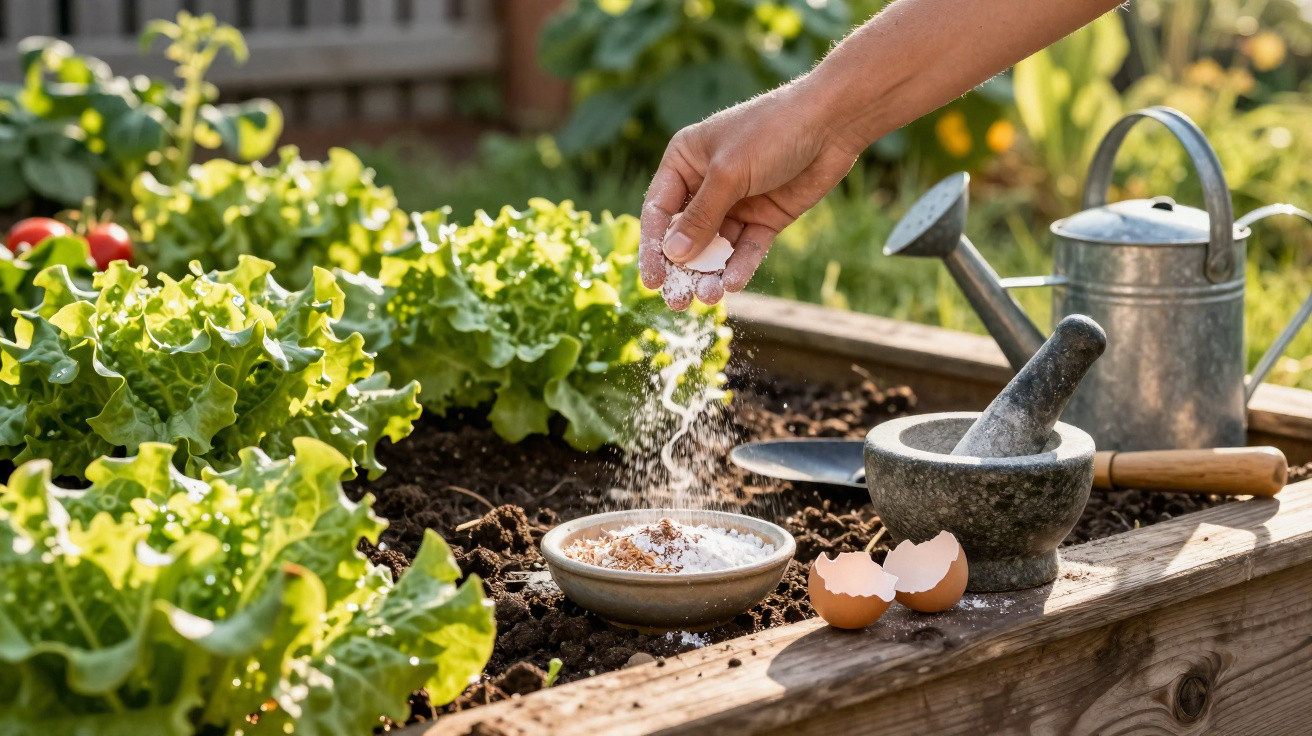
Creating an attractive green space does not mean spending heavily on industrial fertilisers: straightforward homemade solutions can greatly improve plant health. Making smart use of household waste provides valuable minerals that enrich the substrate and revive entire beds in an economical, sustainable way.
Why do eggshells improve soil?
Finely ground eggshell is an excellent source of calcium carbonate, an element needed to address common issues in soil. In areas where soil acidity prevents plants from receiving adequate nourishment, this organic material helps rebalance conditions and supports root development.
Once roots are growing in balanced soil, they can take up other essential nutrients far more effectively. The gradual supply of natural calcium reinforces plant cell structure, resulting in vigorous new growth and leaves that remain much more resistant over the months.
Why do eggshells transform the garden?
This household trick strengthens leaves and soil, but there is a secret in the preparation that… Read more
How should you prepare the fine powder correctly?
For the best results, wash the shells thoroughly under running water to remove every trace of organic residue. After this initial cleaning, allow all the material to dry completely in the sun, making the following grinding stage easier in a household blender.
Blending the dry shells until they become a very fine powder significantly speeds up the natural decomposition process. Smaller particles make direct contact with the soil, allowing micro-organisms to break down the material and release essential nutrients within a few weeks.
Below is a video from the Spagnhol Plantas YouTube channel that explores the points discussed in this subject in greater depth:
What care is essential when fertilising?
Despite being an excellent soil conditioner, this mineral powder must never be treated as a complete fertiliser. Eggshells provide particular minerals, yet plants still require organic matter rich in nitrogen and potassium to sustain balanced, consistent growth.
Excessive alkalinity can harm species that favour acidic soil, including azaleas and ferns. Use moderate amounts for this reason, always monitor how your pots respond, and combine the homemade powder with organic compost to maintain the soil’s biological balance.
Essential Fertilisation Kit
Materials needed
Gather these simple items before beginning the homemade preparation:
- Clean eggshells that are thoroughly dry;
- A powerful blender or food processor;
- A lidded container for dry storage.
What is the correct dosage to apply?
The recommended quantity depends on the size of the container or the area of the cultivated beds. Smaller pots need only one teaspoon, while medium and large containers can take larger portions to ensure nutrition without overloading the soil.
Never leave the powder loose on the surface, as watering and gusts of wind can easily scatter it. Work the fertiliser gently into the top layer of substrate using a small trowel, encouraging the biological activity of beneficial bacteria in the garden.
Follow these practical recommendations when distributing the fine powder among your plants:
- Add one level teaspoon to small pots every three months;
- Mix two teaspoons into the soil of medium-sized containers and beds;
- Water the soil immediately after applying it to activate the minerals.
How do eggshells deter slugs and pests?
As well as improving the mineral composition, lightly crushed pieces of eggshell create an effective physical barrier against crawling intruders. Unwanted molluscs avoid moving across sharp surfaces, protecting tender foliage and new shoots from the continuing attack of these pests.
Spreading a layer around the stem forms efficient protection for beds without the use of harsh chemical pesticides. This uncomplicated method supports ecological cultivation, promotes the health of the garden, and ensures much more healthy harvests day to day.





Comments
No comments yet. Be the first to comment!
Leave a Comment