
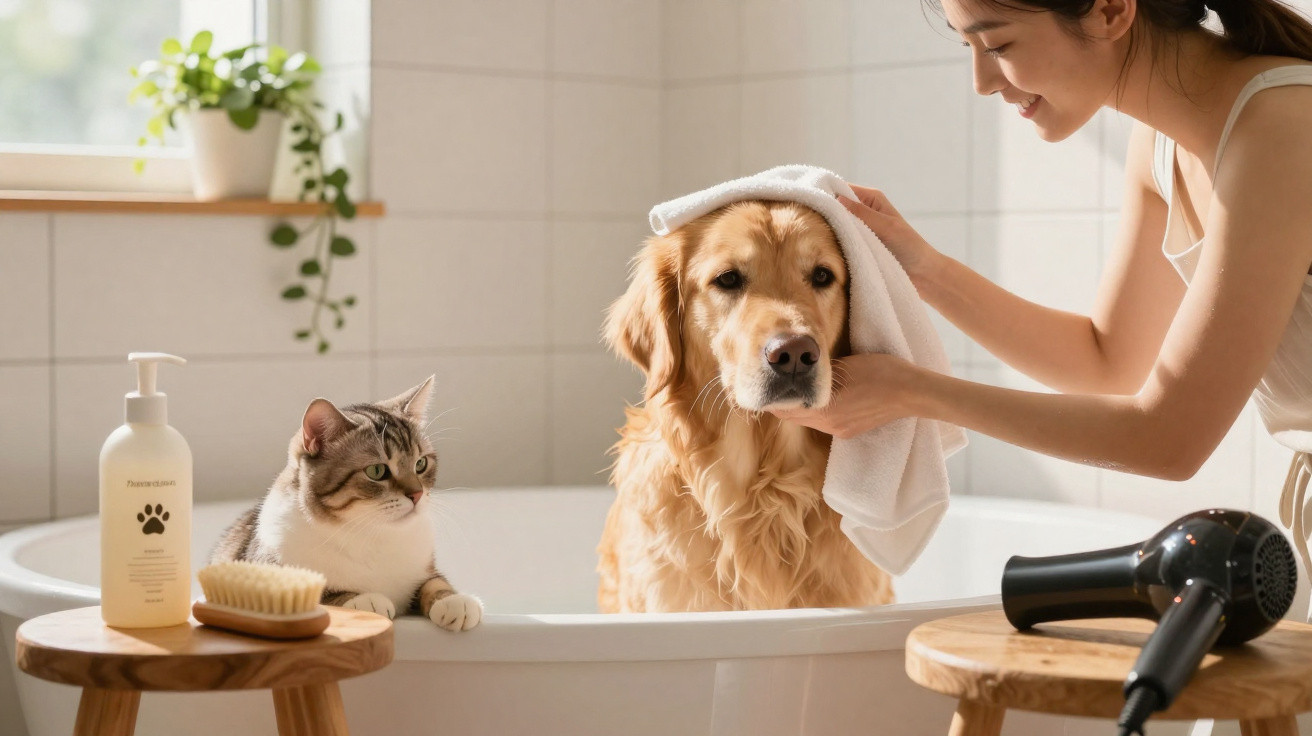
Bathing your pet may look straightforward, yet minor oversights can lead to irritation, allergies and even skin diseases. Understanding the most common mistakes can help keep dogs and cats healthy for much longer.
Which drying mistake can harm your pet’s skin?
One of the most common errors after bathing your pet is allowing the coat to stay damp for too long. Moisture provides the ideal setting for fungi, bacteria and inflammation, particularly in animals with thick coats.
Once the bath is finished, use a clean towel to remove excess water and, if needed, complete the process with a hairdryer on a warm setting. Make sure drying reaches areas such as the armpits, tummy, neck and between the toes.
Does choosing the right shampoo really matter?
Not every shampoo is suitable for every animal. Unsuitable products can disrupt the skin’s pH, strip away its natural protective layer and cause itching, redness and flaking.
Before buying any product, consider your animal’s individual characteristics. To prevent problems, pay attention to the following factors:
- Use shampoos made specifically for pets only.
- Choose products suitable for the animal’s age.
- If allergies are present, follow the veterinary surgeon’s advice.
- Avoid strongly fragranced products and products intended for people.
How often should you bathe your pet?
Bathing too often can also pose a risk. Excessive washing removes the skin’s natural protective barrier, making dryness and sensitivity more likely.
The appropriate interval depends on breed, coat type, lifestyle and veterinary guidance. In many cases, monthly or fortnightly baths are enough to maintain hygiene without affecting skin health.
Which signs point to skin problems?
After a bath, it is important to watch for changes in either behaviour or the appearance of the skin. Irritation or a reaction to the products used may cause symptoms within a few days.
Intense itching, excessive hair loss, a lingering odour, redness, small sores and flaking are warning signs. If any of these symptoms develop, veterinary care should be sought promptly.
How can bath time become a safe experience?
Using the right products is important, but a few simple measures can greatly lower the risk of dermatological problems. Water that is too hot, incomplete rinsing and too much fragrance should all be avoided.
Following a suitable hygiene routine that respects each animal’s needs helps protect the skin’s natural barrier and provides greater comfort for your pet. By paying attention to the details, bath time stops being a risk and instead supports a healthier life. Watch tips on how to bathe your pet in the video published by the Petz channel:
Simple care prevents expense and discomfort
Many dermatological issues could be prevented by making straightforward changes to the routine. Drying properly, selecting suitable products and allowing enough time between baths can make a significant difference.
Whenever there are concerns or changes to the skin, seeking professional guidance is always the safest option. Prevention is usually easier, more affordable and more effective than treating established diseases.





Comments
No comments yet. Be the first to comment!
Leave a Comment