
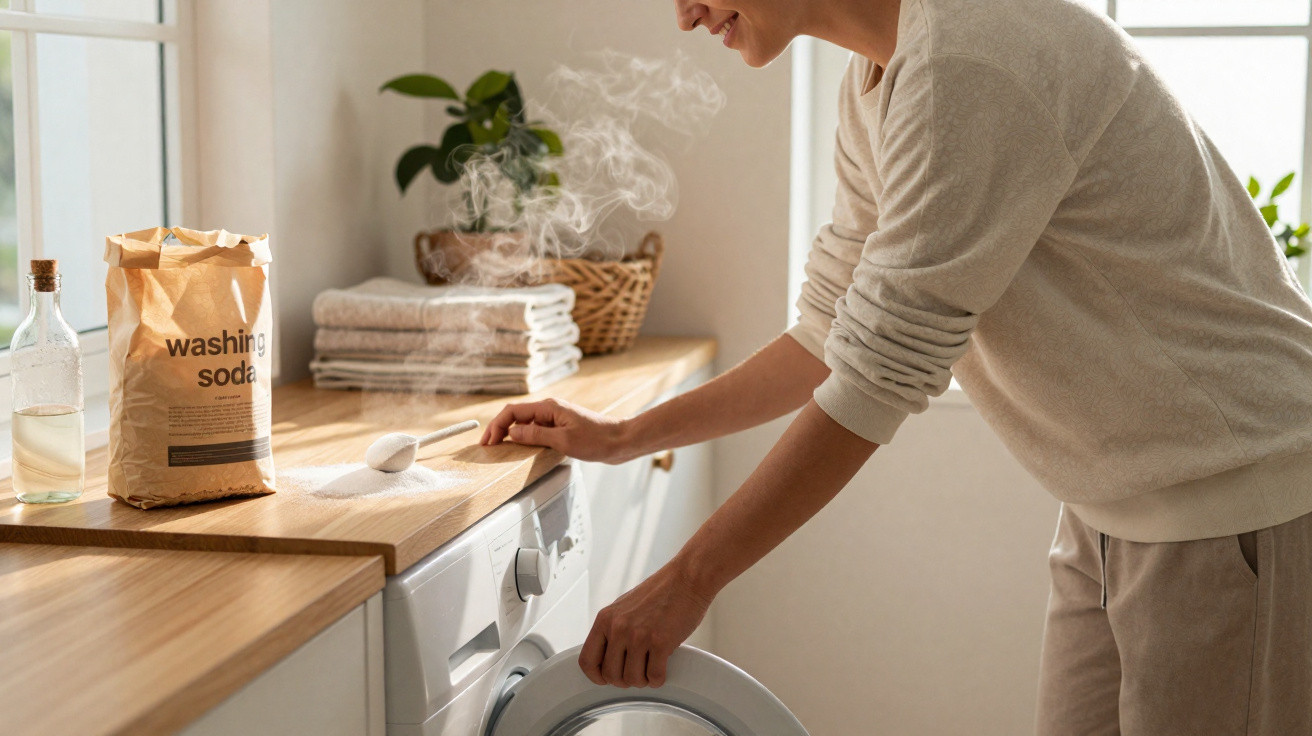
My washing machine had begun to smell like a changing room on a rainy Wednesday: a sour, stale odour that made me question whether properly clean clothes were still achievable.
At first, I blamed the dog, then the teenagers, then the socks that appear to breed when nobody is watching. Yet the real offender was more discreet: a grey, tacky layer of soap residue lodged in unseen spots - the drawer, seal and drum - steadily dulling every wash. Clothes emerged clean-ish and soft-ish, but never truly fresh. I had learned to ignore it, much as you ignore a creaking door, until a friend sent a voice note to the school-run group chat with a tip that sounded almost magical. She promised the sour smell would disappear that same afternoon. I doubted it, but I was also rather keen to have a go.
When laundry day turns against you
British laundry days have their own familiar pattern: kettle on, washing machine on, rain on. You press the button automatically, expecting the appliance to act like the dependable, quiet companion it has always been. Then, one day, you open its door and meet a clammy smell first - a damp punch suggesting that something has spoiled in the hidden parts. Pull back the rubber seal and there it is: grey sludge, as if porridge and lip gloss had come to blows. That is when it dawns on you that your clothes have been washed among remnants of yesterday.
Most of us know the point at which an ordinary household task starts to feel oddly personal. For me, it was a squeaky hinge and a trace of slime on my thumb. Nothing spectacular happened. There was simply a gentle squelch, a glance at the drawer streaked with forlorn blue marks, and a quiet “oh”. It was not a disaster, merely the machine admitting: I’ve been storing your life in here. And honestly, nobody carries out this job every day.
The hidden culprit inside the washing machine drum
Soap buildup may sound innocent, as though it is only soap. In reality, it is a mixture of leftover detergent, fabric softener, body oils and some chalky hard-water deposits, all gripping surfaces like cling film where it does not belong. Each cool wash leaves behind a little more, while every extra dose creates another coating. The layer develops faster if you favour liquid detergents and softener, particularly around the drawer and seal, where the water flow is less forceful.
That residue holds on to odours and nourishes biofilm - the glossy, slippery coating you feel when you run a finger beneath the rubber edge. The machine continues spinning and the laundry still looks clean. However, fabrics lose their crisp feel and their fresh scent vanishes before you have even put them away. It is much like cooking in a pan that was not completely rinsed: invisible leftovers alter the whole result.
The two-step soda crystals and white vinegar hack
The solution is neither an expensive specialist cleaner nor an exhausting scrub that steals your Saturday. Instead, this is a two-stage method with basic cupboard supplies that can transform the machine in an afternoon. Start with an alkaline treatment to tackle greasy soap residue, then use a brief acidic rinse to clear minerals and lingering smells. There is no need to combine products, create a foaming volcano or make a fuss. You only need two cycles, a cloth and ten straightforward minutes of investigating.
The key to the method is simple: soda crystals first, white vinegar second. The first wash loosens the buildup, while the second balances and rinses it away. Afterwards, the machine can breathe again, and the following load smells of absolutely nothing - exactly how clean laundry ought to smell.
What you will need
There is no need for a basket full of specialist supplies. Find a bag of soda crystals (sodium carbonate), plain white vinegar, a jug of hot water, an old microfibre cloth and a soft brush or unused toothbrush. If your machine has a filter flap near the base, keep a shallow tray or old baking tray nearby to catch unexpected water and any stray coins. Your phone torch is useful for lighting the far corners of the seal and detergent-drawer compartment.
That is all. No floral concoctions, unknown tablets or lemon-scented performance. Just practical household essentials, a little patience and the pleasing sensation of components becoming clean beneath your hands.
Step-by-step method
First, remove the detergent drawer. It may resist and sulk before releasing with a thumb press on the blue catch. Put it in a bowl or sink filled with very hot water and a generous handful of soda crystals. Allow it to soak while you tackle everything else. The water will soon turn cloudy, which is the softener and detergent residue finally giving way.
Next, inspect the drawer cavity - the area we all prefer to imagine does not exist. Dampen the cloth with hot water, add a sprinkling of soda crystals, and wipe the sides and upper surface of the channel. Use a toothbrush for the corners; small blue-grey strands of gel will come free. Rinse the cloth and wipe again, repeating until the surface feels smooth rather than sticky beneath your fingertips.
Third, open the door and carefully fold back the front lip of the rubber seal. Do not pull off the entire seal. This is the retirement home for pennies, hair and tiny Lego hands. Make a small paste using soda crystals and warm water, apply it wherever you can see a dull grey coating, and leave it for ten minutes. Wipe it away, rinse, then wipe once more. For the first time in ages, you may hear that faint squeak of genuine cleanliness as the cloth glides properly over the surface.
Fourth, pour roughly 250g of soda crystals directly into the empty drum. Add another small handful to the drawer. Choose the hottest cotton programme available - 90°C, if your machine offers it - and start the cycle. The appliance may grumble before getting on with the task. Hot alkaline water can deal quickly with stubborn deposits beyond the reach of your hands.
Fifth, once the programme ends, open the machine and check the seal. Wipe it again, as it will collect softened residue resembling grey pencil-rubber shavings. If there is a filter hatch, position your tray beneath it, turn the cap and drain a little water before fully removing the filter. It is likely to look worse than expected, then prove less alarming than feared. Rinse the filter under the tap, clean the housing and screw it firmly back into place.
Sixth, add approximately 500ml of white vinegar to the detergent drawer - most into the main-wash section, with a splash in the softener compartment. Run a shorter warm programme at around 60°C. This stage is not for a dramatic sparkle. It provides a final rinse for mineral residue and leaves the machine with a neutral finish that smells like… nothing. Which is wonderful.
Do not mix vinegar with bleach or chlorine products, and don’t run them back-to-back. If you have used another product recently, run a standard rinse in between. This is laundry day, not a chemistry experiment.
Why soda crystals and white vinegar work
Soda crystals are highly alkaline, making them particularly effective at removing fatty deposits - essentially what soap scum becomes when it adheres to plastic and rubber. Heat allows the crystals to dissolve and travel through the machine’s pipes, while a lengthy cotton programme gives them time to work on grime that sits out of sight and out of reach.
White vinegar is gently acidic. Rather than fighting aggressively, it works by persuasion. A vinegar cycle dissolves hard-water mineral traces and counteracts any alkaline film left by the soda crystals. The outcome is a genuinely clean drum, not one disguised with fragrance. The inside of the machine feels calm again, like a room once the party guests have left.
A note on dishwasher tablets
You have probably seen the videos: one or two dishwasher tablets thrown into an empty drum, followed by the hottest cycle, plenty of bubbles and all the accompanying drama. I tried it once in a reckless mood, and it did remove some slime. However, those tablets are made to create limited foam and rinse in a deep pool of water, rather than in a carefully controlled washing-machine cycle with rubber seals and sensors that do not appreciate excessive suds.
The soda-crystals-and-vinegar approach is kinder, less expensive and clearer about its purpose. It does not merely cover up the issue with fragrance. It loosens residue, dissolves it and rinses it away. Afterwards, there is no concern about dishwasher-product residue intended for crockery remaining stubbornly in the machine’s innards. Keep it simple. Your washing machine will repay you with improved spins and quieter rinses.
Small washing machine details with a major impact
When putting the drawer back together, shake the softener channel gently to ensure it is not blocked. On many machines, the blue siphon section can be lifted out. If it has become clogged, softener will not drain correctly; it simply sits there like exhausted jelly. A quick hot-water rinse and a prod with the toothbrush should release it. You will notice water flowing more freely, with the bright, cheerful sound of a seal doing its job.
Clean the door glass as well. It may appear purely cosmetic, but it gathers a layer that is invisible until a dry towel catches on it. Once you have finished, leave the door ajar and keep the drawer slightly open. Air is a quiet but valuable helper. Machines that can dry out remain fresher for longer.
Keep it clean with less effort
The greatest secret is not more cleaning; it is using less product. Use less detergent than you think. Many of us pour in too much, especially when using liquids. Check your water hardness and dose towards the lower end of the manufacturer’s guidance. Powder detergents often rinse away more thoroughly than thick gels, which creates a distinctly fresher result on its own.
Avoid fabric softener for towels and sportswear. It can coat fibres and hold odours, particularly on modern materials that are already made to feel soft. If you enjoy using it on bedding, that is fine, but consider using half your normal quantity. Every small reduction leaves less material behind in the machine after the cycle ends.
Run an empty hot maintenance wash monthly, or after a period of quick, cool programmes. Yes, it is dull. It will also postpone the need for a major clean. Think of it as flossing for your washing machine - easy to neglect, but gratifying when you do it.
For older machines and hard water areas
Older appliances with worn rubber seals can retain odours in tiny cracks. The two-step hack remains effective, although it may require slightly more patience. Complete the soda-crystal cycle and wipe down the surfaces, then run the vinegar cycle. If your appliance allows you to pause it, leave the vinegar solution for half an hour mid-cycle. This can lift more residue from the corners and reduce the rubber’s complaints.
If you live in a hard-water region - hello, kettle crust - occasionally add a scoop of soda crystals to towel washes. It softens the water, meaning detergent does not need to work quite so hard. Your machine will accumulate less residue between deep cleans. Laundry feels less weighed down and the spin sounds less laboured, as if somebody has finally opened a window.
What nobody mentions about washing machine smells
The odour in a laundry room is neither mysterious nor a matter of atmosphere. It comes down to chemistry, habits and a little airflow. Lengthy cool washes combined with excessive liquid detergent create ideal conditions for slime. Short intervals between loads, with the door shut and drawer closed, give it a comfortable afternoon rest in which to grow.
Once you have completed the hack, there is a quiet satisfaction in a machine that smells of nothing at all. You begin to notice small details: the soft thump of the drum as it starts, the drawer gliding smoothly, and no sour note when the door opens. T-shirts smell like the cupboard. Towels smell like towels. It is not showy, but it feels like a victory.
If the washing machine smell returns
When the smell starts creeping back after a couple of weeks, a small detail has usually been overlooked. Check the filter once more; it is a treasure chest for hair grips, 20p coins and fluff. Confirm that the drain hose is not kinked and that the machine tilts very slightly backwards, allowing water to flow as intended. And leave the door open as though you genuinely mean it.
Repeat the two-step process every two or three months if you regularly use quick programmes or share your home with sporty people. You do not have to scrub the drawer every time. Once the appliance is back to neutral, a single vinegar rinse after several heavy loads may be enough to keep the interior fresh. Aim for small adjustments rather than heroic rescue missions.
The comfort of clean that does not make a fuss
I had not expected this to make me feel anything beyond the ordinary domestic pleasure of completing a chore. Yet its quietness stayed with me. Laundry emerged with an airy, newly washed calm that smelled of nothing and, somehow, everything - washing drying in sunshine, an honest cupboard, a weekend running to schedule. It is a routine, certainly, but it also feels like reclaiming a small amount of control in a household that never stops moving.
This is the quiet magic: you remove what shouldn’t be there, and the ordinary becomes good again. No sparkle, no gadgets: only some soda crystals, some vinegar and fifteen minutes spent properly looking at the appliance that cleans for you all week. The method succeeds because it is straightforward and patient. It demands nothing unfamiliar, only less - less product, less perfume and less pretending that the smell will disappear by itself.
One final small ritual
Once the second cycle has ended, I dry the seal with the corner of a tea towel and prop the door open with a peg to let it air. It is a ten-second ceremony that feels unexpectedly grown-up. There is no celebration, only the ticking of cooling metal and the familiar hum of a home carrying on.
The following morning, I open the door and find… nothing. No changing room, no wet dog and no hint of yesterday’s laundry. Only a drum that smells like air. It makes you want to wash whites and peg them outside, even beneath a sulky sky. That is the odd reward of a minor domestic success: the rest of the day feels easier, almost lighter, because clean finally feels properly clean again.





Comments
No comments yet. Be the first to comment!
Leave a Comment