
The real reason is usually somewhere else entirely.
Every summer, many households wonder why their own patio or balcony becomes a gathering place for wasps while the neighbours are left relatively undisturbed. This is not down to chance: the insects follow a clear strategy, and there is an often-overlooked measure that can disrupt it before it takes hold.
Why wasps choose your home rather than the neighbour's
As temperatures begin to rise in spring, queen wasps become active. They do not search at random; instead, they assess a property much as an estate agent would assess a promising home:
- easily available food, whether sweet or protein-rich
- warm, quiet areas
- sheltered cavities and gaps in which to build a nest
Potential sites include lofts, dwarf walls, exposed roof timbers, roller-shutter boxes, carports, garden sheds, cavities in brickwork, dense hedges and even letterboxes that are rarely used. If wasps can fly in and out without disturbance, the site effectively offers the ideal “all-inclusive package” for a wasp colony.
The queen's search can begin as early as March. If she finds favourable conditions on your property, nest construction often starts within just a few days. By midsummer, this can develop into busy flight activity involving dozens of workers, right above the garden table.
Wasps “choose” locations that combine food, warmth and protected cavities. Reducing these factors early in the year prevents entire nests from becoming established.
The overlooked step: inspect and seal rather than fight wasps later
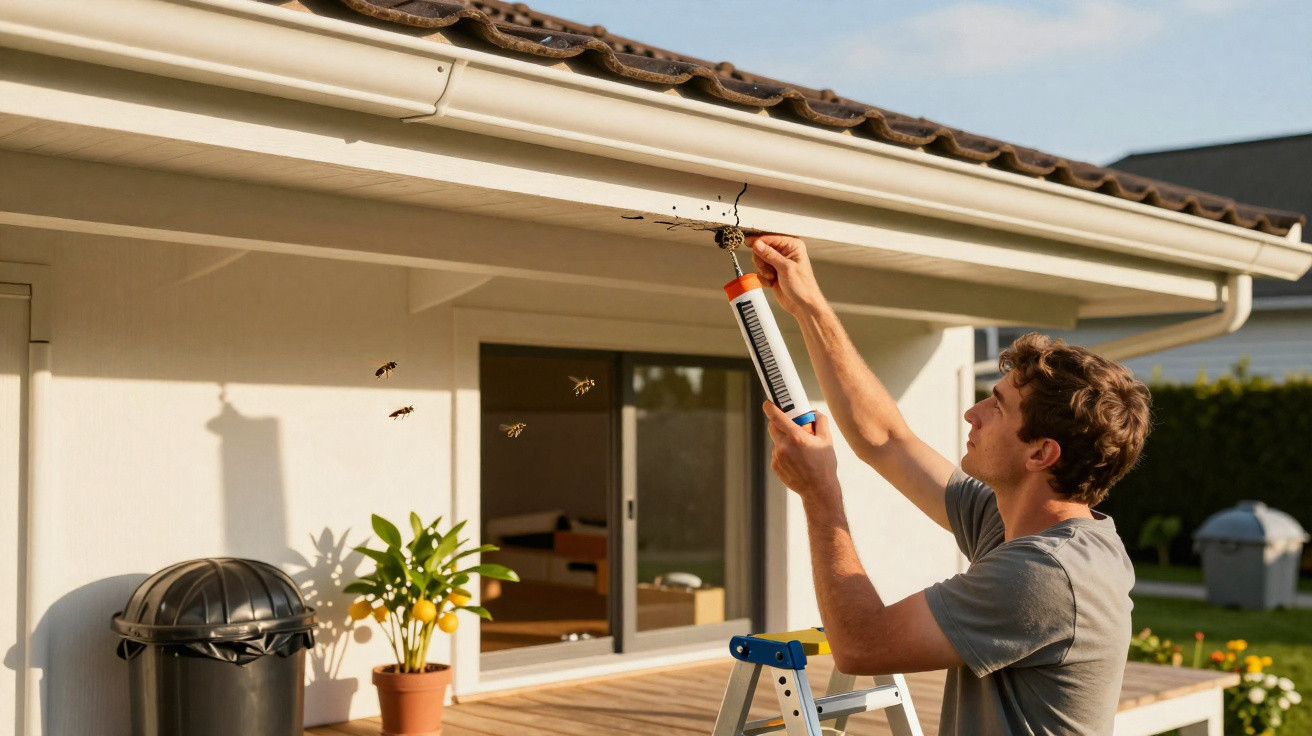
The most important and commonly missed safeguard against a wasp infestation starts long before the first barbecue of the year. The key is to remove potential nesting places before the insects become active.
When to begin checking for wasps
The best period is from mid-February to early April. At this point, queens are gradually becoming active but have not yet built a nest. Taking action now can save you from risky later attempts involving ladders, sprays and panic.
Set aside ten minutes once or twice a month to inspect the following areas methodically:
- lofts, dwarf walls and open roof-timber structures
- the undersides of eaves and porch roofs
- roller-shutter boxes, plus gaps around windows and doors
- garden sheds, carports and timber cladding
- cracks in brickwork, loose mortar joints and unsealed service penetrations
How to seal potential entry points
Any opening that a wasp can pass through easily should be treated as a risk. The table below shows suitable ways to secure common problem areas:
| Problem area | Suitable sealing method |
|---|---|
| Cracks in brickwork and mortar joints | Acrylic or silicone sealant |
| Larger holes in walls or ceilings | Expanding foam, then plaster over it |
| Vent openings and shafts | Fine metal or plastic mesh |
| Gaps beneath eaves | Battens, boards or sealing profiles |
| Roller-shutter boxes | Brush seals or approved sealing systems installed by a specialist |
Important: do not simply block ventilation points in bathrooms, kitchens or heating systems. Instead, protect them with mesh or netting that allows air to pass through while keeping insects out.
The real “gamechanger” is not the spray in July, but sealing gaps in March. Closing off niches stops wasps from gaining a foothold in the home at all.
Food sources: making your property less appealing to wasps
Alongside cavities, wasps are particularly attracted by what is left uncovered on patios and in gardens. They remember places where food is readily accessible remarkably well.
Everyday things that attract wasps
- uncovered glasses of juice, soft drinks and beer bottles
- barbecue leftovers, marinades and grease trays
- fruit remains in the garden, such as fallen fruit
- open wheelie bins and food waste without a lid
- outdoor food bowls for dogs or cats
A more organised approach removes much of the incentive for the insects to return regularly:
- Always cover food and drinks outdoors.
- Clear away leftovers immediately after eating, and wipe down the table and barbecue.
- Keep bins closed at all times, especially food-waste bins.
- Do not leave pet food outside permanently.
- Collect fallen fruit regularly, particularly plums and apples.
The same principle applies to water. Bird baths and water bowls can still be used, but they should be cleaned regularly and not positioned directly beside seating areas or doorways.
Gentle deterrents to keep wasps at a distance
Even careful preparation cannot keep every wasp away. In areas where you spend a lot of time, an additional, relatively gentle barrier can help.
The wrong territory, the wrong place
One popular option is a dummy empty wasp nest made from paper or plastic. The principle is that many species avoid locations that appear to belong to another colony already. The effect is not guaranteed, but it may provide some peace around carports, beneath patio roofs or on garden sheds.
Scents that wasps tend to dislike
Certain aromas are more likely to irritate wasps. Commonly used examples include:
- cloves
- lemongrass
- mint
- lavender
- strongly scented geranium varieties
These plants can be arranged in pots around a seating area. Anyone using essential oils should apply them very sparingly, take children and pets into account, and never put undiluted oils on the skin.
Using traps responsibly
Commercial wasp traps containing sweet attractant liquid unfortunately often catch beneficial insects as well. Protein-based traps are more targeted, as they tend to attract wasps but very few honeybees. These traps should be placed at the edge of the property, rather than directly beside the eating area.
When professional wasp control is needed - and why it can make sense
Some nests are located 4 metres up beneath a roof or deep within brickwork. In such cases, tackling the issue yourself quickly becomes dangerous: collapsing nests, aggressive colonies and falls from ladders are all genuine risks.
In these circumstances, it is worth contacting a pest-control professional or the fire service, depending on the region and the level of danger. Specialists can establish whether the insects really are wasps or perhaps protected species such as hornets, then select the appropriate method.
People with an insect-venom allergy should generally take action especially early, even at the first sign of suspicion. A hidden nest close to a bedroom may pose a considerably greater risk to them than to other residents.
Wasps, nature and neighbours: a brief reality check
However irritating they may be at the table, wasps consume large quantities of other insects and play an important part in the ecosystem. The aim is therefore not to make every garden completely “wasp-proof”, but to prevent critical situations around the home.
In many German federal states, certain species are protected. Anyone wishing to have a nest removed may need permission or may have to demonstrate a specific risk, such as allergies or a nest near a child's bedroom. Specialist companies understand these rules and can help.
For most families, a combination of three measures is enough in everyday life: seal gaps early, clear food away consistently, and use scents, decoys or mesh at critical points. This usually keeps summer relaxed, while wasps look for accommodation somewhere other than directly beside your coffee table.





Comments
No comments yet. Be the first to comment!
Leave a Comment