
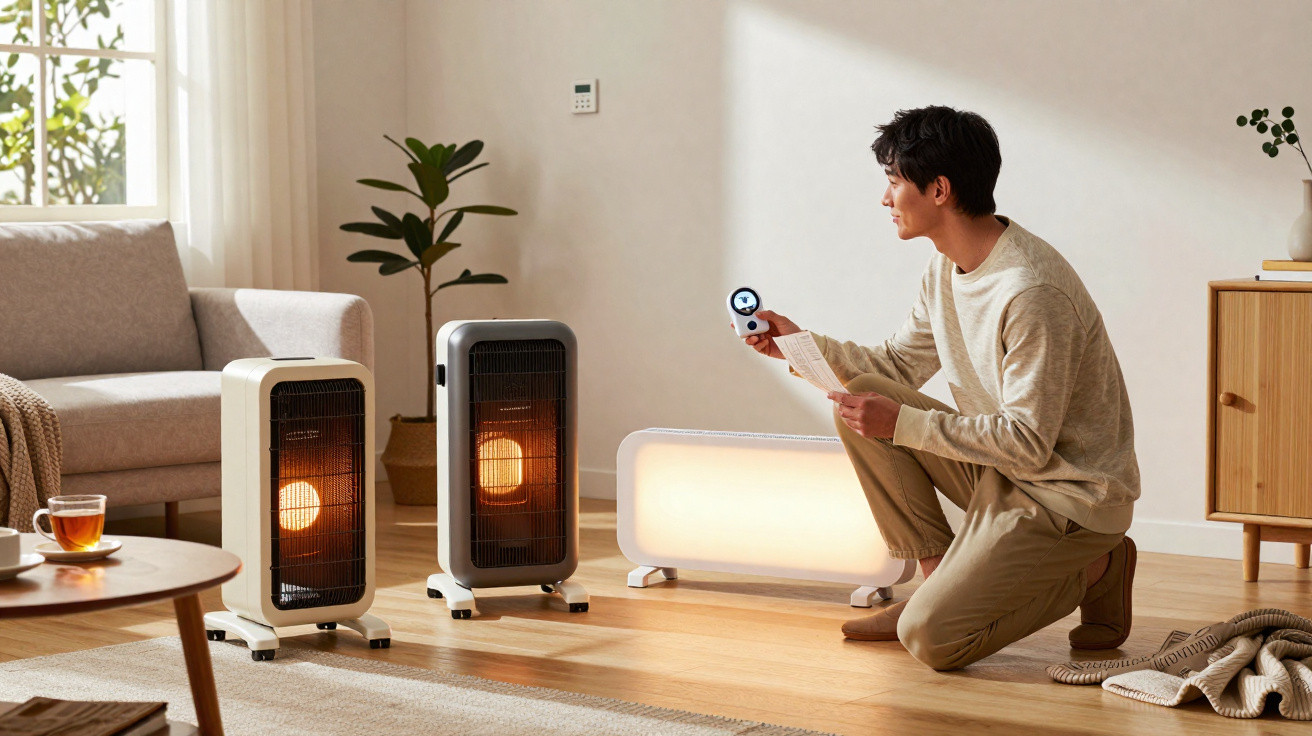
Rather than simply buying the first inexpensive fan heater available, some households choose weightier “oil-filled” units that claim to provide warmth more economically. With persuasive advertising and partly accurate advice circulating online, selecting a heater that delivers both efficiency and savings can feel unexpectedly daunting.
Why space heaters have returned to focus
Throughout Europe, the UK and North America, central heating remains the main source of winter warmth. However, portable heaters are increasingly being used strategically: instead of heating a whole property, people heat only the room they are occupying.
- They focus warmth on one area rather than the entire house.
- They can warm up much faster than central-heating systems.
- They are relatively inexpensive to buy when replacing a boiler is unaffordable.
When used carefully, a space heater can reduce bills by making it practical to keep the rest of the home cooler. When used poorly, it merely transfers energy costs from the boiler to the electricity socket.
Unplugging radiators in unused rooms and heating just your main living zone often cuts costs more than switching supplier.
How much electricity does a “typical” space heater actually use?
Most electric heaters currently on sale are rated between 1,500 and 2,000 watts. That figure can seem modest, but the resulting bill may not be. In many parts of the UK, using a 2,000 W heater for five hours daily on winter tariffs can add the equivalent of a modest streaming subscription each week.
Energy specialists now place less emphasis on finding “cheap heaters” and more on targeted use:
- Turn the central thermostat down by 1–2°C.
- Use a portable heater to keep one room comfortably warm.
- Restrict heating to periods when that room is genuinely occupied.
Whether you save money or quietly spend more depends on the combination of the appliance, the room and the length of use.
Fan heaters: rapid warmth, rapidly rising bills
Fan heaters are still a common impulse purchase in winter. They offer near-instant heat, are cheap to buy, and fit easily beneath a desk or on a bathroom floor.
Their advantages
- They heat air fast, making them useful for very brief use.
- They are lightweight and highly portable.
- They work well in small enclosed areas, including bathrooms and box rooms.
Their cost drawbacks
- They commonly operate at full output, drawing substantial electricity.
- Their fan noise can become irritating over a long evening.
- Their warmth vanishes almost immediately once they are turned off.
Treat a fan heater like a hairdryer: a tool for a few minutes, not an evening-long solution.
They are effective for warming a bathroom before a shower. During a four-hour film marathon, however, they can be expensive to run.
Convector heaters: straightforward, familiar and somewhat expensive
Convector heaters warm the air quietly, allowing it to circulate around the room. Some models can be fixed to a wall, while others are freestanding.
Benefits
- Installation is straightforward and operation is easy to understand.
- They produce gentle, consistent warmth without a fan.
- Simple thermostats and timers provide a degree of control over energy use.
Drawbacks
- They warm up more slowly than fan heaters.
- In rooms with poor insulation, they may operate almost continuously.
- They still use direct electric resistance, which can be costly per kWh.
Convector heaters can suit an occasionally used spare bedroom or home office. They are seldom the “most economical” choice, though, when used for hours each day in a draughty property.
Radiant panels: warming people as well as air
Radiant, or infrared, panels operate in another way. They emit radiation that directly warms skin, objects and walls, much like sunshine on a chilly day.
Why specialists are paying attention
- They create a comfortable, steady feeling of warmth.
- They can make a slightly lower air temperature feel equally comfortable.
- They work particularly well in insulated rooms without draughts.
The compromises
- Their purchase price is higher than that of basic fan or convector heaters.
- Their efficiency falls where cold air is continually entering the room.
- Certain models need time to warm the surrounding solid surfaces.
Radiant heat tends to shine in small, well-sealed spaces where you sit still: a reading nook, a home office, a studio.
As occupants can feel warm while the air remains slightly cooler, radiant panels can often reduce total energy use in a suitable environment.
Oil-filled radiators: gradual, weighty and quietly efficient
Oil-filled radiators have returned to popularity during the past two winters. Internal oil is heated and then gives off warmth slowly over time.
Main strengths
- They hold heat, leaving the room warm even after they are switched off.
- They operate almost silently because there is no fan.
- Thermostats and timers work well with them for smart cycling.
Limitations
- Reaching full heat output takes longer.
- Their bulk makes them less convenient to carry between floors.
- They cost more than basic fan heaters, although they remain affordable.
Oil-filled radiators rarely win the “fastest” contest, but they often win the “cost per comfortable hour” contest.
Many energy advisers now suggest them for bedrooms and living rooms occupied for several hours a day. After warming up, the sealed mass of oil continues to radiate heat, so the heater does not have to run at full power all the time.
Fuel-burning heaters: heat without electricity, with important conditions
Kerosene and gas space heaters are still used in workshops, garages and remote cabins where electricity is unreliable or unavailable.
- They produce powerful heat quickly.
- They can operate without the electricity grid.
- They can heat large, poorly insulated spaces where electric heaters struggle.
Their disadvantages are significant:
- They emit combustion gases and moisture into indoor spaces.
- Careful ventilation is necessary to prevent health risks.
- Fuel costs can change sharply, which makes expenditure difficult to forecast.
Many safety bodies advise reserving these appliances for short-term, supervised use in well-ventilated areas that are not used for sleeping. For everyday domestic heating, they create more concerns than solutions.
A side-by-side comparison of common space heaters
| Type | Heat-up speed | Comfort level | Energy profile | Best use case |
|---|---|---|---|---|
| Fan heater | Very fast | Average | High draw, short bursts | Bathroom or tiny room for a few minutes |
| Convector heater | Moderate | Decent, even | Medium to high | Occasional use in a medium room |
| Radiant panel | Moderate | Very comfortable | Lower when room is well insulated | Regular use in a sealed living space |
| Oil-filled radiator | Slow | Soft, long-lasting warmth | Efficient across long sessions | Evening heating in lounge or bedroom |
| Kerosene / gas heater | Fast | Strong heat, less refined | Varies with fuel price | Workshops, garages, off-grid rooms |
Which space heater best combines efficiency and savings?
Energy agencies do not identify one single “magic” appliance. Instead, they repeatedly highlight a combination of oil-filled radiators and radiant panels as suitable for most modern homes.
For long evenings in one main room, an oil-filled radiator or a modest radiant panel usually beats a cheap fan heater on total cost.
Oil-filled heaters are particularly effective when you remain in one place for several hours. Radiant panels perform best where insulation is good and a soft, sun-like warmth is preferred. Both usually work most effectively when:
- Doors to rooms are kept closed.
- Draughts are blocked using straightforward measures such as strips and brushes.
- The main heating is set slightly lower.
Fan heaters and convectors still serve a purpose, but they are better treated as tactical appliances than regular companions.
Small changes that can affect the bill more than the heater
The heater model matters, but how it is used matters even more. Brief, focused heating in a properly prepared room can significantly reduce consumption.
- Reduce the central thermostat by 1°C: many households report savings of around 7–10%.
- Wear an extra layer rather than trying to achieve summer-like indoor temperatures.
- Seal gaps beneath doors and around windows so warm air does not escape outdoors.
- Use built-in timers or smart plugs to prevent heaters running “just in case”.
Standby consumption is often underestimated too. A number of small appliances left on standby can quietly use as much electricity as a low-power heater operating briefly.
Planning for next winter: moving from a quick fix to a strategy
Space heaters were once bought mainly as emergency measures during cold snaps. They are now part of a broader reconsideration of how homes are heated. For renters unable to alter their boiler or walls, a carefully selected oil-filled unit or radiant panel combined with simple draught-proofing is one of the few practical ways to regain control.
For homeowners, the same appliances can provide a stopgap while larger improvements are considered, including heat pumps, better insulation or zoned smart heating. Viewing a portable heater as part of an energy plan rather than a guilty secret changes its role: it becomes a calculated tool rather than a panic purchase in a changing climate and volatile energy market.





Comments
No comments yet. Be the first to comment!
Leave a Comment