
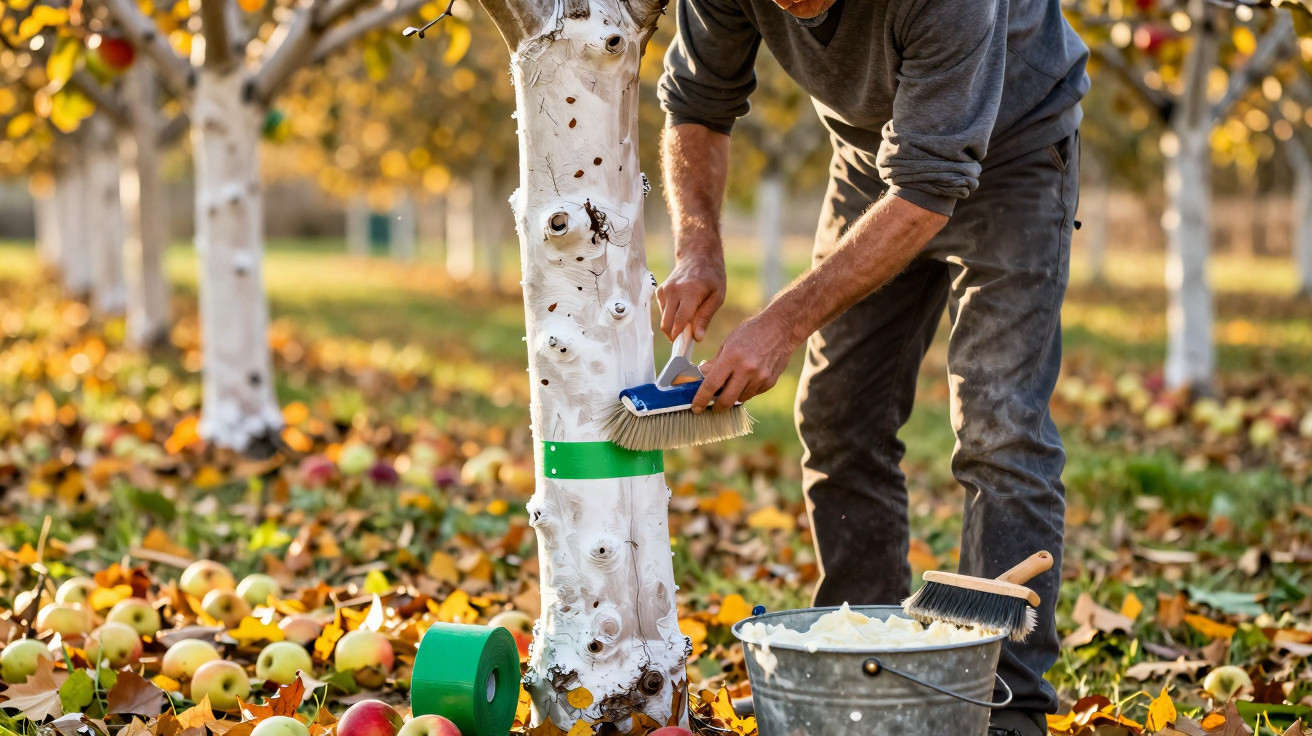
A handful of sensible jobs undertaken now can transform next year’s harvest.
Across temperate areas, gardeners rely on a seasonal routine to control pests without chemicals. It takes roughly an hour, costs very little and prepares trees for vigorous spring growth.
Why autumn preparation makes a difference
When leaves begin to drop, numerous insects enter survival mode. They tuck themselves beneath splitting bark, occupy tiny gaps and wait for the first warmer spell. This dormant period has a major effect on what happens in spring.
As temperatures rise, eggs emerge, larvae begin feeding and colonies rapidly expand. Even a modest winter population can become a serious problem before it is spotted. Taking action now prevents that increase.
Stop pests before deep cold. Prevention beats a rescue mission in April.
What is concealed beneath bark
Scale insects attach themselves to woody growth and drain vigour from new shoots. Aphid eggs nestle close to buds, ready to populate emerging foliage. Codling moths and other borers shelter around scars and knots. In recent years, milder winters have lowered the natural death rate of many species.
Fruit trees already affected by frost and wind can also suffer sunscald during bright, cold weather. Protecting the bark helps them cope with these fluctuations.
The limewash routine: a fast, clean winter defence
A traditional orchard practice is returning to favour: applying a light winter limewash to trunks. This mixture forms a pale, breathable covering that cleans the bark and makes it less inviting to overwintering pests.
The goal is not a paint job. It’s a breathable coat that tidies bark microhabitats.
How it works and what it achieves
Lime increases the pH at the bark surface and dries the small pockets where eggs and tiny larvae hide. Its white finish reflects winter sunlight, reducing changes in bark temperature and helping to prevent splits. Cleaner bark leaves pests with fewer protected places at budbreak.
Equipment and mixing instructions
- Horticultural hydrated lime: 1 kg (about 2.2 lb)
- Water: 2 litres (about 2.1 quarts)
- A broad brush or firm masonry brush
- Gloves and eye protection
Place the lime in a bucket. Slowly pour in the water, stirring throughout, until the result is a smooth, free-flowing slurry with the consistency of thin yoghurt. Leave it for five minutes so air bubbles can settle, then stir once more before applying.
Pick a dry day when temperatures are above freezing. Apply the mixture from the root flare up to the first main branches. Keep the layer light and even; the bark’s texture should remain visible through the wash.
Errors to avoid
- Never apply it to frozen or damp bark, as the coating will soon peel away.
- Do not build up heavy layers, which may put young bark under stress.
- Avoid very young trees with soft, green wood. Choose a milder clay-based barrier for these instead.
- Do not get the mixture on recent pruning wounds. Deal with cuts separately once they have dried.
| Method | Targets | Best timing | Pros | Watch for |
|---|---|---|---|---|
| Limewash | Scale, aphid eggs, bark pests | Late Nov–Dec, on dry days | Cleans bark, moderates temperature swings | Too thick can stress young bark |
| Sticky bands | Ants, crawling moths, earwig pests | Early to mid Nov | Purely mechanical, easy to check | Replace when clogged; shield wildlife |
| Orchard hygiene | Maggot flies, fungal carryover | All autumn | Reduces multiple disease and pest cycles | Needs regular sweeps |
Sticky bands: the second barrier against climbers
Many winter pests do not fly towards fruiting wood; they climb instead. In spring, ants farm aphids and protect them from predators. Female moths and other crawling insects ascend trunks to lay their eggs.
No poisons. Just a roadblock insects cannot cross.
Fitting sticky bands for the best results
- Fit bands 50–60 cm (20–24 in) above ground level in early or mid-November.
- Press them firmly around the complete trunk, sealing any gaps beneath the sticky section with paper or tape.
- On rough-barked or large trees, install two bands to prevent alternative routes.
- Inspect them every two to three weeks, replacing them when they become dry or clogged with debris.
- Place a basic guard above the band to protect birds and small mammals from the adhesive.
Take the bands off in late spring. Leaving them in place throughout summer can catch harmless creatures and allow dust to build up, reducing their effectiveness.
Safeguard beneficial insects while trapping pests
Ladybirds, lacewings and earwigs all assist with aphid control in spring. Create safe areas for them by retaining some leaf litter or placing a small insect shelter away from tree trunks. Controlling ants with sticky bands can reduce aphid outbreaks because ants no longer defend them.
What to expect in spring
Trees protected by a winter coating and sticky barrier commonly produce cleaner blossom clusters. There may be fewer curled leaves at shoot tips and less marking on fruit. More of the tree’s energy can go into shoots and fruit instead of repairing pest damage.
Harvests generally become more reliable after two seasons of regular winter care. Birds return, while the orchard food web regains its balance more quickly after cold snaps.
Use straightforward hygiene to complete the cycle
- Remove mummified fruit still hanging from branches, as it harbours larvae and spores.
- Rake away thick mats of leaves around the trunk base, while leaving a light mulch ring for the roots.
- Mend trunk guards and renew damaged stakes to limit rubbing caused by wind.
- On dry days, prune out dead or crossing branches and dispose of the material.
Timing, changing climate and trees in small spaces
Where winters are unpredictable, keep an eye on forecasts. Choose a dry period with no frost expected for 24 hours after application. Should a January thaw occur, inspect trunks and renew bands promptly.
Container-grown pears, patio apples and espalier trees all gain from the same routine. As they heat up faster against walls, sticky bands on these trees can catch large numbers of early-moving pests.
Costs, safety and simple calculations
One bag of horticultural lime can treat dozens of trees and, if stored dry, will last for several seasons. Sticky bands are inexpensive and reduce the time otherwise spent applying spring sprays.
Hydrated lime is alkaline, so it may irritate the eyes and skin. Use gloves and goggles, keep pets away until the coating has dried, and store remaining mixture sealed and out of reach.
When to reapply and what to check
Inspect the limewash in late winter following storms. Where heavy rain has removed the coating, add a light second layer during a dry spell. In spring, watch the first new leaves. If concentrated patches of scale appear, gently scrape them away and improve air movement with light pruning.
Useful additions that strengthen results
Put up bird boxes now, allowing insect-eating birds to establish themselves before the breeding season. A short mixed-native hedge near the orchard will attract pollinators and predators. Clover strips between rows improve ground cover, limit erosion and support soil life.
One calm afternoon in November can protect months of growth and a season’s worth of fruit.
Who should avoid or modify limewash
Very young whips with green bark may react badly to any alkaline coating. Apply a kaolin clay spray instead, or wait a year until the bark has hardened. For grafted trees containing sensitive varieties, try a small test area first and look for signs of stress after a week.
A short checklist before putting the brush away
- Limewash applied in a thin layer from the base to the first limbs.
- Sticky bands fitted tightly with no gaps, and wildlife guards installed.
- Old fruit and dense leaf mats cleared from around trunks.
- Details recorded in the garden diary: date, weather, products and treated trees.




Comments
No comments yet. Be the first to comment!
Leave a Comment