
It can also conceal straightforward ways to make it last longer.
Appliance costs have risen in recent years, putting pressure on household budgets. Extending a refrigerator’s working life therefore offers obvious value, while also reducing the risk of inconvenient breakdowns. A few modest adjustments can lessen compressor wear, lower electricity consumption and postpone replacing an appliance that frequently exceeds mid-market prices.
A steady temperature protects the compressor
Compressors wear out more quickly when internal temperatures repeatedly rise and fall. Set the fridge to 4°C (39°F) and the freezer to −18°C (0°F). Reducing either setting by just one degree may increase energy use by about 6%. Hot meals and regularly opening the door cause additional cooling cycles, which accumulate over time and can shorten the appliance’s lifespan.
Set 4°C for the fridge and −18°C for the freezer. Avoid temperature swings. Stability means less work for the motor.
Everyday habits for stable cooling
- Put a basic fridge thermometer near the centre of the middle shelf.
- Allow hot food to stop steaming before refrigerating it, then divide it into shallow containers so it cools faster.
- Open the door efficiently: gather everything required and make one quick trip in and out.
- Keep large packaging away from the top shelf, where it can hold warm air close to the thermostat.
- Place bottles of water in unused space to create cold mass that cushions temperature changes.
Clean the coils and vents
Dust-covered condenser coils struggle to release heat. When fluff accumulates beneath or behind the cabinet, efficiency can fall considerably. The compressor then operates for longer, the housing becomes hotter and electronic boards are put under strain. Cleaning every six months with a vacuum cleaner or soft brush addresses most of the problem.
- Unplug the fridge before starting, for safety.
- Carefully pull the appliance forward and look for access at the rear or behind the lower kickplate.
- Vacuum the coils and surrounding floor, using a brush where lint is stuck on.
- Take care not to bend copper pipes or catch sensor wires.
Ten minutes and a brush can prevent an overheated compressor and a repair call that often runs into three figures.
Give the fridge space and keep it away from heat
Nearby heat makes the fridge work against physics. Appliances positioned tightly beside an oven, radiator or sunny window may consume up to 20% more energy. Most manufacturers recommend leaving at least 10 cm (4 in) clear at the back and sides, allowing air to circulate around the condenser.
Leave 10 cm of clearance around the cabinet. Keep it out of direct sun and away from ovens or hobs.
Small positioning changes with a real effect
- Use narrow spacers to prevent the appliance being pushed directly against the wall.
- Install a simple reflective heat shield where a cooker is immediately beside it.
- Lift the front feet slightly to help the doors close themselves and keep the gaskets sealed.
Keep the door seals airtight
Door gaskets deteriorate, pick up dirt and eventually allow cold air to escape. This leads to longer compressor cycles and encourages condensation. A worn seal may waste approximately 60 kWh annually, adding to energy bills. Replacement gaskets are reasonably priced and are often suitable for DIY fitting.
| Symptom | What to do |
|---|---|
| Door pops open or won’t sit flat | Level the cabinet and clean the gasket with warm water and baking soda |
| Moisture along the door frame | Check for cracks; replace the seal if it’s stiff or split |
| Persistent musty smell | Remove residue in the folds; dry fully after cleaning |
A quick test for a leaking seal
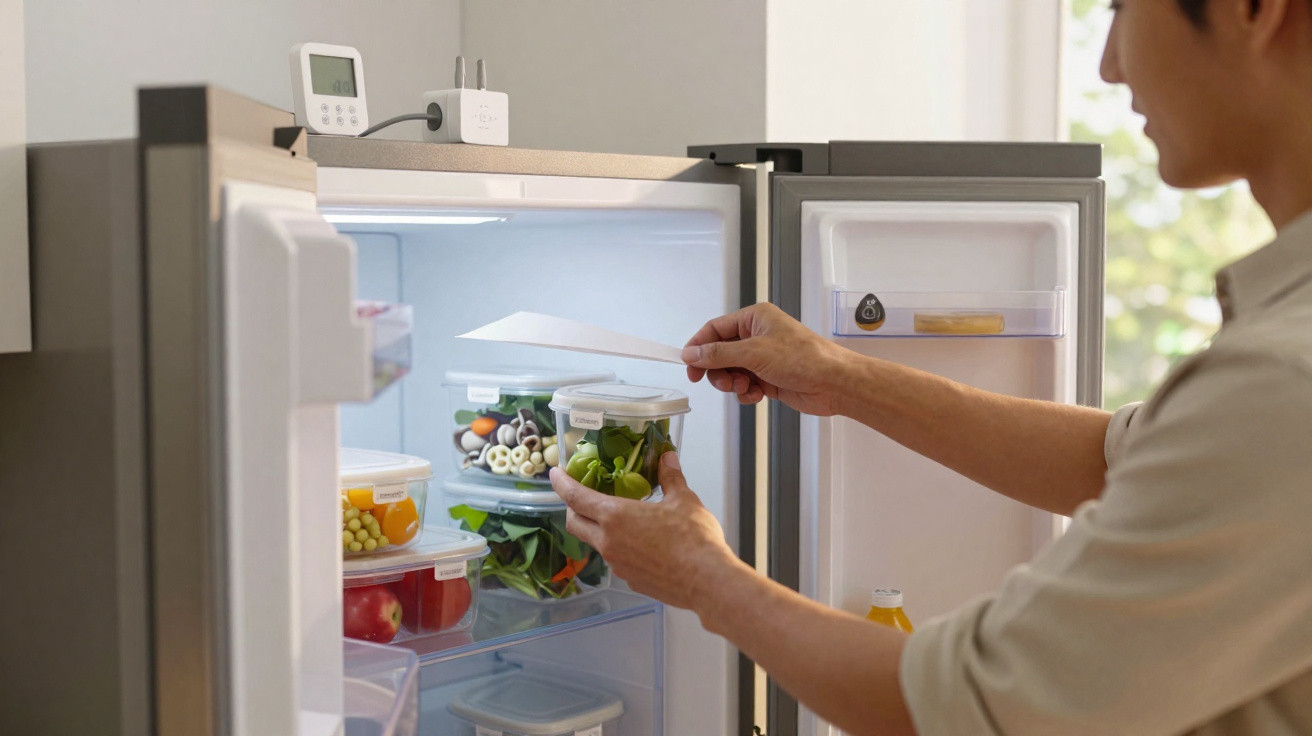
- Shut a sheet of paper in the door, then pull it. Minimal resistance indicates weak contact.
- Test around the full perimeter to identify any weaker areas.
Do not overlook ice, even on “no frost” models
Ice acts as insulation. Once it exceeds 3 mm, it restricts heat transfer and prolongs running times. Even many frost-free systems benefit from an occasional reset. Switch the appliance off twice yearly, allow any frost to thaw naturally and dry the cabinet before turning it on again. This supports hygiene and reduces stress on the fan and evaporator.
More than 3 mm of ice means the motor works longer for the same cold. A half-yearly defrost keeps performance sharp.
Protect the electronics against voltage spikes
Today’s fridges depend on control boards, which can be harmed by power surges caused by storms or overloaded circuits. A filtered, surge-protected power strip costs roughly the same as a family takeaway, yet can prevent a far more expensive repair. It can also reduce nuisance trips when the compressor starts.
Use a surge protector rated for large appliances. It’s cheap insurance for the most expensive board in the box.
Five essential actions and their savings
| Action | Time needed | Typical impact |
|---|---|---|
| Set 4°C / −18°C and add a thermometer | 5 minutes | Lower energy use by a few percent and reduce wear |
| Vacuum coils and clear vents | 10–15 minutes | Recover up to double-digit efficiency losses |
| Add 10 cm of clearance; avoid heat sources | 15–30 minutes | Cut consumption up to 20% in harsh placements |
| Clean or replace door gaskets | 10–60 minutes | Save around 60 kWh/year and stop condensation |
| Fit a surge-protecting strip | 5 minutes | Reduce risk of board failure and data loss on smart models |
Additional checks that can add years
Loading and airflow
Avoid blocking the cooling vents on the rear wall. Arrange food with enough room for air to move freely. Store dairy products away from the door, where temperatures fluctuate more. Put heavier items on lower shelves to stabilise the internal thermal mass.
Levelling, noise and vibration
Vibration can rattle pipework and loosen connections. Level the cabinet, and after cleaning listen for unfamiliar humming sounds. A slight forward tilt allows the doors to close under their own weight.
Water filters and drains
Ice-makers and chilled-water dispensers stay cleaner when filters are replaced on time. If puddles appear beneath the crisper drawers, inspect the defrost drain for blockages. Warm water applied with a turkey baster will often clear it.
When repair is better than replacement
Follow a simple guideline: repairs generally make more sense when they cost less than half the price of an equivalent new model and the appliance is under 10 years old. Also review current energy labels; replacing a very old fridge that uses substantial power may still be worthwhile where daily use is high.
Food safety and power-cut advice
At 4°C, bacterial growth slows down, helping to protect ready-to-eat food. A separate thermometer confirms whether the display panel is accurate. In a power cut, keep the door closed; a full freezer will normally maintain safe temperatures for around 48 hours. When unsure, test the coldest item in the centre and do not refreeze thawed meat that is dripping.
Planning for the next decade
Write down two dates on a label inside the fridge: the last coil clean and the last gasket inspection. Set a six-month reminder on your phone as well. These small habits keep the compressor cool, the electronics settled and food safe. A quiet, uneventful fridge is exactly the result you want.





Comments
No comments yet. Be the first to comment!
Leave a Comment