
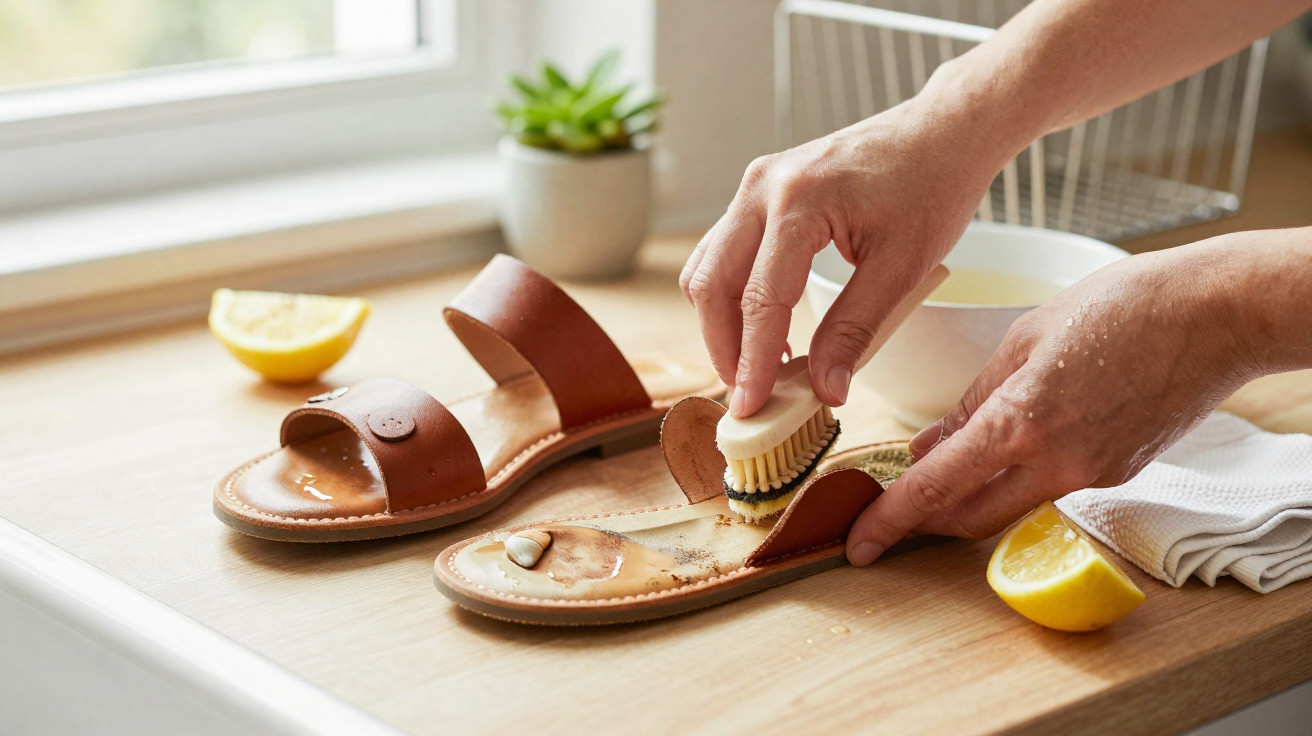
Hot pavements, sunscreen and lengthy walks can leave concealed traces on sandals, often only becoming apparent when the damage has already set in.
When the weather warms up, sandals come out from the back of the wardrobe and become an everyday staple. Before long, however, dark foot-shaped marks, persistent smells and tired-looking insoles can make a pair look old after only a few wears.
Why your sandals stain so quickly
The dark marks following the shape of your toes and heel are more than simply “dirt”. They result from sweat, dead skin, urban dust, sand, and leftover body lotion or sunscreen. With every step, this combination is pushed further into the insole.
Leather and fabric, the two materials most often used for insoles, readily take in moisture. Once that moisture evaporates, oils and pigments remain. As the days and weeks pass, these deposits build up into distinct footprints that can seem almost impossible to remove.
These dark footprints come from a mix of sweat, skin, dust and cosmetics slowly baked into the insole by heat and friction.
This residue is not only unattractive: it also provides an inviting setting for bacteria and fungi. The result can be unpleasant odours, irritation and, at times, infections-particularly during hot, humid conditions or when the same pair is worn all day.
The simple cleaning method that refreshes leather insoles
Check the materials in your sandals before using any cleaning product. Leather calls for a milder approach than canvas, synthetic foam or cork. Plenty of sandals combine several materials too, such as a leather insole with synthetic straps and a rubber sole.
Step-by-step routine for leather sandals
- Use an extra-soft brush to lift away loose dust and grit.
- Mix lukewarm water with a few drops of gentle, fragrance-free soap in a bowl.
- Dip a clean cloth into the solution, wring it out very thoroughly, then clean the insole in small circular movements.
- Concentrate on the dark footprints, applying slightly more pressure without saturating the leather.
- Rinse the cloth with clean water, wring it out well and wipe the insole again to clear away any soap residue.
- Dab the sandals dry with a dry cloth, then allow them to air dry away from sunlight and heat.
Never dry leather sandals in direct sun or under a radiator: heat stiffens the fibres, cracks the surface and fixes stains more deeply.
After the sandals have dried completely, applying a small quantity of colourless leather conditioner or balm can bring back their suppleness. It also leaves the insole feeling smoother beneath the foot and helps limit later staining, as conditioned leather takes in slightly less sweat.
Cleaning fabric, canvas and synthetic insoles
Fabric insoles absorb moisture even more quickly than leather, although they can tolerate a somewhat wetter clean provided you do not scrub them harshly.
Routine for fabric or canvas sandals
First, remove dry debris with a soft brush, paying particular attention to stitching and edges where dirt tends to gather. Next, make the same mild soapy mixture used for leather, though it is fine to use a little more water.
Work the solution into stained sections with a cloth or soft toothbrush, using gentle repeated strokes. The objective is to release the ingrained sweat-and-dirt residue rather than damage the fibres. When the stains begin to lighten, use a fresh damp cloth to wipe away remaining soap.
Dry the sandals in a shaded place with good ventilation. A balcony, a windowsill out of direct sunlight or an area near an open window are all suitable. Do not put them in plastic bags or cupboards while they remain even a little damp.
| Material | What to use | What to avoid |
|---|---|---|
| Leather | Soft brush, lukewarm water, mild soap, leather balm | Soaking, bleach, direct sun, harsh scrubbing |
| Fabric / canvas | Soft brush, diluted soap, gentle cloth or soft toothbrush | Boiling water, strong stain removers, tumble dryer |
| Synthetic foam | Soapy water, sponge, antibacterial spray (light use) | Pure alcohol, acetone, hard brushes that tear foam |
How this routine actually boosts comfort
Washing sandals is about more than appearance. The insole sits against your skin for hours, so its state has a direct effect on how your feet feel at the end of the day. A tacky or gritty surface raises friction, potentially leading to blisters and hot spots.
Removing the layer of dried sweat and grime leaves the surface more even and smooth. Your foot does not catch or drag as much at every step, particularly in humid conditions. A cleaner insole can also ease irritation for anyone with sensitive skin, eczema or small cuts.
A clean, dry insole limits bacteria and fungi growth, which lowers the risk of odours, athlete’s foot and other skin issues.
There is a cost benefit as well. Leather insoles that remain clean and flexible are less likely to split, while sandals hold their form for longer. This can prevent “emergency” replacements midway through summer when a favourite pair suddenly appears ruined.
Preventing footprint stains before they form
Cleaning is most effective alongside modest daily habits that reduce the accumulation of stains and smells. They take very little effort, yet collectively may give a pair of sandals an additional season or two of use.
Daily habits that protect your sandals
- Alternate between at least two pairs, allowing each pair to dry completely between wears.
- If your feet are dusty, give them a quick rinse in the shower or at the sink before putting sandals on.
- Allow sunscreen and body lotion to dry fully before wearing sandals.
- Apply a very light layer of talc or foot powder to the insole to take up moisture.
- Air sandals in a dry place every evening rather than putting them straight into a bag.
Some podiatrists caution that sandals left continually damp can promote fungal infections, especially in warmer climates and on public transport. Those moving repeatedly between sweaty commutes and air-conditioned offices experience quick temperature changes that put stress on the skin. Cleaning regularly reduces this risk and helps sandals remain fresher in enclosed settings.
When odour and stains signal a bigger problem
When sandals develop a strong smell only hours after being cleaned, or dark patches return thicker and stickier, the problem may extend beyond the footwear itself. Excessively sweaty feet, known as hyperhidrosis, require more specific care.
Straightforward measures-including using an antiperspirant made for feet, selecting breathable materials and keeping plastic flip-flops for brief use-can have a meaningful effect. Where the problem persists, healthcare professionals may recommend medical antiperspirants or treatments that lower sweat production.
People living with diabetes, circulation issues or weakened immune systems face increased risks when bacteria and fungi collect in footwear. For these individuals, checking feet and sandals regularly, promptly washing small cuts and avoiding split leather are elements of essential preventive care rather than merely a matter of style.
Extending sandal care to your whole summer routine
Caring for sandals naturally links with other summer routines: how frequently you wash socks, whether you go barefoot in communal showers and how you manage long travel days through hot airports and stations. Clean sandals, together with breathable socks where appropriate, reduce friction and help feet stay fresher on busy days.
It can also support a slower, more sustainable approach to purchasing shoes. Recognising that a straightforward regular routine can remove footprint stains and keep straps supple makes it more worthwhile to invest in one or two better-made pairs instead of replacing inexpensive pairs every few weeks.
From urban pavements to seaside promenades, sandals hold the evidence of a season beneath your feet. Usually, a bowl of soapy water, a soft cloth and a few minutes of occasional attention will remove the visible footprints-leaving only the memories of those walks behind.




Comments
No comments yet. Be the first to comment!
Leave a Comment