
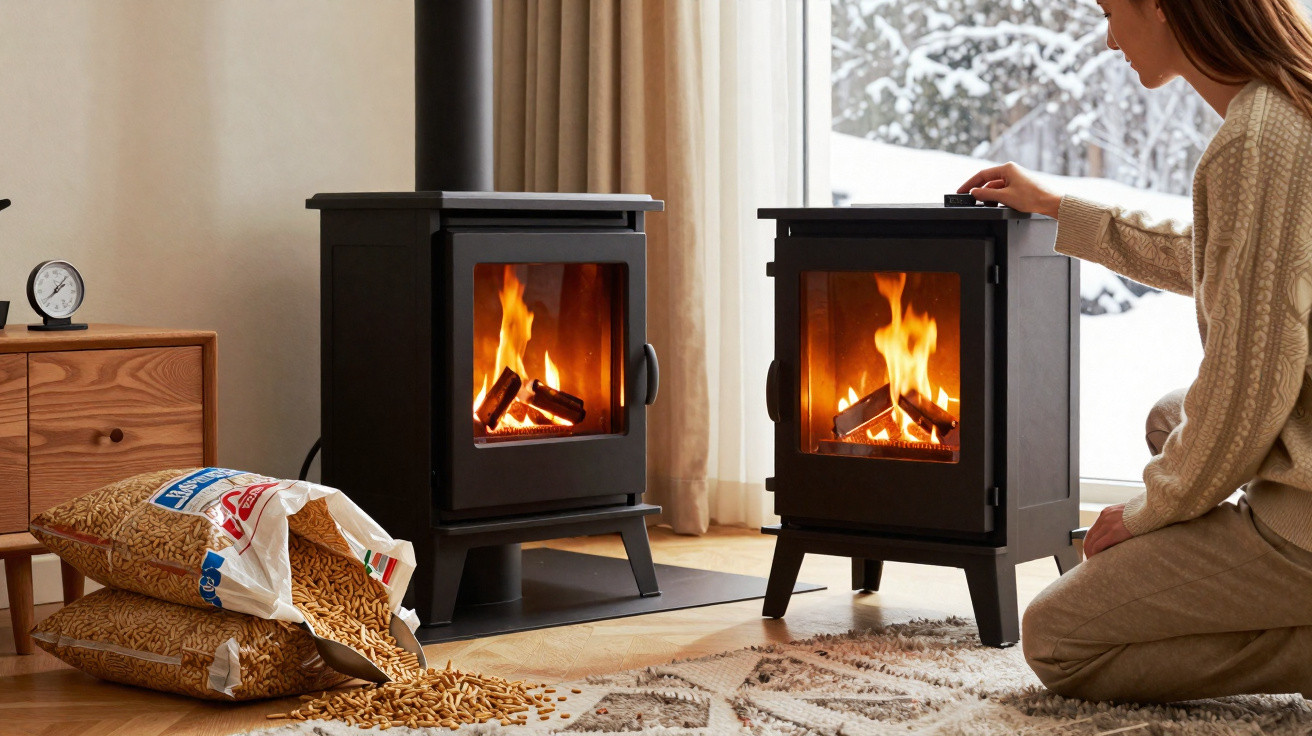
With colder weather becoming more severe and electricity bills putting household budgets under strain, pellet heating is once again a major topic of conversation at home.
In 2026, people who heat their homes with wood pellets face a challenging picture: volatile prices, harsher winters and the need to stay comfortable without blowing the budget. The encouraging news is that fairly straightforward changes can significantly reduce fuel use without leaving anyone cold, while also lowering environmental impact.
Adjusting the pellet stove: the first cut to your bill
The first step towards using fewer pellets lies not in the bag of fuel, but in the appliance itself. Many stoves leave the factory with default settings designed for general conditions rather than for a particular home.
Setting the stove according to the size of the space and the household's routine can often cut consumption by up to two digits.
In practical terms, three settings matter most:
- Burning power: constantly running at maximum produces spikes in heat, frequent shut-downs and waste. Keeping the stove at a medium output for longer provides steadier warmth and consumes fewer pellets.
- Ventilation: an overly powerful fan sends warm air away from occupants and can create the sensation of a cold draught. Set it to a level that spreads heat without “sweeping” through the room.
- Pellet feed: if the auger that carries the pellets is set to supply more fuel than required, the flame will be high but efficiency will fall. Technicians usually match the airflow to the pellet feed to achieve clean combustion.
A common mistake is to use a stove as though it were an electric heater: turn it up to maximum when feeling cold, then switch it off when the room becomes too warm. This leads to high consumption, fluctuating temperatures and more soot.
Maintenance: less ash, more heat
Build-up inside the appliance is another factor that increases consumption. Ash and soot deposits form a kind of insulating “coat” within the stove.
- Cleaning the brazier and ash pan every week improves airflow.
- Monthly cleaning of the internal ducts and fan preserves the efficiency of heat exchange.
- An annual professional service checks sensors, seals and combustion settings.
A dirty stove burns more pellets to provide the same temperature, like a poorly tuned car that uses more fuel per kilometre.
Choosing quality pellets: savings that start with the bag
In Brazil, the pellet market is still becoming established, and the gap between cheap products and good-quality options is already clear. What looks like a saving at the point of purchase can become waste over the winter.
What to check when buying
- Moisture: overly damp pellets create more steam than heat. Look for products with a moisture content of around 8–10%.
- Density: the more compact the pellets, the more energy they provide per kilogram. Pellets that are too light burn quickly and produce more ash.
- Raw material: pellets made from hardwood or a carefully controlled mix generally burn for longer and more consistently.
- Ash: packaging that states a low ash content indicates a cleaner product, which soils the stove less and maintains its efficiency for longer.
For anyone who likes to compare figures, this small illustration is useful:
| Pellet type | Average daily consumption* | Typical situation |
|---|---|---|
| Low quality | 18–20 kg | Heavy ash, uneven flame |
| Medium quality | 15–17 kg | Acceptable burn, frequent cleaning |
| High quality | 13–15 kg | Stable flame, less maintenance |
*Estimated example for a medium-sized home during a cold winter, with extended daily use.
Better pellets generally cost more per bag, but less for each degree of comfort delivered throughout the season.
Insulation: when the stove is not the problem
Even the most modern stove will struggle if heat is escaping in every direction. In 2026, the combination of expensive energy and poorly insulated homes has become a difficult mix for many Brazilian households in colder regions.
Critical areas of heat loss
- Doors and windows: small gaps create constant draughts. Inexpensive self-adhesive draught-excluding strips can already reduce much of this airflow.
- Single glazing: in mountainous areas, thick curtains or thermal blinds help retain warmth overnight.
- Roof and ceiling void: warm air naturally rises. Without insulation above the ceiling, much of the energy escapes through the roof.
- Cold floors: rugs in living areas reduce the feeling of cold and lessen the need to raise the stove temperature.
Small improvements made gradually can still affect the bill. A homeowner who invests in window sealing, thicker curtains and basic ceiling-void insulation may see pellet use drop considerably in the following season.
Smart heating habits: comfort with less fuel
How a household uses the stove matters almost as much as the appliance's technology. Day-to-day adjustments can bring sizeable reductions in the amount of pellets consumed.
The right temperature and strategic timings
- A target of 19–21 °C: this is the range commonly regarded as comfortable for most people wearing winter clothing. Every additional degree can increase consumption by around 6–7%.
- Timed programming: switching on the stove shortly before someone arrives home and lowering its output overnight creates an efficient “thermal rhythm”.
- Closing unused rooms: heating a corridor and empty bedrooms disperses warmth and forces the stove to work harder.
Treating a pellet stove as a system to be managed - rather than as a simple fireplace - is what separates those who save money from those shocked by the bill.
How to combine these tactics in 2026
A typical scenario for the next winter is a family in a cold region, with a stove installed several years ago, average draught-proofing and a tight budget. Rather than putting all the investment into a single area, combining measures usually brings better results.
- Have the stove professionally adjusted and fully cleaned before the season begins.
- Move gradually to higher-quality pellets, starting with part of the purchase in order to compare them in practice.
- Fit seals to the main doors and windows, and improve curtains in the most-used areas.
- Establish a heating routine: switch on before dawn, reduce output when leaving home and increase it again late in the afternoon.
Some suppliers already provide packages that include a basic thermal assessment and guidance on using the stove. At a time of costly energy, this kind of service is likely to gain ground because it combines technical knowledge with behavioural change.
Terms, risks and benefits worth noting
People who are new to using pellets soon encounter terms such as “efficiency”, “LHV” (lower heating value) and “modulation”. These measures relate to the amount of heat that is actually used. Two stoves with the same rated output may consume very different volumes of pellets if their thermal efficiency differs.
Safety is another important consideration. Improper use, an incorrectly sized flue and neglected maintenance increase the risk of smoke backing up and carbon monoxide accumulating: an odourless, toxic gas. Fitting CO detectors and following the manufacturer's cleaning schedule add an extra layer of protection.
On the benefits side, using pellets more efficiently creates a knock-on effect: fewer bags to carry, less ash to clean, lower pressure on plantation forests and more predictable thermal comfort. In the context of 2026, when energy has become a household planning issue, these measures are no longer merely “tricks” and are moving towards a new, more considered yet more comfortable culture of domestic heating.




Comments
No comments yet. Be the first to comment!
Leave a Comment