
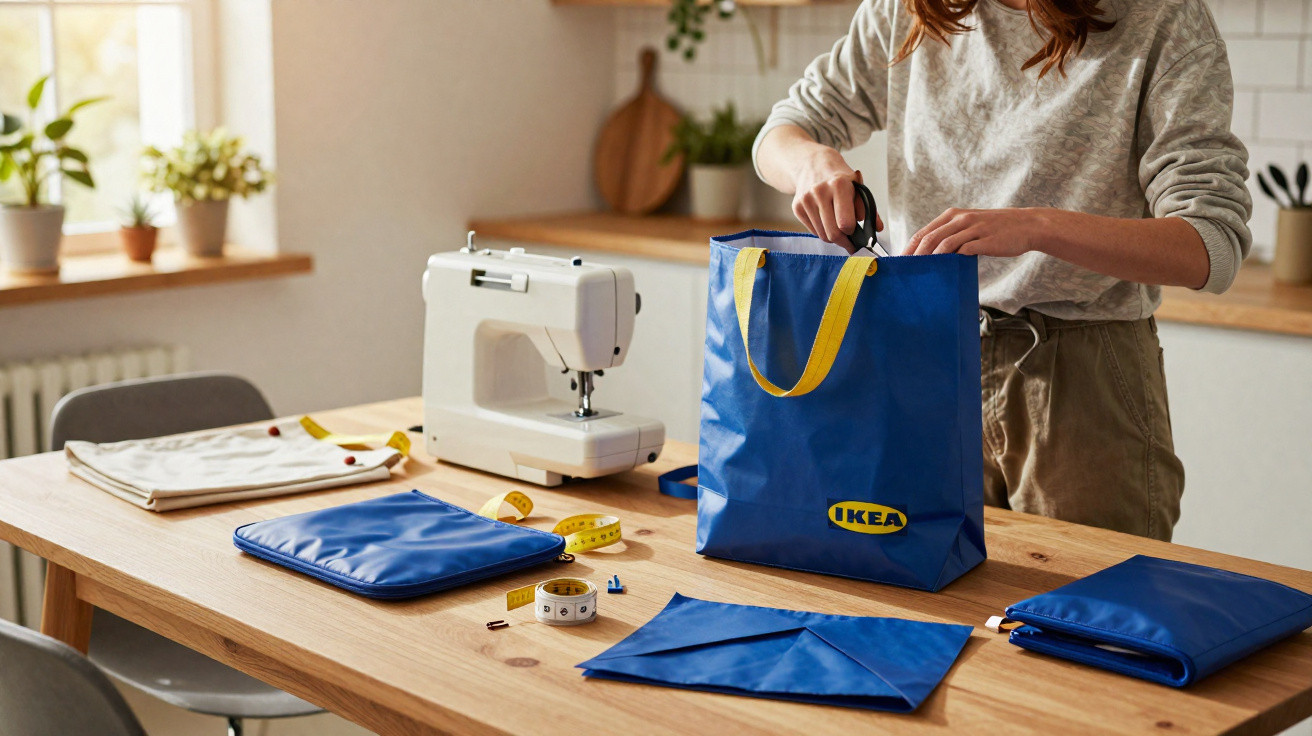
Anyone who shops at IKEA regularly is likely to have several of its large blue carrier bags at home. Many sit unused in a corner, despite offering plenty of potential. The material is tough, water-repellent and virtually indestructible – ideal for sewing useful accessories for the bathroom, beach and park.
Why the blue IKEA bag is a genuine upcycling treasure
The familiar IKEA carrier bag is made from 100 per cent polypropylene. This durable non-woven plastic can cope with a great deal: moisture, dirt, friction and heavy loads. Its technical specifications state a carrying capacity of up to 25 kg. For home-sewn projects, that means hard-wearing bags, covers and mats that can genuinely withstand everyday use.
Polypropylene absorbs very little water, wipes clean easily and retains its shape. Unlike many fabrics, it does not fray when cut. Anyone who enjoys sewing, or wants to give it a try, has an inexpensive and forgiving source of material without buying fabric separately. As an added benefit, less waste ends up in the incinerator.
The blue shopping bag will become free base material for DIY projects in 2026 – sturdy, waterproof and almost indestructible.
Three easy projects that turn an IKEA bag into a new favourite
1. Wash bag for the bathroom and travel – waterproof and wipe-clean
One classic use for the blue material is a make-up bag or wash bag. Its surface copes well with moisture and stains, while spilled shampoo or toothpaste can simply be removed with a cloth.
Here is how to make the project step by step:
- Unpick the bag along its seams until it forms one flat sheet.
- Mark out and cut a rectangular piece for the finished bag.
- Attach a zip along the top and secure it with a straight stitch.
- Sew the sides and base closed, leaving a slightly wider seam allowance to create volume.
For neater edges, sew cotton bias binding over them or use strips from the original handles as edging. This gives the bag a subtly industrial appearance while concealing sharp cut edges.
A beach version is especially useful: make a small pouch solely for wet swimwear or dripping shampoo bottles. The rest of the rucksack then stays dry, even if the towel is still damp.
2. XXL beach bag that easily handles sand and water
The standard shape of the IKEA bag is an ideal starting point for an oversized beach bag. A few seams transform it into a lightweight yet sturdy companion for summer, the lake or an outdoor swimming pool.
If an existing bag is being used as the base, first reinforce its bottom with a second layer of material. This improves stability, particularly when towels, drinks and children's toys are all packed together. Then topstitch the side seams so that the bag holds its shape better.
A large inner pocket with a zip keeps everything organised. It provides space for sun cream, a phone or keys, all well protected because the material repels water. Open bottles and sand at the beach become far less troublesome.
The carrying handles can also be strengthened with visible topstitching. This makes them look intentionally designed rather than improvised. The result is a large beach bag that is easy to rinse out after a sandy day, either under the shower or with a garden hose.
3. Picnic blanket with a water-repellent underside
Anyone who enjoys sitting in the park or having picnics with friends will know the issue: damp ground, grass stains and moisture rising from below. Several cut pieces can be turned into a robust blanket that blocks ground moisture.
The idea is simple: make a large bottom layer from several panels of bag material. Add an old bed sheet or unwanted bedding on top for a soft upper surface. For extra comfort, place a lightweight filling in the middle, such as a thin blanket or polyester wadding.
Sew all the layers together like a sandwich, with the polypropylene facing downwards. Finish the blanket with a wide border, using either bias binding or handles cut into strips. A sewn-on flap and handle make it easy to carry: fold it up, fasten it closed, and it is ready to take to the park, a festival or the playground.
With only a few seams, an old bag becomes a picnic blanket that keeps out moisture and can simply be rinsed off after the outing.
How to work effectively with polypropylene
To make sewing run smoothly, it is worth checking the right sewing-machine settings. The material is strong, but it does not suit extremely dense rows of needle holes.
| Setting | Recommendation |
|---|---|
| Needle | Size 90 or 100 denim needle |
| Stitch length | Straight stitch, around 3–4 mm |
| Thread | Polyester thread, tear-resistant and sufficiently flexible |
| Preparation | Clean the bag with soapy water, dry it, then unpick it |
Since cut edges do not fray, cutting the material is pleasantly straightforward. Its texture can feel slightly scratchy, however. Finishing it with tape or fabric strips solves this issue and creates a more premium look.
Clever ways to use handles and small offcuts
Those who work carefully need throw almost nothing away. The wide handles are ideal for key lanyards, towel hangers, or loops in a camper van or cellar. Add a carabiner and they become useful attachment points for water bottles or tools.
Smaller offcuts can be made into:
- Protective covers for exercise books, notebooks or passports
- Cases for sunglasses or reading glasses
- Flexible compartments for dividing drawers and storage boxes
- Small pouches for sorting cables and chargers
Sewing the edges directly on the fold, then covering them with bias binding, produces clean edges and a stable shape. A damp cloth is generally enough for cleaning. The material offers strong mechanical water repellency without requiring additional chemicals.
Why this is worthwhile environmentally as well
From a sustainability perspective, this craft idea makes clear sense: every new bag, cover or blanket made from carrier bags already on hand avoids another purchase. Manufacturing polypropylene requires both energy and raw materials. If products are thrown away after a short time, that investment is quite literally burned in the incinerator.
Extending the life of the material supports circular use: reuse rather than dispose of it. Especially in everyday life, when it is easy to reach for new plastic or fabric bags, a project like this can help people question their own consumption. At the same time, it produces items that are genuinely used instead of merely sitting decoratively on a shelf.
Who DIY projects with IKEA bags are particularly suited to
This form of upcycling appeals to several groups. People on a limited budget can gain practical everyday items almost free of charge. Sewing beginners benefit from the forgiving material: uneven seams are less of a problem and edges do not need finishing. Experienced hobby sewists can experiment with bold colour combinations, contrast stitching and unusual cuts.
The material is also appealing for families: children can help with cutting, pin on handles or choose colours. As well as creating new items, this builds awareness of how much potential there is in an otherwise simple shopping bag.
Comments
No comments yet. Be the first to comment!
Leave a Comment