
In brief
- 🌀 Keeping the detergent drawer slightly open boosts airflow, reduces relative humidity, interrupts biofilm formation, and deprives mould of the moisture it requires.
- 🔎 Common mould-prone spots are the softener siphon, dispenser roof, and drawer rails/seals; ventilation dries the residual films of water on which colonies depend.
- ⚖️ Pros vs. Cons: it provides free odour control, reduces the need for deep cleaning, and limits residue damage, although there are minor issues around snagging, dust, and child/pet safety.
- 🧭 An easy routine: leave the drawer and door a little open, take out and rinse the siphon insert, wipe the dispenser roof each week, run a 60°C maintenance wash every month, and measure detergent correctly.
- 📈 The payoff is fresher washing, fewer engineer call-outs, and a longer-lasting appliance-particularly with UK-style low-temp cycles-showing how a small habit can have a major effect.
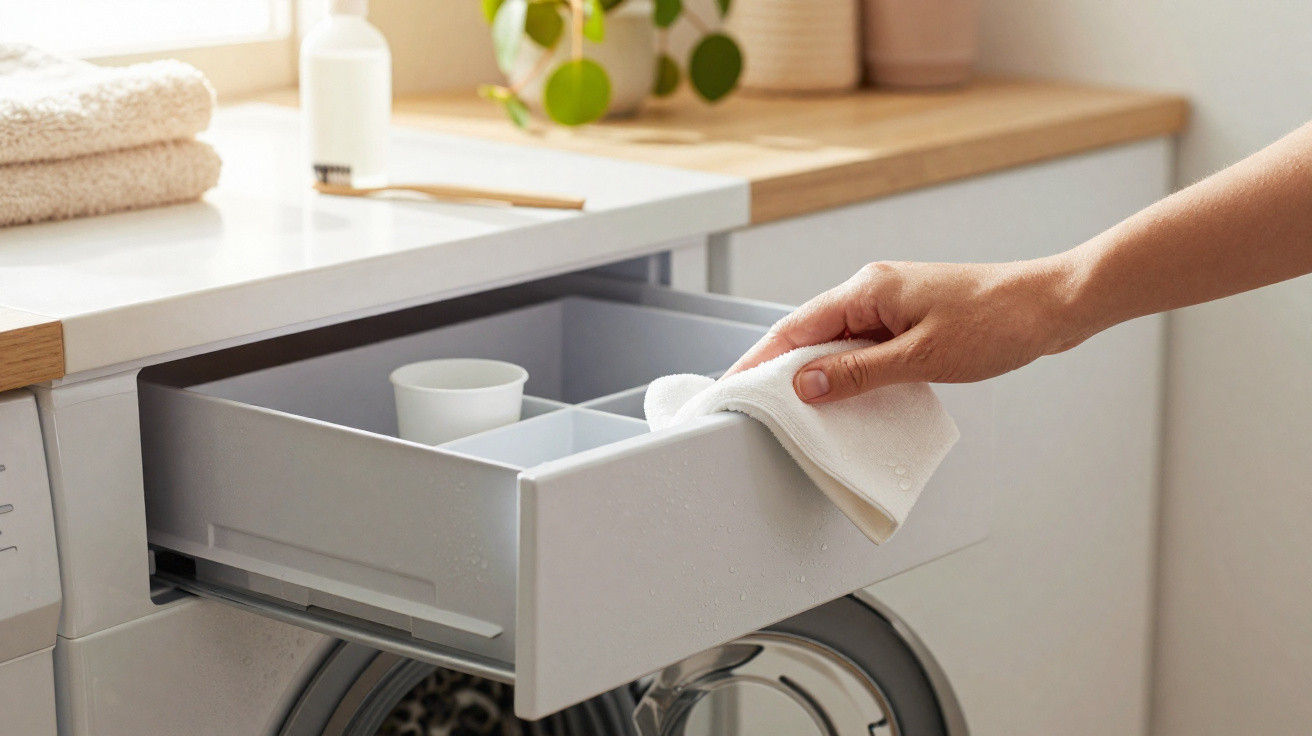
It may seem almost absurdly straightforward: leave your washing machine detergent drawer ajar and the stale smell fades away. However, this modest practice is rooted in sound hygiene and physics. Closing the drawer and dispenser housing after a cycle traps warm, damp air along with product residue, creating perfect conditions for a biofilm that encourages black mould. Opening the drawer slightly introduces airflow, which speeds up evaporation, cuts relative humidity, and removes the water film microbes need to grow. A minor daily ventilation habit transforms the microclimate in the machine’s most overlooked compartment. As a UK reporter who has visited numerous laundries and kitchens, I have watched this one-minute adjustment prevent costly cleaning jobs, unpleasant odours, and even premature appliance breakdowns.
The science of airflow: drying out hidden mould
Mould is opportunistic rather than mysterious. For a colony to take hold, it needs three essentials: moisture, nutrients, and time. A closed detergent drawer supplies each one. Detergent and softener deposits provide nourishment, splashed rinse water creates a fine layer of moisture, and the enclosed space maintains high relative humidity. Airflow disrupts this combination. With the drawer left open, fresh air strips away the still layer of air around surfaces and encourages quicker evaporation. As less water remains on plastic parts and seals, spores find it harder to germinate, while established biofilm dries out and is simpler to wipe off.
Chemistry also plays a part. A number of detergents are mildly alkaline. If they collect in tight gaps, they may irritate skin and gradually corrode components; when airflow dilutes and dries them, the amount of residue is reduced. At the same time, the temperature gradient between a recently used drum and the kitchen or utility room helps moisture move outwards-provided it has an open route. Put simply, airflow brings humidity below the level at which mould can consistently become established, converting a welcoming swamp into an uninviting desert. This is not merely cosmetic: it is free preventative maintenance.
Where mould hides in detergent drawers
Anyone who has removed a drawer to discover black specks and a sickly, sour odour will recognise the typical problem areas. The softener compartment contains a siphon insert that retains water after the last rinse. The roof of the dispenser housing gathers splash-back where water jets meet powder deposits. Tight channels and seals between the drawer and housing hold moisture in their crevices, while shaded corners receive no daylight. Such permanently damp spaces let spores settle and feed on fabric softener and undissolved detergent, particularly during cooler washes.
While visiting a rented Manchester flat, I spoke to a tenant who said, “the smell comes back two days after cleaning.” The reason was the wet siphon cup sitting beneath a closed drawer; weekly wiping did nothing to help it dry. Leaving the drawer open allowed airflow into the roof cavity, and within a fortnight the previously shiny slime had become dull and flaky, making it easy to remove. The crucial point is that mould is not only cleaned away; it can be starved, and airflow is its fastest diet.
| Hidden area | Why it remains wet | How airflow helps |
|---|---|---|
| Softener siphon cup | Holds a pool of water after rinsing | Dries the water film and stops spores germinating |
| Dispenser roof | Atomised spray and condensation | Disrupts the humid boundary layer and accelerates drying |
| Drawer rails and seals | Capillary moisture is held in crevices | Promotes wicking and evaporation from surfaces |
Pros and cons of leaving the drawer open
The pros are clear: the approach costs nothing, takes no effort, and suits every washing machine design. Ventilating the dispenser cuts odour, lengthens the time between deep cleans, and protects plastic parts from prolonged exposure to caustic deposits. Households using cooler cycles-now widespread in the UK for energy saving-benefit especially because lower temperatures leave behind more viable spores and residue. A drawer-gap of airflow outperforms a bottleful of fragrance every time.
There are, though, some trade-offs. In narrow galley kitchens or with integrated appliances, a protruding drawer may catch clothes or knock against cupboard doors. Pets could lick leftover softener, so bottles should be kept beyond reach and spills wiped promptly. Homes with inquisitive toddlers need to consider sharp rails and the small removable siphon pieces. Dust entering the drawer is a minor issue; realistically, washing-generated lint builds up much more quickly than dust from the room. Where appearance is important, leaving a gap of around one finger-width delivers almost the same advantage without leaving the drawer obviously open.
| Pros | Cons |
|---|---|
| Lowers humidity, odour, and biofilm growth | Can snag in confined spaces |
| Free and easy to incorporate into any routine | May gather dust when fully open for weeks |
| Fewer deep cleans and engineer call-outs | Curious children and pets need supervision |
| Supports low-temp, eco-wash routines | Might not work with tightly fitted cabinetry |
A simple routine for a cleaner washing machine
The most effective approach combines airflow with brief regular care. After the last load of the day, pull the drawer open by about 2.5 cm. Where possible, remove the siphon insert from the softener section and empty any standing water. Wiping the dispenser roof with a microfibre cloth for 10 seconds removes the film mould needs to take hold. Keep the machine door slightly open as well, since mould in the drum and seal relies on the same damp conditions. Ventilation is not another task-it is the final stage of every wash.
Each month, run a 60°C maintenance cycle with the drawer taken out and the housing exposed to the room; the combination of heat and airflow removes remaining dampness. Choose powder or liquid detergent and dose it precisely, as excess detergent creates more residue. If you use softener, use concentrated products sparingly: less liquid means less water left pooling after the rinse. Also check the spray jets, using a soft brush to clear any build-up that sends water back towards the roof cavity.
- After washing: leave the drawer and door both slightly open.
- Weekly: take out the siphon, rinse and dry it, then wipe the dispenser roof.
- Monthly: run a 60°C cleaning cycle with the drawer removed for maximum airflow.
- Always: measure detergent accurately to reduce residue.
By leaving the drawer open, you give the machine a meaningful defence against the quiet combination of moisture, residue, and time. This slight increase in airflow reduces humidity, speeds drying, and makes all later cleaning easier, often removing the musty smell that homeowners may mistake for a more serious fault. It is a zero-cost, low-carbon habit suited to cooler washing trends and busy households. If one minute of ventilation can safeguard fabrics, lungs, and an appliance, what other subtle, physics-led changes could improve how you look after your home?





Comments
No comments yet. Be the first to comment!
Leave a Comment