
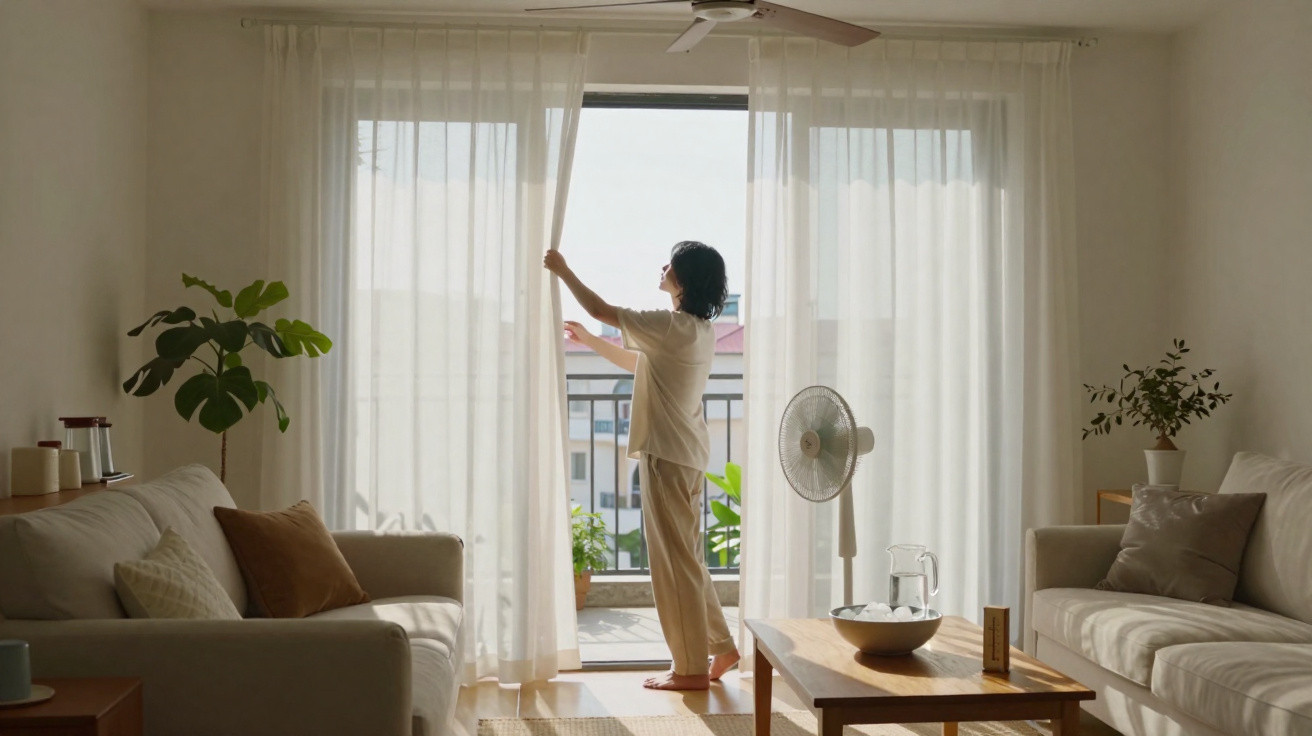
By 3 p.m., the small fan on the kitchen worktop has already surrendered. The dog is lying flat on the tiles. The street outside is buzzing, yet the air indoors feels dense, as though a warm blanket has been draped over the entire house. You open the fridge simply to let the cool air hit your face for a moment. It is that sort of heat.
You look at the thermostat, calculate what another afternoon of air conditioning might add to the bill, and pause. The blinds are partly open, with a pale band of sunshine stretching across the sitting-room floor. You can sense that, somewhere, the house is soaking up the day’s warmth like a sponge.
A neighbour passes by with every window firmly closed and the curtains shut, and you find yourself wondering whether their home could really be cooler than yours. Oddly enough, it probably is – and the solution is almost embarrassingly straightforward.
Why your house gets so hot in the first place
Take a walk through any suburb during a hot spell and certain patterns become obvious. Homes with windows wide open and sunlight flooding in look welcoming from outside. Go indoors, however, and it can feel like entering an oven that is slowly heating up. The houses that appear shut away, with curtains drawn and rooms looking almost gloomy, are often the places where people can nap beneath a light cover.
We enjoy feeling that our homes are open to the outside world. Daylight feels alive, while fresh air suggests freedom. But during a scorching afternoon, the sunbeams that seem harmless on the sofa gradually turn it into a store of heat. Soft furnishings, walls and floors absorb that warmth, then continue to give it off long after the sun has shifted.
People in Spain, Italy and Greece have understood this for generations. Walk through an old town at midday and you will see closed shutters, quiet streets and a sense that everything has stopped. That is not laziness; it is architecture and routine working in tandem. There is a reason thick walls and shaded windows remain common in countries familiar with serious heat.
Picture your home as a living body trying to cope with a heatwave. Sunlight strikes the glass and passes through it easily, before becoming trapped indoors as heat. It is the greenhouse effect, only in your sitting room. Dark furniture and flooring take in more energy and release it gradually, increasing the indoor temperature even after the outdoor thermometer has fallen slightly.
Opening windows at the wrong point in the day merely replaces warm indoor air with hotter air from outside. The structure of the building remains heated. By evening, the walls may still be giving off the effects of yesterday’s poor timing. This is why some homes stay hot far into the night even when the outdoors has become tolerable. It is not only about the air: it is also about the heat the sun has already deposited inside.
The simple trick: treat your home like a human body
The simplest way to keep your home cooler without air conditioning is to follow a practice long used in hot countries: close it up during the day and open it at night. Put simply, block sunlight and heat during the hottest part of the day, then let cooler air in once it arrives.
Think of it as choosing clothes for your house. In the morning, before the sun is high, shut curtains, blinds or shutters on every window receiving direct sunlight. Focus on those that turn very bright or white in the sun. Close them completely rather than leaving them half-open. The aim is shade, not merely “softer sunlight”. Once the outdoor air becomes cooler than the air indoors – generally late in the evening or very early in the morning – open everything up and allow the house to breathe.
The pattern is straightforward: shade + seal when it is hotter outside, then ventilate + flush when the outdoor air is cooler. Repeating this routine over several days of a heatwave can make a striking difference. Some people achieve an indoor reduction of 3–5°C simply by managing their blinds and windows in this way. There are no gadgets or tricks involved, only good timing and consistent habits.
This is where most people stumble. We only do half the job: draw the curtains a little, then forget about them. We open the windows too soon because the air seems as though it ought to be fresh, despite it being 32°C outside. Or we leave the kitchen window slightly ajar “for some air”, unintentionally giving the heat an easy route inside.
Let’s be honest: hardly anyone manages this perfectly every day. You wake up late, rush off to work and do not stop to consider which side of the house gets the morning sun. That is entirely normal. Make the process easier by choosing one or two priority areas, usually the rooms used most in the afternoon, and begin there. The bedroom, sitting room or children’s room is enough to make a noticeable difference.
For blinds with slats, tilt them upwards so that light reflects towards the ceiling rather than landing directly on the floor or sofa. If your curtains are thin, fit an inexpensive reflective blind or hang a temporary white sheet at the sunniest window. It may not look attractive, but your future, less-sweaty self will appreciate it.
“The day I started treating my home like something I had to ‘dress’ for the weather, everything changed,” says Claire, 34, who lives on the top floor of a small apartment block. “I used to think it was just bad insulation. Turns out I was basically slow-cooking my own living room by letting the sun hit the same wall every afternoon.”
Use this quick mental checklist when a hot day is forecast:
- Morning: shut blinds or curtains on sun-facing windows before the heat reaches its peak.
- Daytime: leave windows closed when it is hotter outdoors than indoors.
- Evening: when the air outside feels cooler, open windows on opposite sides to create a cross-breeze.
- Night: leave safe windows open, with fans facing outwards in one room and inwards in another.
- The following morning: close everything again before the sun and heat begin building up.
Small tweaks that make the trick even stronger
Once you have established the shade-by-day, ventilate-by-night routine, small extra measures can work almost like manual air conditioning. One of the easiest is to use fans with a purpose. Rather than aiming a fan at your face all day, position one pointing out of a window in the hottest room so it draws hot air outside. In a cooler room, or on the shaded side of the home, place a second fan to push cooler air in.
Where the air is particularly dry, hanging a damp sheet in front of an open window can provide a little evaporative cooling. It is not glamorous, but it is highly effective. Putting cold packs or frozen bottles behind a fan creates a small stream of cool air. It will not lower the room temperature by 10 degrees, but sitting in that airflow while the rest of the house remains shaded can feel like beating the weather.
At a more structural level, pale blinds and curtains reflect more heat than darker alternatives. Rugs over dark flooring can reduce the amount of warmth absorbed by the surface. Even modest steps, such as switching off unused lights and large appliances in the late afternoon, help move the indoor temperature in the right direction.
| Key point | Detail | Benefit for the reader |
|---|---|---|
| Close by day, open by night | Block sunshine and heat during the hottest period, then ventilate when outdoor air is cooler | Lowers the temperature by several degrees without air conditioning through one simple daily habit |
| Manage window orientation | Target windows in direct sun (east, south or west) with curtains, blinds or shutters | Maximises the “cool home” effect even where insulation is only average |
| Use fans intelligently | Create airflow with one fan extracting air and another bringing it in, while cooling specific areas | Improves comfort without sending the electricity bill soaring |
FAQ:
- What if I do not have blinds or thick curtains? Improvise with a light-coloured sheet, reflective car sunshades or even cardboard on the sunniest windows. The objective is simple: prevent direct sunlight from reaching indoor surfaces.
- Should I leave windows open all night? If it is safe, yes. This is when walls and floors can finally cool down. Where security is a concern, focus instead on early morning and late evening, using a strong cross-breeze.
- Does this work in humid climates? It still makes a difference. The reduction may not be as dramatic as it is in dry heat, but blocking sunlight and using cooler night air intelligently will always make rooms more bearable.
- Can indoor plants help keep a house cooler? A small number will not alter the temperature greatly, but clusters of plants near windows can offer light shade and create slightly cooler, more humid air around them.
- Is reflective film for windows worth the investment? On highly exposed windows, particularly those that cannot be shaded externally, reflective film or thermal blinds can make a genuine difference throughout the summer.



Comments
No comments yet. Be the first to comment!
Leave a Comment