
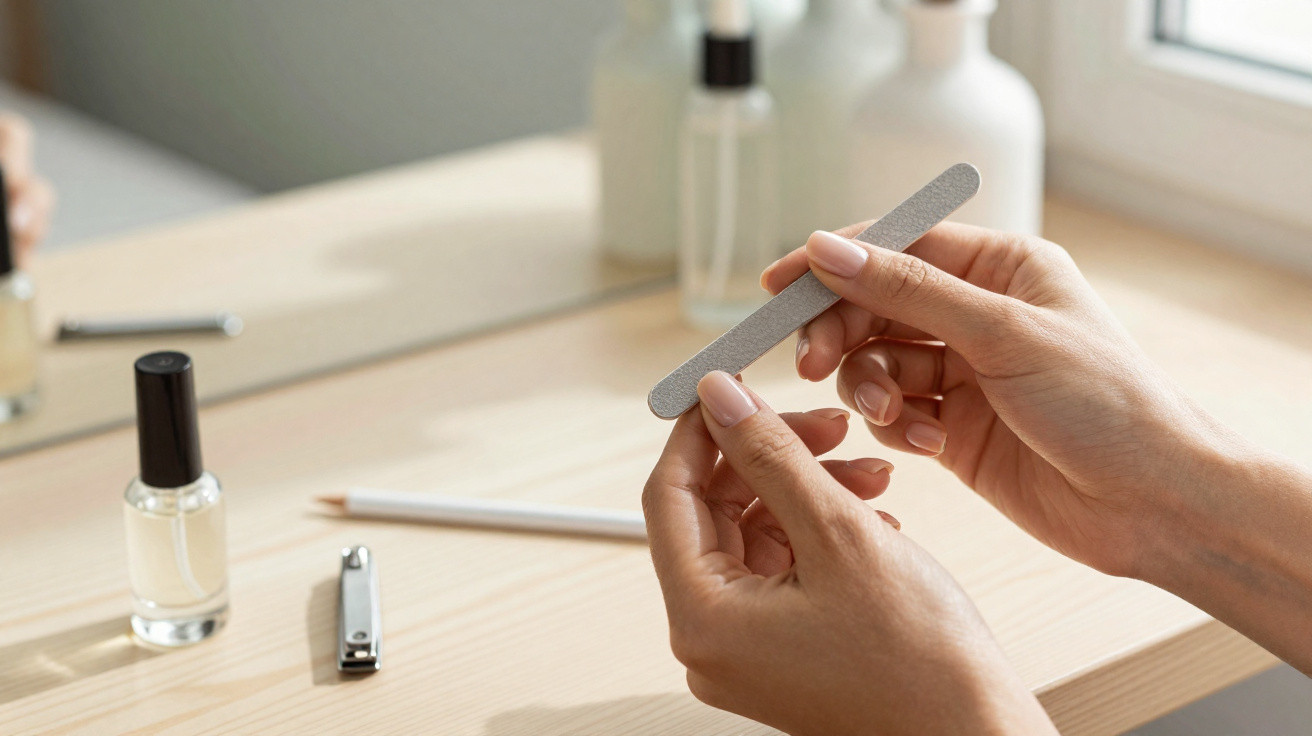
A tiny raised corner on a nail may seem harmless, yet catching it on clothing, hair or a towel can make the chip spread, turning a minor issue into a painful break. Most people instinctively pull at the loose edge with their fingers, but that is exactly what can make the damage worse. Using a nail file gently is generally the safest option.
Why can pulling a chipped section make a nail worse?
When a nail starts peeling or chipping at its tip, the loose section may still be attached to layers that remain intact. Pulling it gives you no control over where the split will end. This can lead to a larger crack, an excessively short edge or even an exposed sensitive area.
The risk is greater when the uneven tip keeps catching on fabrics and objects throughout the day. Rather than trying to tear off the piece, it is worth smoothing the raised area as soon as you spot it. The less the chip moves, the less likely it is to travel across the nail.
Can a nail file stop the corner from breaking further?
As soon as you notice a small chip, take a clean nail file and gently smooth only the uneven part. Use light, controlled strokes, without applying too much pressure or filing areas that are still securely attached. The aim is not to shorten the entire nail, but to remove the point that is catching.
It is also best to avoid harsh back-and-forth motions, particularly if your nails are thin or prone to peeling. Filing carefully makes the tip more even and reduces the chances of the corner catching on a surface and splitting further.
What should you do as soon as you spot a small chip?
Acting promptly is helpful, although there is no need to treat nail care as an emergency. Once you see the irregularity, check whether it is only on the white free edge of the nail and make a gentle adjustment. Then lightly run a finger over the tip to make sure no rough section remains.
- Wash and dry your hands thoroughly before touching the nail.
- Use a clean nail file and make gentle strokes over the raised area.
- Stop once the edge no longer catches on fabrics or hair.
- Do not pull, bite or tear away any layer that is still attached.
If you wish, finish by applying a hand and cuticle moisturiser, especially if your nails are dry. This will not mend a nail that has already cracked, but it can prevent unnecessary handling and keep the area protected as it grows out, allowing the weakened section to be trimmed gradually.
Watch the video shared by the YouTube channel Cristina Lopes Podologia, which offers tips on caring for weak, brittle nails.
When should you avoid trying to fix it with a nail file alone?
If the crack has reached the pink part of the nail, is painful, bleeding or appears attached to the skin, do not attempt to level it aggressively. In these situations, excessive cutting or filing may affect a sensitive area. The best approach is to protect it from further knocks and avoid pulling it.
Frequent breakage also deserves attention, especially if several nails become very thin, change colour or show persistent changes. A nail file can deal with an everyday uneven edge, but it is not a replacement for professional assessment when nail weakness occurs repeatedly or alongside other signs.
A few seconds of care can preserve your nail length
Keeping a small nail file in your handbag or nearby may sound like a minor detail, but it matters when that irritating raised corner appears. Dealing with it early stops the chip catching for hours and improves the chances of keeping the rest of the nail intact.
The next time a corner lifts, resist the urge to pull it. Take your nail file and calmly remove only the uneven section. A few seconds of care can prevent days spent waiting for a broken nail to grow back. Seen a small chip? Deal with it before the next piece of fabric causes the damage.




Comments
No comments yet. Be the first to comment!
Leave a Comment