
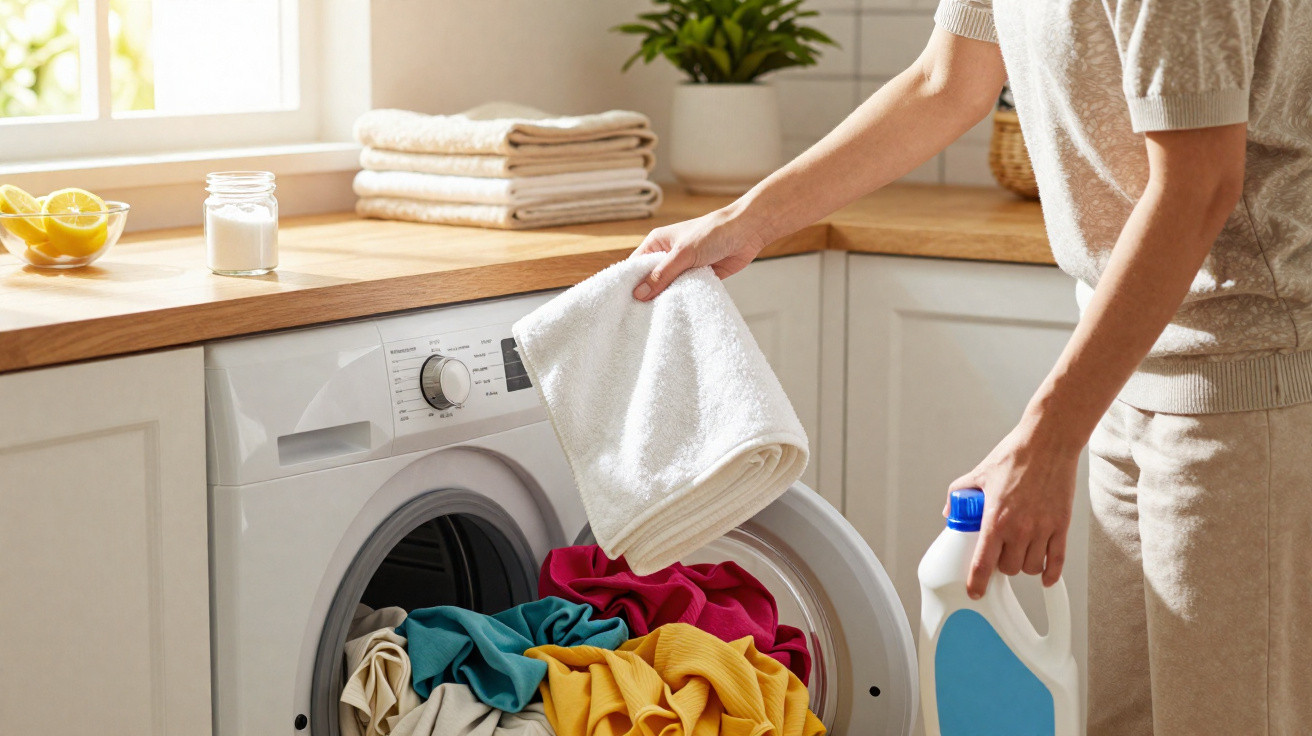
A hoodie that looks as though it has just snuggled a cat. A washing machine with a slightly… marsh-like smell. We buy premium detergents and vow to improve our routines, until everyday life gets in the way. What we need is a solution for the things soap cannot deal with: something ridiculously straightforward, almost traditional. We need a towel.
My laundry basket was packed with dark clothes and pet blankets-the sort of wash you already know will end badly. Lint sticks to every surface, hairs lodge in the seams, and a mild gym-bag odour hangs around for days. As I watched the drum rotate, that familiar annoyance started to build. While scrolling, I came across a short post from a laundrette owner: “Toss in one old towel. Thank me later.” It sounded far too simple to work, but I gave it a go. One clean, coarse towel; no fuss, no wonder product-just fabric rubbing against fabric during a warm, soapy wash. The outcome genuinely made me pause.
Why one towel transforms the wash
The basic principle is this: detergent releases dirt, while a towel catches it. Inside the drum, it provides an extra grippy surface, rather like a helpful bouncer stopping trouble at the entrance. Pet hair, lint and tiny fragments of paper from a stray tissue-anything that detergent cannot dissolve-become caught in the towel’s loops. The load gets more friction and agitation, leaving fewer bits clinging to your clothes. It is not clever technology; it is visible physics.
I tried it in the toughest possible circumstances: black leggings, a fleece, two T-shirts and a blanket belonging to a golden retriever with professional-level shedding ambitions. In the first wash, without a towel, the leggings looked like a galaxy of lint. For the second, I used identical settings and detergent but added one old, clean bath towel. Most of the debris ended up on the towel, while the leggings met the “I’d genuinely wear these outdoors” standard. There was no gadget and no lab experiment-only a towel doing the hard work.
The process is strangely satisfying to watch. As a thick, textured companion in the drum, the towel creates mechanical scrubbing that the garments cannot provide by themselves. Detergent lowers surface tension to release grime, and water lifts it away. The towel loops then work like tiny hooks, catching lint and hair before they can settle back onto the fabrics. It also adds a little weight to the load, encouraging the machine to tumble with more force. There is less floating about and more gripping. That is also why it can help with a faint stale odour: biofilm and residue are disturbed and lifted away rather than merely circulated.
The towel method that works at home
Choose a single towel for this purpose. A coarse cotton towel or a microfibre car-cleaning towel is ideal, while darker colours conceal the collected mess. Dampen it before adding it to the wash so it is ready to pick things up. Use it in loads prone to hair and lint, such as fleece, hoodies, socks, pet bedding and gym kit. Select your normal programme, then use an extra rinse if your machine offers one. Once the cycle has finished, take the towel outdoors and shake it vigorously to dislodge the debris. Afterwards, wash it on its own or with cleaning cloths, without fabric conditioner, so it remains effective next time.
Make the routine practical rather than fussy. Do not use fabric conditioner in a load where you are using this technique, as it coats the fibres and stops the towel from gripping. Avoid cramming the towel into an overloaded drum, too. A load that is one-third to half full gives it enough room to move around and work properly. Leave the towel out when washing highly delicate knitwear. Concerned about dye transfer? Pair a dark towel with dark garments and a light towel with light ones. In reality, no one sorts every wash perfectly. The aim is a method that is good enough and easy to repeat.
There is also a useful extra step for machines that smell musty. Once a month, run a hot maintenance wash with one large towel and one or two cups of white vinegar in the detergent drawer. The towel helps scrub the drum as the vinegar breaks down residue. Afterwards, wipe the seal and detergent drawer. Your sense of smell will notice the difference.
“I tell customers the same thing,” says Lina, who runs a busy corner laundromat. “A clean towel beats another cap of soap. It gives the wash a hand-literally.”
- Use a “sacrificial” towel for lint, hair and maintenance washes.
- Never use fabric conditioner on the towel.
- Shake the towel outside as soon as the wash ends.
- This works very well in high-efficiency machines-just avoid overfilling them.
- If washing brand-new dark items with a light towel, test a small area first.
How the towel trick improves your laundry routine
Once you have watched the towel trick do its job, it changes what you expect from a wash cycle. Instead of battling lint with sticky tape and irritation, you stop trying to solve every issue by adding more detergent. You use texture and movement to complete the cleaning process. It is practical, quietly effective and easy to fit into a busy week without creating another task to remember. We have all pulled out a wash and thought, “I don’t have time for this.” This small adjustment can turn that minor dread into a fast success. Pass it on to a friend with a black dog and an all-black wardrobe, or test it on the load that always lets you down: gym clothes, children’s hoodies or that fluffy throw. A towel will not solve every problem, but what it catches may surprise you.
| Key point | Detail | Benefit for the reader |
|---|---|---|
| Useful friction | A towel adds a surface that catches hair, lint and residue | Less lint on dark clothing |
| Machine maintenance | A hot wash with a towel and vinegar helps lift film and odours | A machine that smells clean and fresher laundry |
| Simple routine | One dedicated towel, no fabric conditioner and an extra rinse | An easy habit with visible results and no “magic” products |
Frequently asked questions
- What kind of towel works best? A coarse cotton bath towel or a microfibre car-cleaning towel. Microfibre catches hair like Velcro, while cotton loops hold lint effectively. Keep one towel solely for this task.
- Will a towel damage delicate clothes? Not if you choose the load carefully. Do not add one to fine knits, lace or loosely woven fabrics. It is best used with fleece, cotton, denim, sportswear and pet bedding.
- Can I use fabric conditioner or tumble dryer sheets with this trick? Do not use fabric conditioner on the collection towel. It coats the fibres and removes its grip. If you enjoy using fabric conditioner, reserve it for other loads rather than those in which the towel is working.
- Is this safe for high-efficiency and front-loading machines? Yes. The towel provides useful agitation without damaging the drum. Keep the load moderate so that it can move around. An extra rinse helps remove what it has collected.
- How do I clean the towel after it has collected hair and lint? Shake it outdoors, then wash it alone or with cleaning cloths on a hot cycle without fabric conditioner. Every few weeks, refresh it with a hot wash and vinegar. It is a tool, not a display piece.






Comments
No comments yet. Be the first to comment!
Leave a Comment