
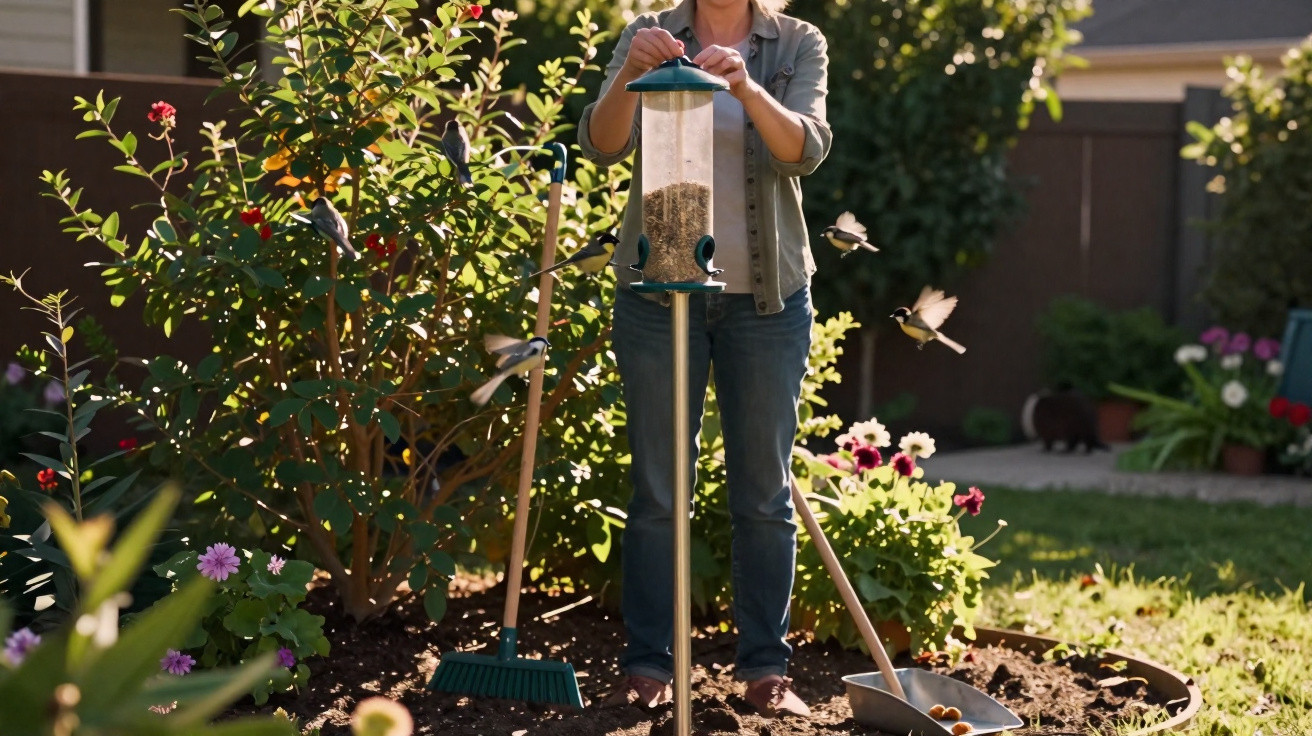
Something else is watching, however.
In towns and suburbs alike, caring bird enthusiasts may unknowingly be putting out an all-you-can-eat feast for rats. The seeds that help finches and robins survive freezing spells can also attract rodents, bringing the hygiene concerns and disease hazards associated with them. A handful of sensible adjustments can keep birds visiting while bringing the rat feast to an end.
When feeding birds quietly invites a rat problem
Winter is particularly tough for small birds. Their natural food becomes scarce, the days are shorter, and simply keeping warm uses vast amounts of energy. Garden feeders can therefore be genuine lifesavers, particularly in January and February.
Rats, however, are highly opportunistic. Their arrival is not accidental: they follow smells, regular patterns and familiar places where food is plentiful and simple to access.
Rats don’t “appear out of nowhere” – they follow reliable food sources, and a badly managed feeder is exactly that.
After rats discover a dependable source of grain, they seldom merely collect the food dropped below a feeder before departing. They can begin nesting in sheds, garages, compost bins or beneath decking. Their urine and droppings may contaminate patios and bird-feeding spaces. Once they have settled in, persuading them to leave is considerably harder.
The answer is not to stop feeding birds. The problem is unrestricted access: seed left on the ground, feeders positioned too low or poorly, and large evening supplies left out long after the final blackbird has roosted.
Turning the feeder into a fortress
Rats can climb, jump and pass through surprisingly small spaces. Protecting bird seed means considering three factors at once: height, distance and the support type.
Height: preventing the jump
Rats can leap roughly half a metre vertically, and even higher when they have something to push off from. A low-hung feeder effectively welcomes them in.
- Hang feeders at least 1.5–1.6 metres above ground level.
- Reserve low tables and trays for ground-feeding birds only where you are sure rats are not active locally.
- Lift low platform feeders, or take them away, if you spot signs of rat activity.
A feeder high enough and far enough from launch points can become practically unreachable for rats, even if they are determined.
Distance: removing nearby “springboards”
Height by itself will not solve the issue when a feeder is close to a branch or fence. Rats treat walls, ledges and even outdoor furniture as places to launch from.
As a general guide:
- Position feeders at least 2 metres from trees, sheds, fences and walls.
- Do not place feeders on railings, trellis or pergolas that rodents can climb with ease.
- Move ornamental pots or benches directly beneath a feeder if they help rats get nearer.
Creating this “no-launch-zone” around a feeder greatly reduces access for rats and grey squirrels, while birds can still fly in without restriction.
Support: narrow, smooth and difficult to scale
A number of commonly used stands unintentionally make life easier for rats. Thick supports and rough wooden posts offer claws plenty of purchase.
More suitable choices are:
- A narrow, smooth metal pole for suspended feeders.
- Fine metal chain rather than rope when hanging a feeder from a branch.
- Baffles – cone-shaped or dome barriers – attached around the pole.
| Support type | Rat access | Comment |
|---|---|---|
| Thick wooden post | Easy | Provides excellent claw grip and should be avoided. |
| Smooth metal pole | Difficult | Among the most effective choices. |
| Rope or twine | Moderate | Rats may climb it or gnaw through it. |
| Fine metal chain | Hard | More difficult for rats to climb down. |
Fitting a baffle may seem excessive, yet it can be the difference between an occasional rat and an ongoing pest issue.
The “zero waste” menu that leaves nothing on the ground
Rats are usually fed not by the seed remaining in the feeder, but by what drops below it. Birds can be selective, throwing aside husks, split grains and any food they do not want, leaving a nightly buffet for nocturnal animals.
Every husk on the lawn is a tiny billboard saying “free food here” to the rats patrolling after dark.
Selecting seed that birds will eat
Inexpensive “wild bird mixes” frequently contain substantial amounts of wheat, lentils and large pulses. Many garden birds disregard these ingredients, scattering them underneath the feeder.
Choose foods that birds consume almost entirely instead:
- Dehulled sunflower hearts – very nutritious, with virtually no waste.
- High-quality seed mixes containing few fillers and little broken maize.
- Peanuts in mesh feeders – whole nuts in suitable cages create fewer crumbs.
Fat-based foods can be useful too, provided that they are solid and tidy:
- Choose compressed fat blocks in rigid holders instead of crumbly fat balls supplied in plastic nets.
- Where possible, select plant-based fats free from palm oil, for environmental as well as wildlife reasons.
The less food that falls, the less is available to rats. You may pay a little more for each bag, but far less is wasted and the likelihood of attracting pests falls.
Two minutes a day that change everything
Some mess is unavoidable, even with the finest seed blend. A short daily habit is therefore your most effective protection.
Think of cleaning under the feeder as closing time at the bar: once the floor is clear, late-night visitors lose interest.
Carry out a quick check once each day, preferably in late afternoon or early evening:
- Brush or rake up spilled seed and shells beneath feeders.
- Empty any seed-catching trays in use.
- Look for droppings or gnaw marks that may indicate increasing rat activity.
For a patio or balcony, a dustpan and stiff brush will generally do the job. On a lawn, placing a broad tray or platform beneath the feeder catches much of the spill and makes cleaning simpler.
Portion sizes are equally important. Put out only roughly one day’s supply of food. When feeders remain half full at dusk, too much is being offered. Birds eat during daylight, so food left overnight is essentially set aside for rodents.
Keeping the birds, not the rats, in your garden
When access is blocked and the dependable food source disappears, many rats will seek easier options elsewhere. Depending on how firmly established they are, this change may occur over days or weeks.
A tidier, safer feeding spot also helps birds. It lowers their exposure to disease risks caused by damp, mouldy seed and droppings. It can also prevent disputes with neighbours who dislike rodents and may otherwise hold your bird feeding responsible.
What “rodent-proof” really means in practice
No garden can be made completely rat-free. Cities and suburbs especially contain numerous alternative food sources and hiding places, including compost and bins.
In practical terms, “rodent-proof feeding” means ensuring your arrangement is not the area’s easiest option. Faced with a choice between a garden with regular seed spillage on the ground and one where the only seed is clean, high up and difficult to reach, rats will usually choose the former.
Consider likely situations. Picture a hungry rat on a cold, wet night, emerging from a sewer or railway embankment. It follows food scents along your street and investigates three gardens. One has bird seed scattered beneath a low table. Another has pet food left on the patio. In yours, the sole food source is 1.6 metres above ground on a smooth pole, with no seed below and nothing accessible. That modest contrast strongly shapes where the rat chooses to remain.
Extra steps for high-risk homes
Some homes are naturally located where rat traffic is greater: beside rivers, close to restaurants, near old drainage systems or in blocks of flats. Bird feeding in these locations requires additional care.
- Choose caged feeders that physically keep larger animals out.
- Do not ground-feed at all during periods of high rat activity.
- Keep bird food in metal or thick plastic containers with secure lids.
- Inspect rubbish storage, compost bins and chicken coops, since these may undermine the work done at the feeder.
For renters or people in densely packed homes, a quick conversation with neighbours can help bring feeding practices into line. A single immaculate garden surrounded by three patios scattered with seed will not entirely disrupt the established routine of a rat colony.
The key is balance: helping urban biodiversity without operating a nocturnal canteen for rodents. By raising the feeder, offering a cleaner menu and spending two minutes each day on maintenance, birds can still enjoy their winter feast – while rats have to search elsewhere.





Comments
No comments yet. Be the first to comment!
Leave a Comment