
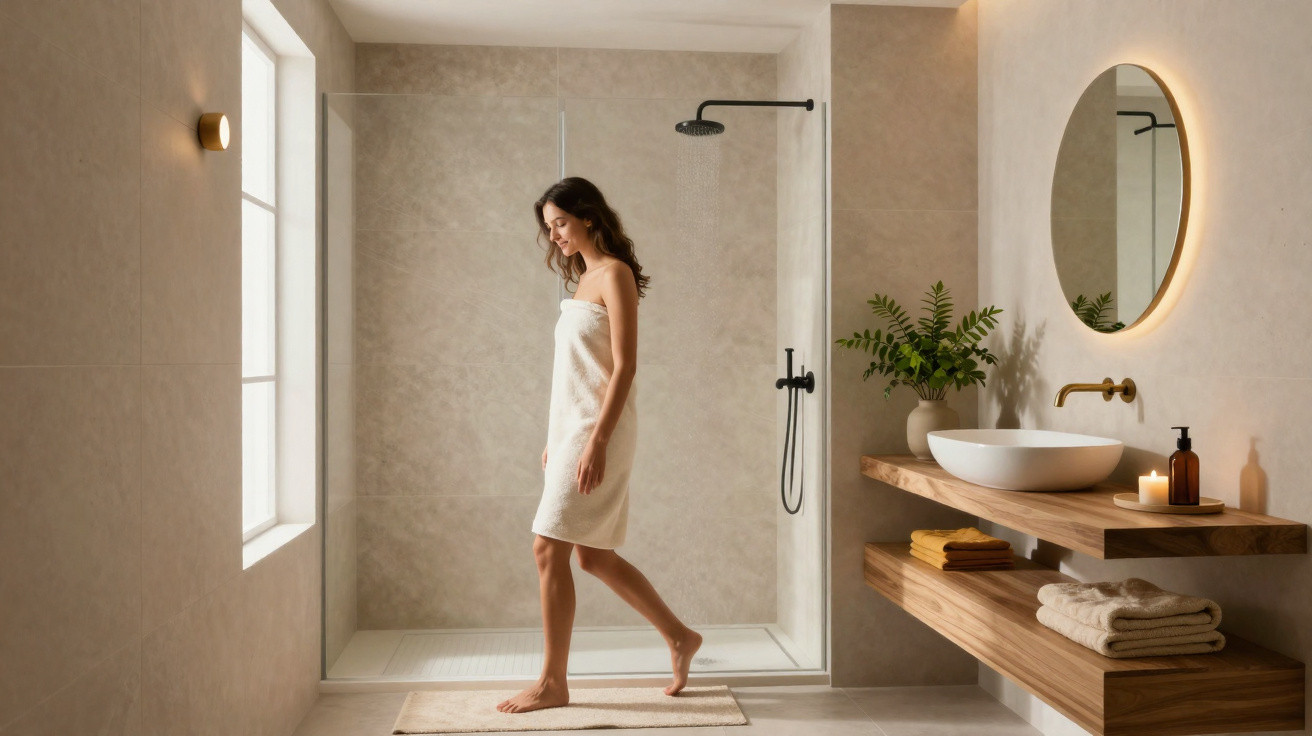
Many people will recognise the scene: a practical but unloved bathroom, tiled right up to the ceiling, with a fluorescent tube overhead and absolutely no sense of wellbeing. It is a room you use, nothing more. Yet current bathroom trends for 2026 show that even a dated bathroom can be turned into a warm, modern retreat with a few well-chosen changes – often without clouds of dust or months of building work.
Why the bathroom is becoming a compact wellness space in 2026
For a long time, the bathroom was purely functional: take a quick shower, brush your teeth and leave. Daily life is becoming busier, working from home is more widespread, and this room has suddenly become a place to escape to. Hotels and spas provide the inspiration, but the result needs to be affordable and achieved without a full refurbishment.
“The trend is clearly moving towards quick, clean and durable solutions that can be installed over existing tiles and fittings.”
This is exactly where 2026 bathroom trends come in. Rather than stripping everything out, much of the transformation is achieved with coatings, large-format cladding, smart furniture and atmospheric lighting. Five areas stand out in particular, and they can visibly refresh even a tired 1990s bathroom.
Trend 1: Seamless surfaces instead of a sea of tiles
Anyone fed up with old tiles does not necessarily need to remove them. Continuous finishes that make walls or floors appear as one uninterrupted surface are becoming increasingly popular. Typical options include:
- Microcement with a subtly mineral appearance
- Mineral resin systems with a satin-matt finish
- Technical panels bonded directly over tiles
The benefit is obvious: less mess, no building rubble and a shorter installation period. Old grout lines disappear, along with many of the small areas where dirt and mould tend to accumulate, especially around the shower and bath.
Flooring is where the idea becomes particularly interesting. Rather than slippery standard tiles, 2026 is bringing lightly textured finishes into focus. Designers are choosing natural stone with fine relief, for example, or slip-resistant porcelain tiles. This improves safety without making the room feel clinical.
“Flooring with light slip resistance reduces the risk of falls – an important consideration for children, older people and anyone planning a future-proof bathroom.”
Trend 2: Decorative panels – a new look in a matter of hours
Those looking to make a dramatic visual change to their bathroom are increasingly opting for large-format panels. These waterproof boards are glued straight over the existing finish, for example:
- In a marble effect with striking veining
- With a raw stone or slate appearance
- In a soft concrete look
- In a warm wood or wood-slat effect
Panels create a bold yet calm backdrop, particularly in the shower or behind the basin. Their generous dimensions make walls appear less busy than lots of small tiles. The colour direction is towards warm natural shades: cream, sand, greige and gentle earthy tones.
This can be especially appealing for tenants: with the landlord’s consent, some systems can be removed without leaving residue. Homeowners seeking a lasting improvement to their bathroom will be more likely to choose sturdy, permanently bonded options.
Trend 3: Vanity furniture as a focal point, not just storage
In 2026, the vanity area is taking on a more central role, almost like a piece of furniture in the living room. Instead of bulky standard base units, the sought-after choices are:
- Wall-hung vanity units with visible wall space beneath
- Airy metal frames rather than enclosed plinths
- Bespoke worktops in stone, solid-surface material or wood
The uninterrupted floor makes the room look larger, cleaning becomes easier and the space gains a contemporary, almost hotel-like feel. Where there is enough room, double basins with a large mirror can be planned to emphasise the room’s width.
“Rather than an ‘off-the-shelf bathroom block’, the trend is for combined solutions: a light base, a distinctive basin and a large mirror with integrated lighting.”
Materials are also becoming more interesting. Marble and onyx effects add a sense of luxury, even when they are durable imitations. Gold- or bronze-coloured veining in otherwise understated surfaces is particularly fashionable, complementing taps in warmer tones.
Trend 4: Level-access showers and greater everyday accessibility
The level-access shower has long been more than a design feature. In 2026, it is becoming standard because it offers several benefits:
- No high step to negotiate – more comfortable and less hazardous.
- The room appears larger and calmer.
- Cleaning is easier, as there are barely any edges or grout lines.
Anyone planning from scratch or already renovating can dispense with the shower tray and choose a low-profile construction with a linear or point drain. A built-in seat, clad in a waterproof finish, is often included. This creates a combination of shower and mini spa.
Practical details matter too: a hand shower alongside the main shower head, easy-to-reach niches for shampoo, secure grab rails and perhaps a slightly wider doorway. None of this may look dramatic, but it makes the room fit for everyday use over the long term, especially as circumstances change.
Trend 5: Statement taps, lighting and textiles for the finishing touch
Even the most attractive panel has little impact if the taps and lighting look outdated. In 2026, it is above all the details that transform the atmosphere.
Taps with character
Standard chrome now has serious competition. Popular finishes include:
- Matt black for graphic, contemporary bathrooms
- Brushed steel for a pared-back loft look
- Warm-toned brass or bronze for a more homely feel
Taps designed to age deliberately are especially appealing, such as untreated brass that develops a patina over time. This looks less sterile and removes some of the bathroom’s utility-room character.
Layered lighting instead of a harsh ceiling light
Many older bathrooms have only one harsh light source. That works neither for applying make-up nor for relaxing in the evening. The trend is towards several layers:
- General lighting on the ceiling or wall for orientation
- Soft, glare-free lighting at the mirror for grooming and make-up
- Indirect light strips or small wall lights for evening calm
A warm-white light temperature makes skin look more natural and takes away the room’s sterile feel. Those upgrading gradually often begin with an illuminated mirror – a change that already makes a major difference without completely altering the electrical installation.
Textiles and décor: minimal, but thoughtfully chosen
High-quality, thick towels in rich shades, a soft bathroom rug instead of a thin mat, perhaps one stool in wood or metal – details like these bring a lived-in feel to the bathroom. Many interior professionals even use small vintage pieces: an old stool, a small bench or a picture frame above the bath.
“Using accessories selectively creates atmosphere without turning the bathroom into a cluttered storeroom – fewer items, but better quality.”
How to apply the trends realistically in your own bathroom
Not every bathroom can be rebuilt from the ground up; budget and structural constraints set limits. A staged plan is sensible, for example:
| Level | Measure | Effect |
|---|---|---|
| 1 | New textiles, lighting and mirror | Noticeably cosier, with no changes to the building fabric |
| 2 | Decorative panels in the shower / behind the basin, new taps | Visually almost like a new bathroom |
| 3 | Level-access shower, low-grout coating, new furniture | Complete comfort-focused transformation with added future benefits |
Careful planning makes it possible to combine individual jobs. If a new shower is needed anyway, it is worth considering slip-resistant tiles and modern niche solutions at the same time. When replacing the vanity, connections can be positioned to allow for wall-hung furniture.
A few considerations not to overlook in the rush for trends
As tempting as seamless surfaces and elegant taps may be, daily use and maintenance matter just as much as appearance. Highly textured natural stone looks impressive, but needs careful sealing. Dark taps show limescale more quickly, so they need to be dried regularly. And microcement should be installed by a specialist company to ensure it remains genuinely watertight and durable.
On the positive side, a clear increase in a property’s value is possible: a modern, well-planned bathroom plays an important role when letting or selling. Many buyers now pay closer attention to accessibility, slip-resistant floors and the ability to use the room easily in later life.
Anyone investing in these solutions now benefits twice: through greater comfort and atmosphere in everyday life, and over the longer term from a bathroom that does not demand the next quick trend-led update every few years.


Comments
No comments yet. Be the first to comment!
Leave a Comment