
Across Europe and the US, homes get through hundreds of single-use floor wipes each year, frequently overlooking a free reusable option that may already be in the linen cupboard.
Transforming an old towel into a reusable floor pad
Many people discard bath towels when they become faded and scratchy rather than soft. That worn texture, however, makes them particularly useful for household cleaning, especially washing floors.
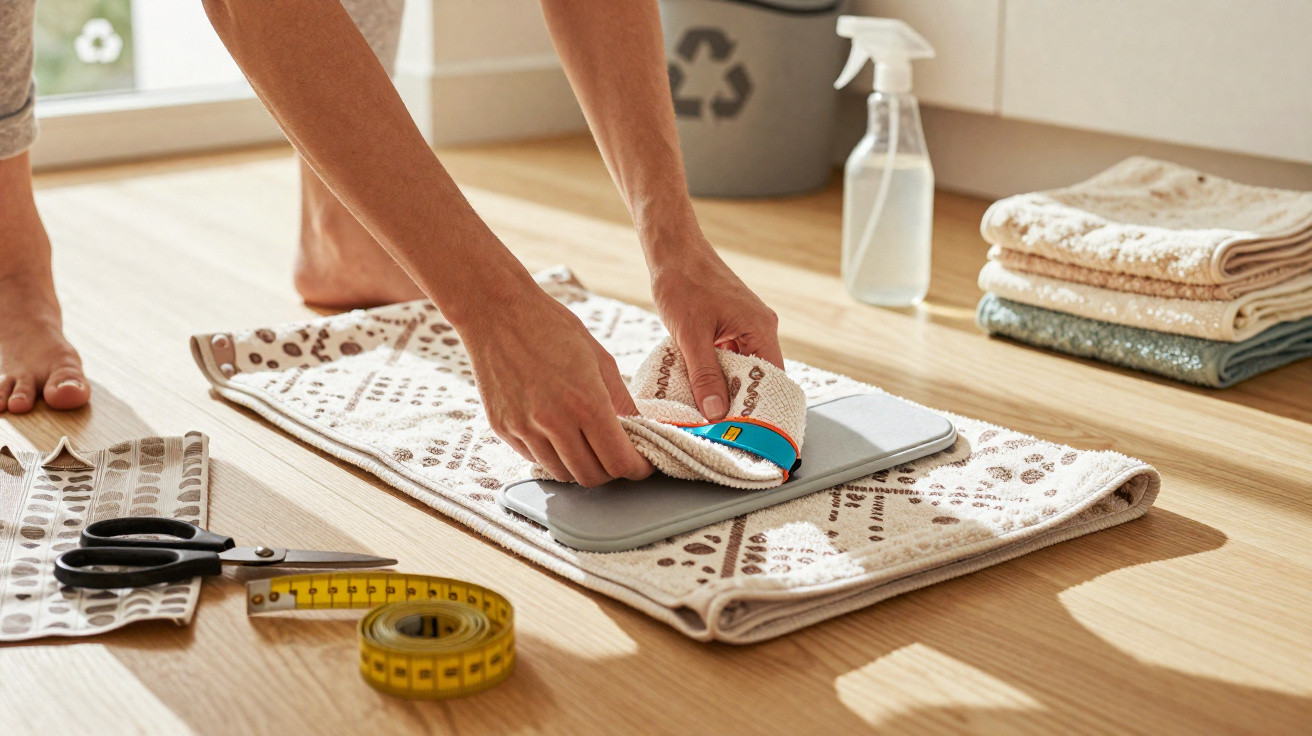
The process is straightforward: trim an old cotton bath towel to the size of a flat mop head, such as a Swiffer-style broom, then use it as a washable replacement for disposable sheets.
With one old towel, a household can create a small “fleet” of reusable mop covers and avoid buying refills for years.
This small adjustment replaces part of a disposable cleaning routine with something long-lasting. You need no sewing machine or specialist equipment: only scissors, a ruler and some careful measurements.
Why terry cloth is effective for floor cleaning
Bath towels are usually made from terry cloth, which contains thousands of small woven loops. These loops work rather like tiny hooks.
They trap dust, hair and crumbs, as well as the fine grit often left behind on tile or laminate after a quick vacuum.
Cotton terry also absorbs moisture effectively. Whereas many disposable wipes contain synthetic fibres that largely move water across the surface, cotton holds moisture - and the dirt carried with it - within the fibres.
As a result, a towel pad performs more like the professional mops and flat pads used in offices and hospitals, which are made to lift particles rather than merely spread them around.
Terry cotton combines mechanical action from its loops with strong absorbency, so it both dusts and washes in one tool.
What the change means for your bin and budget
Cleaning hard floors twice weekly with two disposable wipes on each occasion uses around 208 wipes annually.
At approximately 30 to 40 euro cents, or a comparable amount in pounds or dollars, per wipe, the yearly cost comes to between £55 and £70, depending on the retailer and brand.
In comparison, one large bath towel measuring about 70 x 140 cm can be cut into multiple reusable covers or a pile of square cloths. Every piece can withstand dozens of hot washes.
- Frequency: 2 floor cleanings per week
- Disposable wipes: 2 per cleaning
- Yearly count: about 200+ wipes
- Yearly spend: approximately £55–£70
- Reusable towel pads: made once, used and washed for months or years
For households seeking to reduce both rubbish and household spending, this offers two benefits: fewer plastic-wrapped products to throw away and less money spent on replacement refills.
Step-by-step: making a flat-mop cover from a towel
This approach, described in French households, has been shared informally on social media because it is fast and requires no sewing experience.
1. Measure the mop head
Set the flat mop head in the centre of the towel and use a tape measure to record its length and width.
Allow an additional 5 to 7 cm on every side. The surplus fabric will wrap around the edges and fit into the small plastic or rubber grips intended to secure disposable wipes.
2. Draw and cut the rectangle
Mark out the rectangle on the towel with a pencil or fabric marker, then carefully cut along the lines using sharp scissors.
Keep the edges as even as possible. When making several matching covers, retain the first cut piece as a template.
3. Cut small slits at the corners
Make a short, straight slit around 2 cm deep at each of the rectangle’s four corners.
These cuts allow the thick terry cloth to fold smoothly around the mop head corners without gathering or being stretched too tightly.
4. Attach the cover to the mop
Place the cut towel section flat, with the terry side facing down if one side is smoother. Centre the mop head on top.
Fold the edges of the fabric over the mop head, then push them firmly into the existing grips or slots normally used for single-use wipes.
The corner slits act like flexible hinges, allowing the fabric to stretch around the mop and stay tightly in place while you clean.
When it needs washing, the cover can be removed in seconds and placed straight in the laundry basket.
Everyday use for your DIY floor pad
When used dry, the towel pad works much like a static wipe, lifting dust and lint from tile, vinyl and laminate surfaces.
Slightly dampened, it becomes a compact mop for regular hard-floor washing.
Matching moisture levels to your floor
- Tiles and vinyl: run the pad under the tap, wring it out well and attach it to the mop.
- Laminate: keep it merely damp rather than wet to prevent the boards swelling.
- Wooden floors: use a barely damp pad and make brief, fast passes.
For high-traffic spots such as kitchens, hallways and pet areas, a two-stage method can be effective: first use the dry pad to gather fur and crumbs, then follow with a damp pass to remove marks and stains.
A basic homemade cleaning solution
Some households prefer to soak several pads beforehand in a gentle cleaning mixture, leaving them ready for a quick floor clean.
One common formula fills a lidded glass jar with one third white vinegar and two thirds demineralised water, adding a few drops of lemon essential oil for fragrance.
Leave the pads to soak in the solution, wring them out before cleaning, and put them in with the next load of household laundry afterwards.
Regular washes at 60°C are enough to keep cotton floor pads hygienic, as long as you skip fabric softener, which can reduce absorbency.
Washing, maintenance and lifespan
Wash the towel covers alongside other household textiles at 60°C. This heat helps lift grease, bacteria and cleaning-product residue from the fibres.
Do not use fabric softener, as it coats the cotton loops and slowly reduces their ability to absorb moisture.
Where possible, dry the covers on a washing line in sunlight for natural deodorising and a gentle bleaching effect. Shaking them briefly before folding helps restore the terry loops.
Slightly frayed edges do not usually stop a pad from working. Should a corner rip, simply trim the rectangle smaller and reuse it as a dusting cloth or hand rag.
Other useful ways to reuse old towels
Once you begin cutting up worn towels, further uses tend to suggest themselves.
- Small dishcloths for stubborn kitchen spills
- Absorbent mats beneath pet bowls or litter trays
- Garage rags for car cleaning and DIY work
- Protective padding for moving furniture
These alternatives extend a towel’s useful life as far as possible before it eventually goes to textile recycling or, only as a final option, the bin.
What “zero waste” means here
The term “zero waste” may sound absolute, although in reality it often means “less waste, more reuse”.
Converting a towel into a mop cover will not make a home entirely waste-free. Instead, it eliminates one repeat purchase and one regular source of rubbish: disposable floor wipes and their packaging.
Over several years, small repeated decisions of this kind can add up. A family that avoids 200 wipes annually prevents several kilograms of mixed waste that can be difficult to recycle.
Practical situations: who gains most from this idea?
In a compact city flat with mainly hard flooring, three or four towel covers can manage regular cleaning: one on the mop, one being washed and the rest ready to use.
Households with pets may see the clearest practical difference. Terry cloth’s dense loops can collect fur more effectively than many thin synthetic wipes, particularly beneath furniture and along skirting boards.
For anyone on a limited budget, the financial benefit is clear. An old towel is effectively “free material”, whereas single-use wipes create a continual stream of small costs throughout the year.
Limits, risks and sensible precautions
There are several considerations to bear in mind. Excess water can stain or warp delicate or untreated wooden floors, whether the cleaner uses a towel pad or a branded wipe.
White vinegar fumes and essential oils can affect some people. Good ventilation and very small amounts can manage this, or plain warm water with a neutral floor cleaner can be used instead.
Although hot washing keeps the pads hygienic, replace them if they retain an odour or become so thin that they no longer clean properly.
With basic care, though, a tired bath towel can have a second life beneath your feet, quietly taking the place of another disposable item from the cleaning aisle.




Comments
No comments yet. Be the first to comment!
Leave a Comment