

Rather than relying on an expensive intensive treatment or a glossy professional conditioner, the secret behind mirror-like hair lengths is an age-old household remedy found in almost every kitchen. One simple change to your routine can make dry, dull hair look visibly smoother, easier to comb and noticeably shinier – all without a conventional conditioner.
How I sent my hairdresser completely down the wrong track
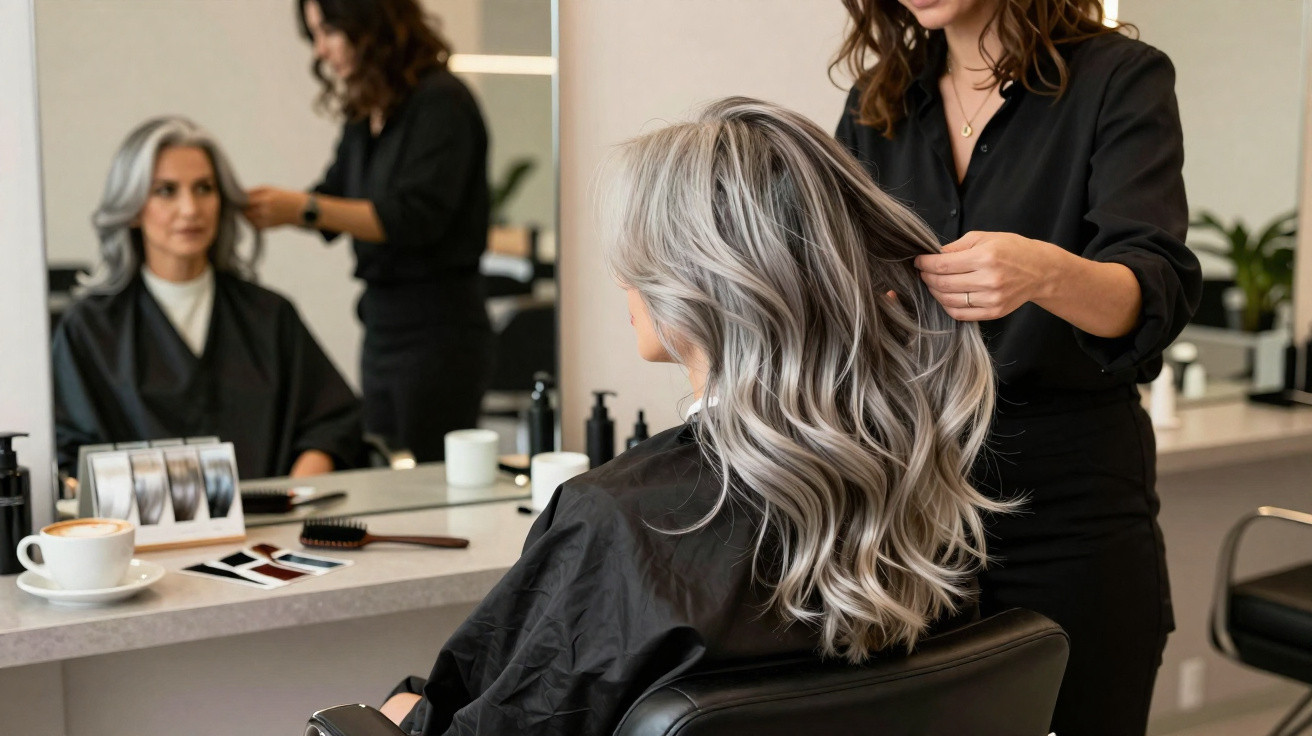
After winter, plenty of people know the standard verdict from a professional: dry ends, lacklustre lengths and tired-looking roots. This time, however, the situation was entirely different. My hair looked sleek and soft, and I could comb through it without tugging. It reflected the light as though a luxury salon treatment had just been applied.
“The hairdresser assumed I was using an expensive branded range – but the answer was in the kitchen cupboard, not on the bathroom shelf.”
This highlights a common misconception: many people think only costly, high-tech products can deliver visible results. In reality, hair biology is far more straightforward. Hair structure responds mainly to pH, residue and the condition of the cuticle – not to the price on the bottle.
Why conventional conditioners can leave hair heavy and lifeless
Anyone prone to dry ends will often automatically reach for rich post-shampoo products and masks. Hair may feel better in the short term, but over time many people experience the same issue: weighed-down lengths, a lack of volume and roots that become greasy more quickly.
One reason lies in the ingredients. Many products contain:
- silicones that coat the hair in a film
- plant-based and synthetic waxes
- petroleum-derived film-forming agents
These substances cover every individual strand like a coating. At first, this creates smoothness and shine, but eventually an invisible layer can build up that is difficult to wash away completely. Professionals call this “build-up” – effectively, an accumulation of layers.
“The more coating products that enter the routine, the more likely hair is to look heavy, dull and in need of treatment.”
That creates a vicious cycle: when the lengths look dull, even more product is applied. Hair turns greasy sooner, it is washed more often, the roots dry out and the ends suffer further. Many people then increase the amount of conditioner or mask they use – ultimately making the very problem they want to solve worse.
The overlooked household remedy: what apple cider vinegar has to do with luxury haircare
The real “secret weapon” that surprised the hairdresser is not an exotic oil but apple cider vinegar. Traditionally used in salad dressings, it is now regaining attention in haircare.
Apple cider vinegar is made by fermenting apples. During this process, it develops, among other things:
- acetic acid
- minerals such as potassium and magnesium
- trace elements and secondary plant compounds
This combination can affect both hair and scalp in several ways. Its mild acidity helps loosen residue without stripping away oils aggressively. At the same time, the skin’s natural protective barrier remains largely intact. This is something many “clarifying” shampoos fail to achieve: although they cleanse thoroughly, they can quickly cause irritation.
Calcium, pH and shine: the science behind the vinegar trick
Anyone living in a hard-water area will recognise the issue: limescale settles everywhere – including on hair. With every wash, tiny calcium deposits remain on the surface. They roughen the structure, reduce shine and intensify the feeling of dryness.
“A fine veil of limescale is enough to seriously reduce light reflection – even the best shampoo cannot fully compensate for it.”
Apple cider vinegar acts as a gentle descaler in this case. The acid it contains dissolves mineral deposits without attacking the hair fibre. pH also plays a central part. Healthy hair sits in a mildly acidic range, yet many shampoos – and especially tap water – shift that value towards alkaline.
When this happens, the scales on the hair surface lift. The result is:
- hair appears frizzy and brittle
- it tangles more easily
- conditioning ingredients penetrate unevenly
A mildly acidic rinse returns the pH to its ideal range. The cuticle settles back down and the surface becomes smoother. Smooth hair reflects light more effectively, so it automatically looks healthier, even without a silicone coating.
How the “1-to-4” apple cider vinegar method works
This approach does not require an elaborate DIY regime. The only essential factor is the correct mixing ratio. Undiluted vinegar would be too strong for the scalp, whereas diluted vinegar is entirely sufficient.
The basic recipe for a shine rinse
- 1 part apple cider vinegar, ideally cloudy and organic
- 4 parts cool water
Apply it step by step as follows:
- Wash your hair as usual with shampoo and rinse it thoroughly.
- Slowly pour the vinegar-and-water mixture over the scalp and lengths.
- Massage it in gently, especially at the roots and ends.
- Leave it on for around two minutes.
- Rinse thoroughly with cool to cold water afterwards.
“A brief cold rinse after the final step noticeably enhances the smoothing effect on the cuticle.”
The cold causes the hair’s outer layers to contract and sit closely together. Hair then looks less fluffy, falls more smoothly and appears more intensely glossy. The characteristic vinegar scent disappears completely once the hair has dried.
Who can benefit from the vinegar trick – and when to take care
It can be particularly useful for people with:
- dull lengths that are difficult to comb
- hard water at home
- a scalp that becomes greasy quickly alongside dry ends
- curls that have lost bounce because of coating products
Sensitive scalps can often tolerate the rinse well, including those prone to dandruff or itching. In this case, it is worth testing it on a small area first and using a slightly stronger dilution, such as 1 to 6.
Anyone with freshly coloured or heavily lightened hair should reduce the processing time for their first attempt and observe how their hair responds. Although apple cider vinegar does not strip colour from hair, severely overprocessed lengths may initially feel tighter or drier if substantial damage is already present.
What the trick means for your budget and the bin
Depending on hair length, an average person gets through several bottles of conditioner each year. Every bottle involves packaging, transport and expense. Apple cider vinegar is usually sold in glass bottles, can be used sparingly and serves two purposes: the kitchen and the bathroom.
“Replacing most conditioners quickly saves several plastic bottles a year – as well as a noticeable amount of money.”
Premium haircare ranges often cost many times more per litre than straightforward apple cider vinegar. Because it is diluted for the rinse, one bottle also lasts surprisingly long. Many people report that they now use their remaining masks only selectively, such as a targeted treatment for badly damaged ends, rather than at every wash.
How to fit the new routine into everyday life
In many cases, using the vinegar trick once a week is enough. If you suspect severe build-up or live with extremely hard water, you can schedule the rinse twice weekly if needed. Between uses, a mild shampoo without any additional conditioner is sufficient.
At the beginning, it may be sensible not to stop using conditioner completely at once, but to reduce it gradually. For example:
- Weeks 1–2: use the rinse alongside your usual conditioner
- Weeks 3–4: use conditioner only every other wash
- From week 5: mainly use the rinse, applying conditioner only where needed
This makes it easier to observe the changes. After just two or three uses, many people notice that their hair feels lighter, dries faster and stays fresh for longer.
Why fewer products can often mean better hair
The vinegar trick shows how strongly marketing and habit shape our care routines. Hair structure often responds more positively to clear, simple steps than to complicated layering routines. Streamlining the routine creates space to notice your own hair’s response more consciously.
A pared-back approach can look like this:
- a mild shampoo suited to your hair type
- an apple cider vinegar rinse once or twice a week
- pure oil, such as argan or jojoba, applied only to the ends when needed
It is particularly worthwhile reviewing habits during transitional seasons such as spring and autumn. Many people find they get better results from three simple products than from a whole arsenal of bottles and tubs. The hairdresser then sees only the outcome: smooth, shiny lengths – and is left wondering which luxury brand is responsible.





Comments
No comments yet. Be the first to comment!
Leave a Comment