
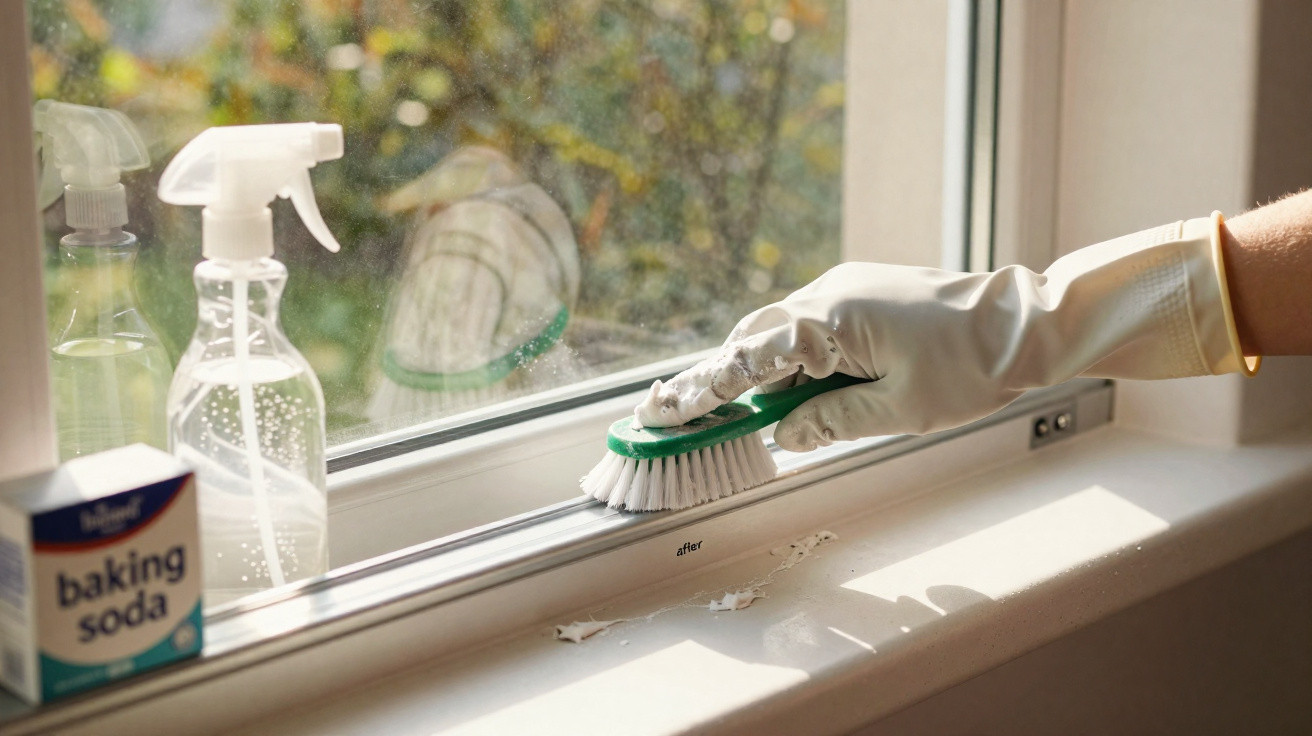
Keeping window tracks clean with bicarbonate of soda has become a regular practice in many homes. This care prevents dust, wind-blown debris and moisture from building up in this narrow space, which can eventually hinder the movement of the panes, leave dark marks, cause unpleasant smells and even encourage fungal growth.
What is bicarbonate of soda used for in window tracks?
Using bicarbonate of soda in window tracks helps lift ingrained dirt, minimise damp-related odours and keep the sliding channel clearer. Its mildly abrasive texture acts as a gentle “exfoliant”, loosening crusted-on residue without causing deep scratches on delicate materials such as aluminium or PVC.
It can also neutralise smells from windows near outdoor areas, gardens or places prone to water ingress. Where rainwater collects, bicarbonate of soda can help prevent mould staining and reduce moisture trapped in the track's small corners.
- Removes debris lodged in the track's corners and bends.
- Neutralises odours caused by dampness and old dirt.
- Reduces moisture in areas where water tends to gather.
- Helps glass panes slide more smoothly.
Watch a video on the Almanaque SOS YouTube channel about fizzy bicarbonate of soda mixtures that loosen ingrained dirt from the most difficult corners of the home:
https://www.youtube.com/watch?v=M9mF2c5R9U4
How to clean window tracks with bicarbonate of soda step by step
Using bicarbonate of soda in window tracks is straightforward and generally requires only basic items, including a cloth, small brush or paintbrush, a little water and, if needed, white vinegar. Start by removing loose dirt before treating the more stubborn residue, without soaking the area and increasing moisture.
- Remove excess dust: use a paintbrush, small brush or vacuum cleaner to clear away loose debris.
- Apply the bicarbonate of soda: sprinkle a thin layer along the entire track, paying particular attention to the corners.
- Moisten it lightly: add a few drops of water to create a damp paste, without saturating the track.
- Leave it to work: wait for 5 to 10 minutes so it can act on the dirt.
- Scrub gently: use an old toothbrush or small brush to reach into narrow gaps.
- Remove the residue: wipe with a damp cloth until all the paste has gone, then dry thoroughly.
For more stubborn crusted residue, many people mix bicarbonate of soda with a little white vinegar, using the fizzing reaction to dislodge the dirt. Once finished, drying the track carefully is essential to prevent moisture from accumulating again and to protect rollers and metal components.
How often should bicarbonate of soda be used in window tracks?
The ideal frequency for using bicarbonate of soda in window tracks depends on the surroundings and on the level of dust and damp in the area. In particularly dusty locations, near busy roads or beaches, cleaning should be carried out more regularly. In dry, enclosed places, the interval can be longer, provided there is no excessive moisture.
- Urban areas with heavy vehicle traffic: clean approximately every 15 days.
- Quieter residential neighbourhoods: on average, once a month.
- Homes near the sea or in very damp areas: inspect every two weeks to avoid mould.
Regular maintenance helps extend the lifespan of the opening system by reducing friction in the tracks and lowering the likelihood of rust or sticking. Removing particles frequently also restricts fungal colonies from forming in poorly ventilated corners and makes rooms feel fresher.
Why is bicarbonate of soda so widely used for household cleaning?
Using bicarbonate of soda for household cleaning is common on sinks, drains, tiles, carpets and certain types of upholstery, always for the same reason: it works as a mild cleaning agent and helps control smells. In window tracks, it is a low-cost alternative to industrial cleaners formulated specifically for aluminium or PVC.
When applied in moderate amounts and without excessive scrubbing, bicarbonate of soda helps keep surfaces intact and appeals to those seeking less harsh everyday solutions. Combined with simple measures, such as drying tracks well after rainy days and promptly removing leaves or dead insects, it becomes a discreet yet effective aid for keeping windows clean and functional for longer.





Comments
No comments yet. Be the first to comment!
Leave a Comment