
A modest cupboard essential can make a subtle but meaningful difference to the way your home handles pests.
In neighbourhoods everywhere, there is talk of an easy plant-based solution placed behind doors and along windowsills. It has a fresh, clean aroma, is inexpensive, and can stop summer insects from treating your living room like a landing strip.
Why warm weather brings insects indoors
Warm, humid conditions trigger pest activity. Kitchens remain busy, bathrooms hold onto steam, and recycling builds up quickly during longer days. To flies, gnats, moths, mosquitoes, and even cockroaches and ants, these conditions suggest readily available food and secure shelter.
- Higher temperatures accelerate insect life cycles and encourage more confident behaviour.
- Dampness from showers and cooking draws flies and mosquitoes.
- Leftover food, overripe fruit and sticky rubbish bins attract gnats and houseflies.
- Gaps beneath doors and poorly fitted screens provide easy ways in.
- Gardens and patios close to entrances become direct routes into the house.
Control the attractants, then add a scent barrier. That two-step rhythm beats sporadic sprays every time.
How bay leaves act as a natural repellent
Bay leaves (Laurus nobilis) contain fragrant compounds including eugenol, cineole and linalool. For insects, this scent combination effectively says “keep moving.” Rather than acting as a powerful kill treatment, it works more like a mild plant-based protective barrier.
Dried leaves retain their strength for several weeks. They neither poison nor catch insects; instead, they encourage them to avoid the routes they would otherwise use to enter.
Bay leaves don’t kill. They push pests off course, making your home less attractive and harder to enter.
Pests they are most helpful against
Households often notice fewer houseflies, fruit flies, pantry moths and occasional ants around entrances and food-storage areas. Mosquitoes also dislike the aroma, although damaged screens or standing water can quickly reduce its benefit.
Where to put bay leaves for the best results
Focus on bottlenecks and food-related areas. Use small groups of leaves instead of isolated individual leaves, and renew them once their fragrance starts to disappear.
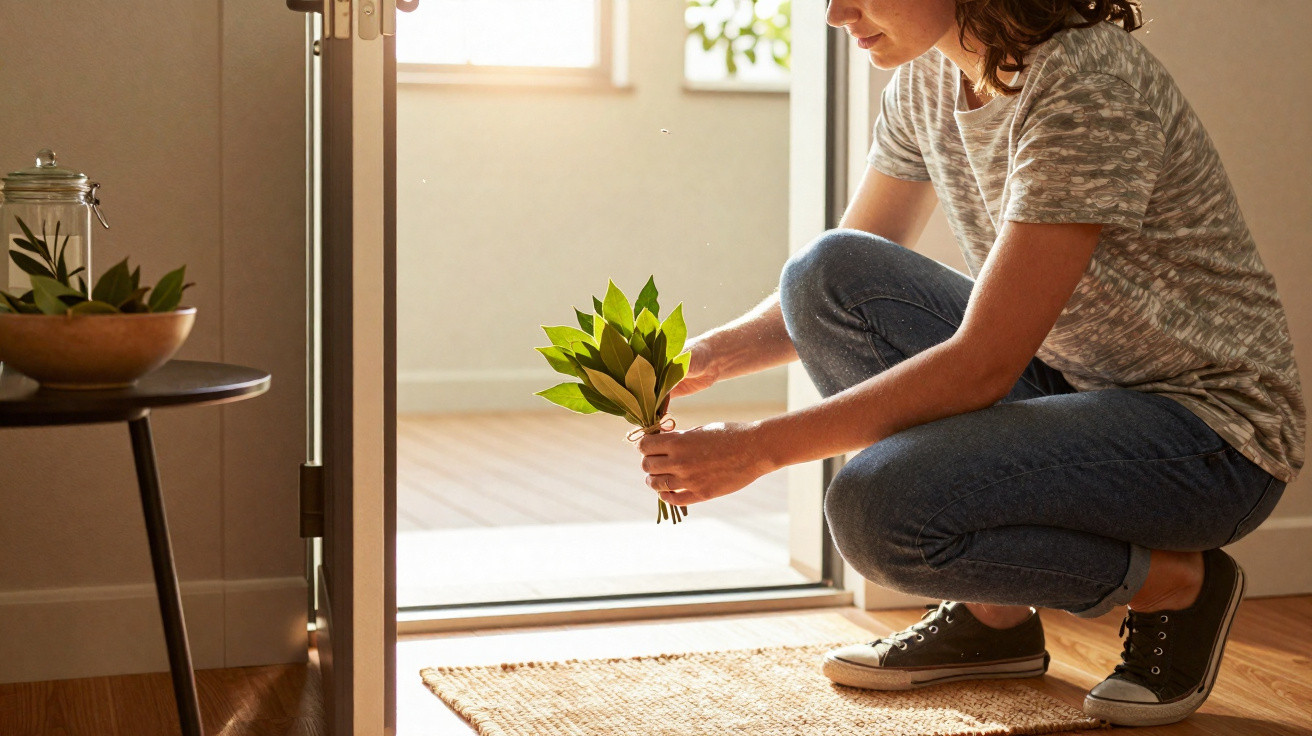
- Behind external doors and close to thresholds.
- Along windowsills, particularly windows opened each evening.
- Near rubbish and recycling bins, as well as the compost caddy.
- In pantry cupboards and beside containers of dry goods.
- Next to fruit bowls and in appliance corners where crumbs can collect.
| Spot | Why it helps | Refresh window |
|---|---|---|
| Behind doors | Blocks the most frequently used entry route | Every 2–3 weeks |
| Windowsills | Forms a scented boundary where incoming air travels | Every 2–3 weeks |
| Trash zone | Covers tiny odours that attract flies | Every 2 weeks |
| Pantry shelves | Deters pantry moths and ants | Monthly or as scent fades |
Make fast sachets or a bundle for the doorstep
- Choose whole dried bay leaves for the most powerful fragrance.
- Tie 5–6 leaves together with kitchen twine to make a small bundle.
- Alternatively, put a dozen leaves into breathable linen or paper pouches.
- Position bundles behind doors, with pouches on sills and shelves.
- Change them when the aroma fades, normally after two to three weeks.
Increase the effect during a serious infestation
For a short-term boost, prepare a gentle spray. Simmer a handful of leaves in a cup of water for 10 minutes, allow it to cool, strain it, then add a splash of clear alcohol to aid preservation. Spray lightly onto door frames, skirting boards near bins and the outer edges of screens. Always test it on an inconspicuous area first.
Some households put several leaves on a heat-safe dish and warm them briefly to release the scent. Take care around smoke, and never leave anything heating unattended. Essential-oil diffusers may also be effective, but they should be kept away from children and pets and used only for brief periods.
Short bursts of strong scent help during peak hours at dusk, when mosquitoes and houseflies get busy.
What results to expect and their limits
Bay leaves improve the balance rather than work like magic. You may see fewer insects landing casually, fewer pantry pests and more peaceful evenings with open windows. However, if a compost bin is leaking or a drain is producing gnats, deal with the source; the leaves will otherwise only offer a temporary reprieve.
Use the leaves alongside straightforward household upkeep. During warm periods, empty kitchen bins every day. Clean worktops in the evening, rinse recycling, and leave the bathroom extractor fan running longer after showers. Fit a door sweep to seal gaps beneath doors and repair damaged screens.
Safety advice and notes for pets
Store bundles where pets and young children cannot reach them. Whole bay leaves are not toxic after minor accidental contact, but may upset the stomach if chewed. Essential oils are far more concentrated and can affect cats and birds, so avoid using diffusers near them. Anyone sensitive to fragrances should begin with small sachets before gradually using more.
Why this low-tech bay leaf solution works for busy homes
Bay leaf bundles take only minutes to make, remain neat in appearance and offer a pleasant herbal smell without seeming overly perfumed. They can be placed where sprays are impractical, such as inside a pantry or behind a doorstop. They can last through a fortnight of hot weather while costing less than a coffee.
A straightforward routine that works
- Sunday: renew bundles by doors and sachets on windowsills.
- Midweek: quickly wipe worktops, rinse drains and change the bin.
- At dusk on hot days: use 2–3 sprays of bay infusion around thresholds.
- Monthly: inspect door sweeps and window screens for gaps.
If you prefer combining scents, use bay with lemon peel or lavender in separate pouches. Mint placed near the back door can help deter ants, while rosemary around the barbecue area discourages outdoor flies. Keep each fragrance within its own area, so you can identify what works without relying on guesswork.
In flats with ongoing problems, keep a record for one week of when and where pests appear. Patterns usually become clear quickly: often one window at sunset, a particular bin or a single draughty door. Start by positioning bay leaves to interrupt those routes. The routine becomes easy to maintain, and the resulting quiet is hard to miss.



Comments
No comments yet. Be the first to comment!
Leave a Comment