
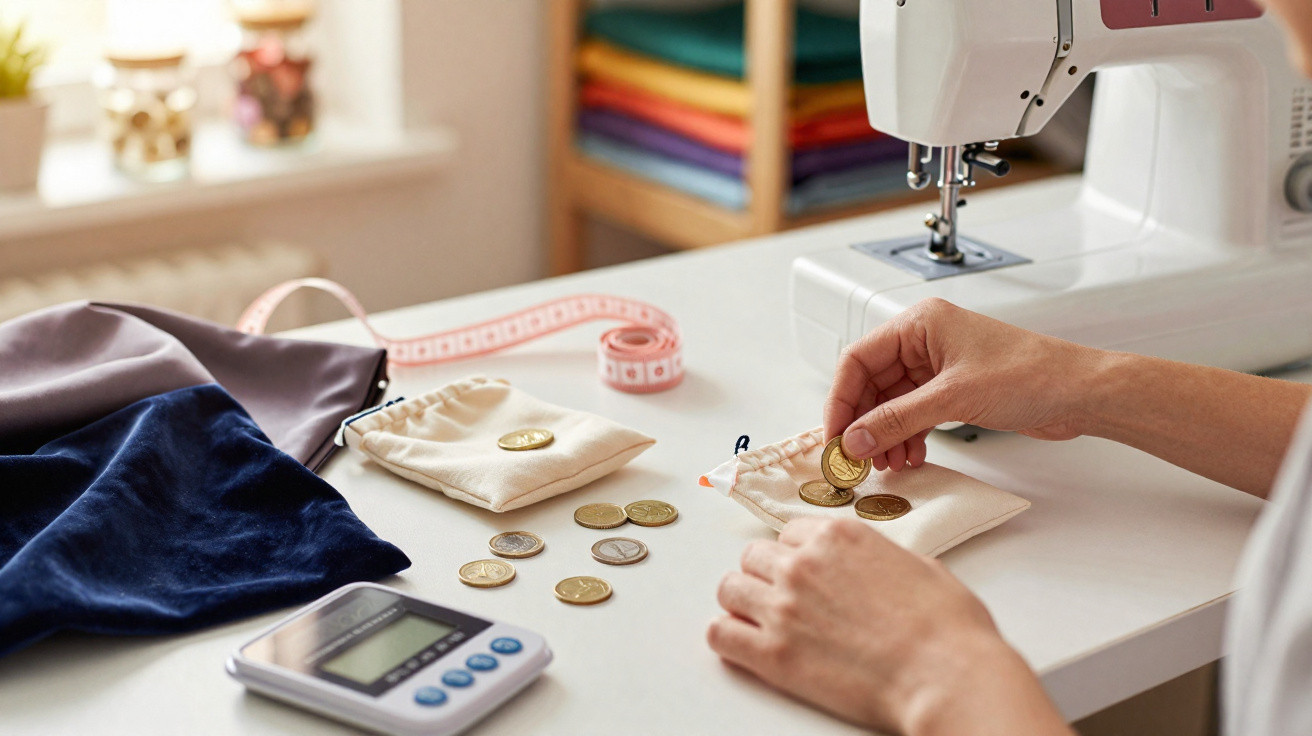
Old loose-change treasures in a drawer can do far more than merely annoy you: in sewing rooms, they become a secret tool for delicate fabrics.
Where pins were once essential, more and more home sewers and professionals are reaching for a different aid: tiny weights made from old coins. They can secure delicate fabric without leaving a single hole. Although it may sound like a craft-room trick, the approach has a very practical foundation that stands up to textile expertise.
Why coin weights for sewing are currently so popular
Many households have a jar of old or foreign coins sitting somewhere, with no one having any use for them. To most people, they are simply worthless. In sewing studios, however, they are now considered extremely valuable – not because of what they are made from, but because of their weight.
“Fabrics are no longer pierced, but simply weighed down – gravity does the job that pins used to do.”
This is the crucial point: delicate and technical textiles often do not cope well with pins. Textile research institutes advise using as few pins as possible with certain materials. Every puncture creates a micro-perforation: a minute injury to the fibre. That hardly matters with sturdy cotton fabrics, but it can be disastrous with specialist materials.
The following are particularly sensitive:
- Silk and fine crêpes
- Muslin and very thin jerseys
- Faux leather, real leather and coated cotton
- Softshell and other waterproof performance fabrics
With raincoats or outdoor jackets, every unnecessary pinhole can later become a place where water gets in. On leather, every hole remains visible. This is precisely where coin weights excel: they keep pattern pieces and fabric in place without piercing a single fibre.
Check the value before taking coins to the sewing machine
Before moving your coin collection into the sewing room, it is worth taking a brief look at its material and collector value. Some pieces appear unremarkable yet may interest collectors, while others are genuinely useful only as metal.
In numismatics – the study of coins – a rarity index from 0 to 100 is often used. A low score means that the coin is very common and therefore of limited interest to collectors. Such mass-produced coins are ideal for the workshop.
A practical example is provided by certain old silver coins from a former currency system, which contain several grams of fine silver. Their pure metal value rises well above their face value as the current silver price increases. Even if they are no longer legal tender for everyday use, selling them to a precious-metals dealer is more worthwhile than putting them beneath the dressmaking shears.
“The basic rule among collectors: sort first, then recycle – never drill, bend or reshape anything prematurely.”
For sewing projects, the remaining pieces will usually be coins made from non-precious alloys, often copper-nickel mixtures. They may not look attractive, but they provide reliable weight – and that is exactly what matters.
How to find the ideal weight for each sewing weight
For improvised weights to work properly, you need a little feel for grams. If they are too light, the pattern will slip. If they are too heavy, delicate fabric may distort or slide sideways.
A proven guideline from sewing studios is around 40 to 60 grams per weight for standard pattern pieces. This range is sufficient to:
- Keep paper pattern pieces made from thin tissue paper flat
- Secure lightweight to medium-weight fabrics safely






Comments
No comments yet. Be the first to comment!
Leave a Comment