
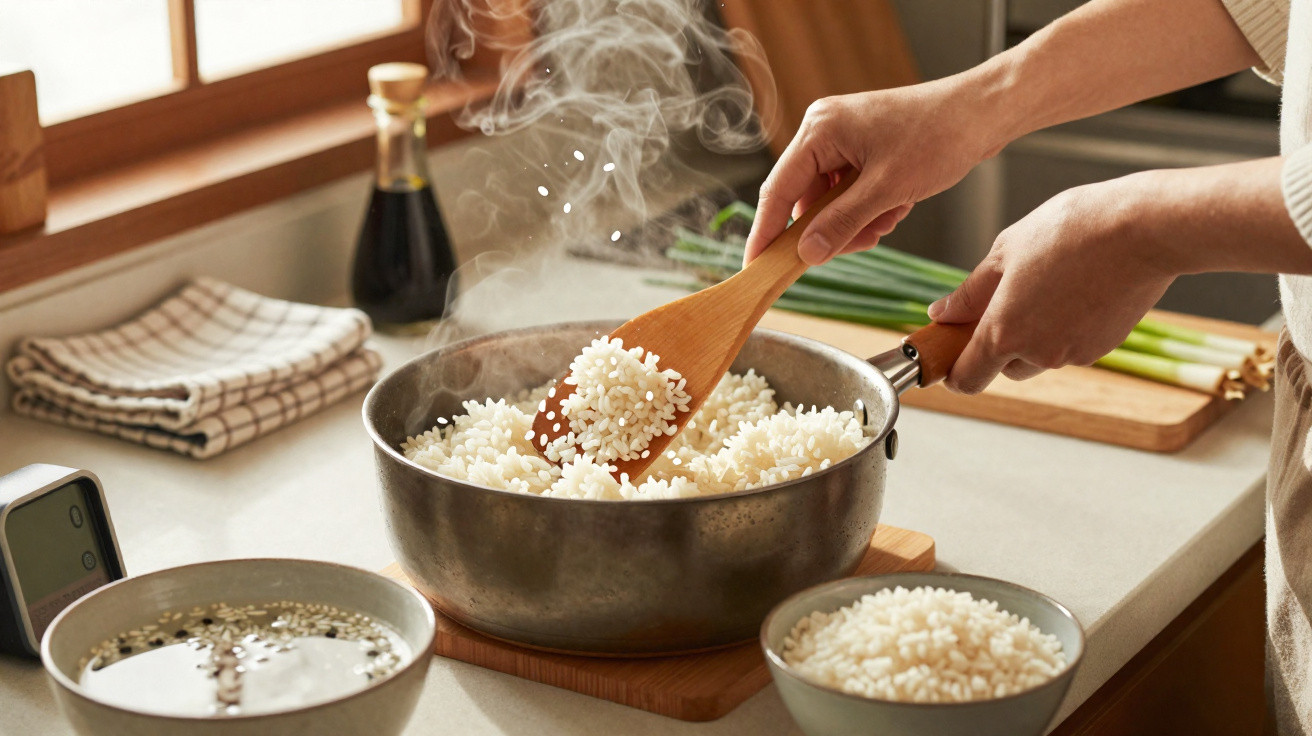
Preparing the ideal accompaniment for everyday meals calls for patience and traditional techniques that can entirely change the final result in the saucepan. The pursuit of flavoursome, beautifully separate rice begins well before the hob is switched on.
Why is washing the grains properly so important?
Many people skip the initial cleaning stage because they consider it completely unnecessary in everyday cooking. However, removing excess surface starch is the most important step in achieving the ideal consistency for traditional gohan.
When the grains first meet cold water, they take in moisture extremely quickly. For this reason, pouring away the first cloudy water prevents the rice from retaining unwanted impurities and helps it keep a very balanced flavour.
To carry out this process properly, follow these essential basic steps:
- Accurate measuring: Use level measuring cups to ensure the right proportion of grains.
- First rinse: Add water, then pour it away straight away to quickly remove surface impurities.
- Circular movements: Gently swirl the grains with your fingertips for a few seconds.
- Repeated washing: Wash and rinse the rice until the water appears almost clear.
- Thorough draining: Use a fine sieve to remove every trace of excess liquid.
How do you cook perfect rice directly in the saucepan?
Once the ingredient has been washed and drained properly, place it in a heavy-based saucepan. Adding the correct amount of cold water ensures the rice cooks evenly and highly efficiently.
Level the grains with your fingers so that they are fully submerged before heating. Allowing the rice to sit in the water for a few minutes before putting it on the hob is essential for an excellent, wonderfully soft texture.
Watch the explanatory video on the Just One Cookbook YouTube channel for the complete, practical method for making this wonderful recipe.
What are the secrets during the boiling stage?
Careful control of the initial medium heat is vital for reaching the right boil with the saucepan partly covered. As soon as the liquid starts bubbling vigorously, turn the heat down to its lowest setting so the cooking can continue slowly.
Watch the timing closely
Why a timer matters
Keeping the saucepan completely closed during the final twelve minutes prevents the loss of essential steam.
Opening it too early can spoil the proper hydration and leave the rice hard.
A quick check after this time will show whether all the water has been fully absorbed by the grains. If any liquid remains at the bottom, put the lid back on immediately so the rice can complete its highly necessary cooking.
After turning off the heat on the hob, pay attention to the following key points:
- Turn off the heat: Extinguish the flame as soon as all the water has completely disappeared.
- Keep the lid on: Leave the saucepan covered to retain all the remaining internal heat.
- Essential resting time: Let the dish stand for a full ten minutes before eating.
Why is the resting stage crucial for gohan?
Letting the rice rest away from the direct heat of the hob is the indispensable final stage in traditional Eastern cooking. This resting period allows the trapped steam to finish cooking every grain in a completely even and balanced way.
Taking off the lid before the right moment seriously affects the even distribution of moisture within the preparation. Patience at this final stage stops the base from becoming overly dry and ensures a very pleasant mouthfeel for everyone.
Respecting this resting time provides the following main culinary benefits:
- Velvety texture: The grains become perfectly soft while retaining their original firm structure.
- Balanced flavour: The food’s natural flavours become more pronounced and pleasing on the palate.
- Easy serving: The rice lifts easily from the base of the saucepan without breaking apart or sticking.
How should you finish and serve the dish perfectly?
Once the stated resting time has elapsed, remove the lid completely to begin finishing the dish correctly. Using a suitable plastic or wooden spatula lets you loosen the cooked grains very gently, without breaking their outer structure.
Use light upward movements to allow air to circulate freely through the cooked rice. This straightforward step makes the dish light and ready to accompany any delicious recipe in traditional home cooking in a fully satisfactory way.
Read also: Why people in Japan always wash rice seven times before cooking




Comments
No comments yet. Be the first to comment!
Leave a Comment