
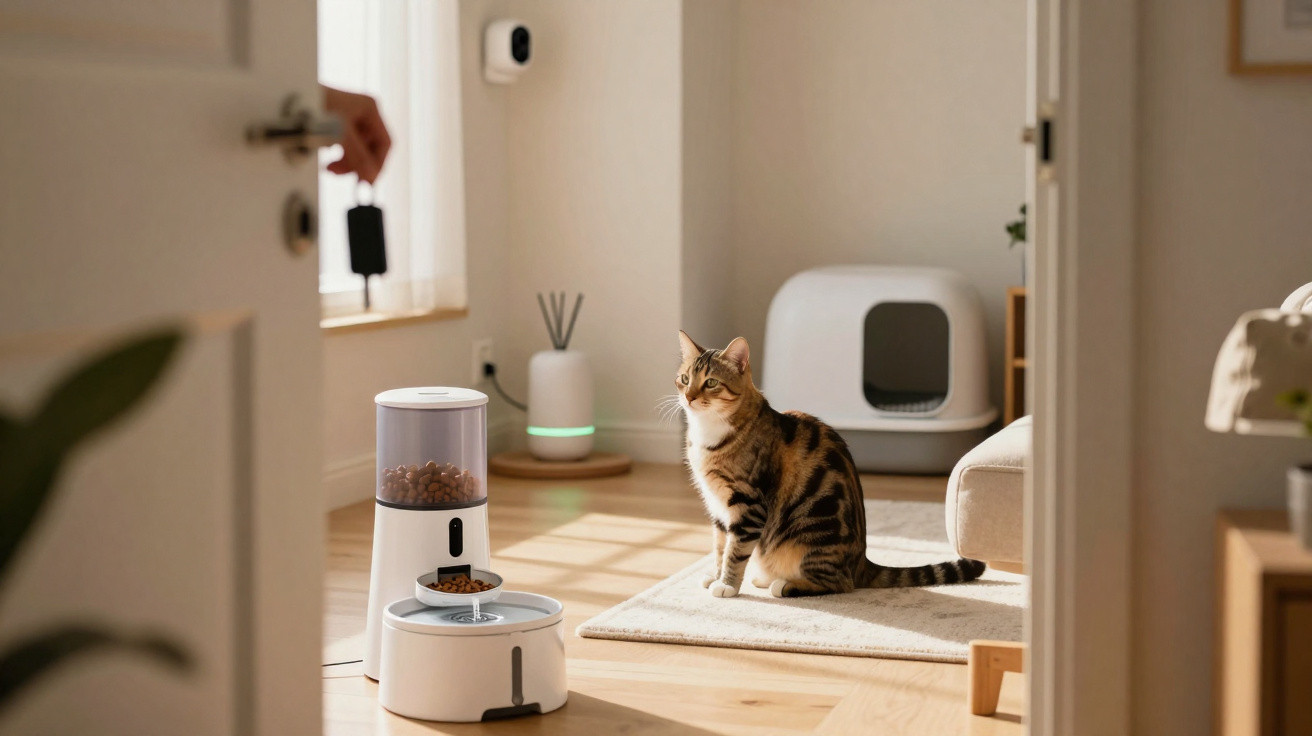
As winter breaks and festive weekends begin to fill the diary, plenty of owners privately ask themselves what actually happens when their cat is left at home.
The shut door separating you from your pet can conceal a reality far removed from the “independent cat” stereotype. Being alone may be perfectly manageable, or it may become a difficult source of stress, depending on the length of your absence and how well your home has been prepared.
Independent, yes – but how alone can a cat really be?
The myth of the self-sufficient cat
Cats gained their image as lone hunters centuries ago, and this perception continues to influence the way they are cared for. It is common to think a cat enjoys a silent, empty house and scarcely registers its humans going out. In practice, the picture is more nuanced.
Today’s indoor cats form strong habits around the people they live with. They may wait by the door, trail footsteps into the kitchen, sleep in familiar places, and respond to alarms or lights. When a home becomes unexpectedly quiet, some cats simply settle down and sleep for longer. Others may pace, call out or search from room to room as though something feels “off”.
Cats are not truly solitary; they’re independent animals that still rely on social and environmental habits to feel secure.
The more useful question, then, is not “Can I leave my cat alone?” but how much disruption a particular cat can manage before it becomes stressed.
What independence really looks like for a house cat
Outside or in the wild, cats can spend much of the day exploring territory, hunting, smelling, climbing and listening. Their surroundings are continually changing. Indoors, particularly during winter, opportunities for stimulation may reduce considerably: daylight hours are shorter, windows are shut, curtains are heavier, and people may stay out later for work or social events.
A self-assured cat might respond by spending more time asleep. A more sensitive one may become unsettled, groom compulsively or overeat because there is less to occupy it. Some cats use the litter tray excessively or scratch more often simply through lack of other activity.
A cat’s famed autonomy only works when the environment stays rich enough: places to perch, things to watch, textures to scratch and safe spots to retreat to.
Daily basics that must always be available
Even for a one-night absence, four essentials need to be in place:
- Fresh water in several bowls, should one be knocked over.
- Sufficient food, preferably dry food that remains fresh.
- A clean, easy-to-reach litter tray kept away from loud appliances.
- Comfortable, secure hiding areas and raised spots from which to watch the room.
Provided these needs are met, a healthy adult cat will generally cope with a brief absence. Difficulties arise when the period becomes longer and part of that arrangement goes wrong.
So how long can you leave a cat alone?
The realistic limits: 24 hours, 48 hours and beyond
Veterinary behaviour specialists and cat welfare charities broadly offer similar guidance. There is no single universal limit, but the following ranges are useful:
| Type of cat | Time alone that may be tolerable* | Key conditions |
|---|---|---|
| Healthy adult cat | Up to 24–48 hours | Secure home, enough food and water, spotless litter, enriched environment |
| Kitten (under 12 months) | 6–12 hours | Human check-in, safe-proofed space, frequent small meals |
| Senior cat (10+ years) | 6–12 hours | Monitoring for health issues, easy access to litter and beds |
| Cat on medication or with chronic illness | 0–6 hours | Close supervision, reliable dosing schedule |
*These are general ranges. A cat’s individual temperament, health history and the layout of the home can alter the safe period.
For a healthy adult, 24 hours alone is usually manageable with preparation. Stretching to 48 hours starts to raise the odds of stress, accidents or basic needs not being met.
Going away for a weekend without anyone checking in places much greater strain on this delicate arrangement. One overturned water bowl, a jammed automatic feeder or an unexpected medical problem can quickly turn a peaceful break into an emergency.
Signs your cat doesn’t cope well with solitude
For many owners, the issue only becomes clear after several trips away. Warning signs are often most obvious soon after they get home:
- Persistent, intense meowing that continues beyond a simple “welcome back”.
- Going to the toilet outside the litter tray despite it having been clean.
- Damaged furnishings, torn curtains or scratching in unfamiliar places.
- A food bowl left untouched, or emptied at once followed by vomiting.
- Over-grooming, bald areas or sore skin.
These behaviours suggest that either the duration of the absence or the arrangements made for it do not suit the cat. Reducing the length of trips, using a pet sitter or changing the home environment may have a substantial effect.
How to prepare your cat – and your home – before you leave
Water, food and litter: getting the basics right
For a short time away, some owners leave one water bowl and a generously filled food dish. That is only adequate if everything goes exactly to plan. A safer arrangement involves:
- A minimum of two water supplies in separate rooms.
- A sturdy water fountain for cats that drink little or experience urinary problems.
- Timed feeders for cats that binge eat or depend on fixed feeding routines.
- One more litter tray than the number of cats in the household, cleaned immediately before departure.
Wet food goes off more quickly, particularly in heated flats, so dry food is often more appropriate for an overnight absence. On longer trips, however, the safest approach remains a person visiting to replace wet food and clean the trays.
Keeping a bored cat from spiralling
Alongside food, water and litter, both mental and physical activity can reduce anxiety. A few simple measures can give your cat some structure while you are out:
- Conceal several treats in puzzle feeders or beneath cardboard flaps.
- Position a secure cat tree by a safely closed window with an outdoor view.
- Swap toys around so there is always something seemingly “new” available.
- Put a worn T-shirt carrying your scent in a basket or on the bed.
- Set soft lights on timers, preventing the flat from becoming entirely dark during winter.
Cats often cope better with your absence when the home still feels “alive”: soft light, familiar smells, places to climb and puzzles to solve.
Safety checks before you close the door
A short inspection of the home can eliminate overlooked dangers that could become serious when nobody is available to intervene:
- Unplug candles, fairy lights and appliances with loose or hanging cables.
- Make windows and tilt openings secure, leaving no space through which a cat could force itself.
- Put away sewing thread, hair ties and small plastic objects.
- Ensure washing machine and tumble dryer doors are securely closed.
- Make sure no room could shut with the cat trapped inside because of a draught or an unstable handle.
Veterinary emergency clinics regularly see cats that have been shut in cupboards or hurt by objects falling while their owners are away for the weekend. Spending a few minutes on prevention can greatly lower this risk.
When you should bring in extra help
Pet sitters, neighbours and boarding: choosing the least stressful option
When an absence is close to or longer than 48 hours, extra care is no longer simply an optional extra. A reliable neighbour visiting daily can top up bowls, remove litter and spend a little time interacting with the cat. This arrangement works well for many cats, especially where they already know the visitor.
Professional pet sitters have experience with timid or reactive cats and may spot early signs of illness. Some provide photographs and brief updates after every visit, offering reassurance to owners as well.
Boarding catteries are suitable for only some temperaments. Bold, sociable cats may cope with a few days in a specialist facility. Anxious or territorial cats generally do better in their own home with visits, even where the amount of human contact is more limited.
Whenever possible, keep the environment constant and change the human, not the other way round. Home visits usually create less disruption than moving a cat to a new place.
Seasonal twists: winter, heatwaves and changing routines
Why the season changes how long “alone” feels
Brief winter days reduce the time in which cats tend to be active and lengthen the hours of darkness. Owners often alter their routines too, working later or travelling more often. Longer shadows, increased heating and fewer insects visible at the window can together leave indoor cats noticeably less stimulated.
Summer creates other challenges, including overheated rooms, dehydration risks and open windows that may encourage cats to push through dangerous gaps. During either season, even a seemingly minor increase in time alone can be significant for a sensitive pet.
Planning ahead for temperature control, curtains and access to warmer or cooler spaces can make the waiting time more comfortable.
Reading your own cat, not just the guidelines
Cats with identical ages and health can have completely different responses to solitude. One might hardly react when left for 36 hours, whereas another could become distressed after one late work shift. Observing behaviour over several absences allows you to set limits that suit your own cat.
Some owners maintain a straightforward record of how long they were away, the condition of the home when they returned, whether the cat ate as normal, used the litter tray normally or appeared more clingy. Patterns become clearer over time. This personal record can often be more reliable than a general guideline.
For cats already showing anxiety, separation training may be beneficial. Brief, regular departures followed by calm, understated returns can show the cat that being left alone does not mean something disastrous is about to happen. Alongside a dependable routine, this may extend the time your pet can tolerate solitude without progressing to panic or destructive behaviour.



Comments
No comments yet. Be the first to comment!
Leave a Comment