
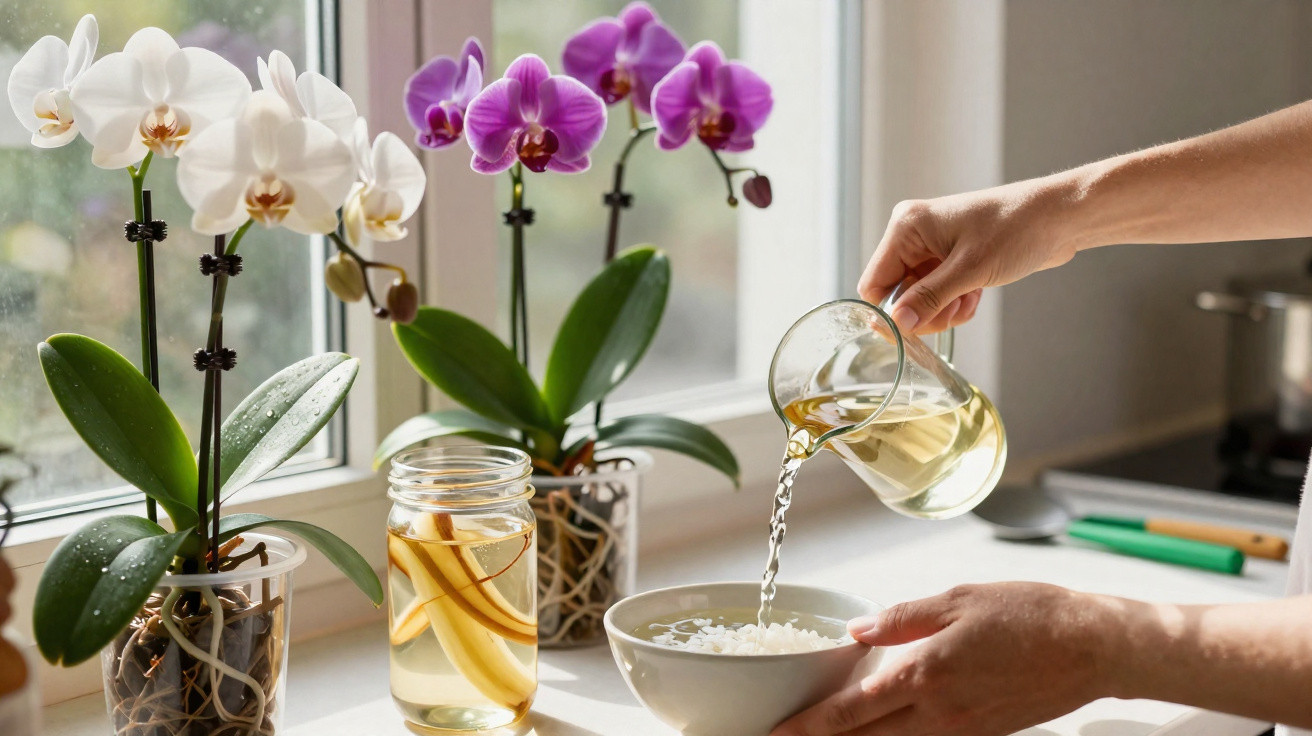
Orchid enthusiasts rely on a straightforward routine to encourage flowers to return, using gentle care that costs very little.
The answer is not a secret tonic or expensive fertiliser. It begins at the kitchen sink and can lead to stronger roots, sturdier foliage and long-lasting flower spikes. Home growers are using everyday pantry ingredients to bring dependable colour to demanding orchids.
The two-ingredient booster
For years, gardeners have turned to gentle homemade tonics to refresh orchids between flowering periods. Banana peel water and rice water are especially popular because they are inexpensive, quick to prepare and unexpectedly useful. Applied properly, they work as a mild fertiliser: nourishing plants rather than pushing them into growth, so they can respond without strain.
Banana peel water delivers potassium, phosphorus, and a touch of calcium. Rice water adds starches and trace B vitamins, iron, and magnesium.
Making banana peel water
Put several fresh banana peels in a jar, cover them with water and leave them to steep at room temperature for two days. Strain the liquid, then dilute one part peel water with four parts clean water. Store the diluted mixture in the fridge and use it within 24 hours, before it begins to turn sour.
- Ratio: 1 part peel extract to 4 parts water
- Timing: early morning or evening, never under harsh midday sun
- Target: the potting mix, not the crown or leaves
Making rice water
Wash half a cup of uncooked rice, then leave it to soak in two cups of water for 30 minutes. Swirl the mixture, strain it and use the cloudy water immediately. This mild, starchy liquid helps support microbial activity in the potting mix while providing small amounts of trace nutrients.
Use both solutions as light supplements. Think “tea,” not “full-strength fertilizer.” If the liquid smells off, toss it.
Why orchids respond to banana peel water and rice water
Many orchids kept at home, particularly phalaenopsis, are epiphytes. In their natural habitat, they grow attached to trees and absorb moisture and nutrients from rain, dew and decomposing plant material. Banana peel water supplies potassium to support flower formation and turgor, alongside phosphorus for roots and developing buds. The starches in rice water feed beneficial microbes, which can make nutrients more accessible to the roots.
Neither mixture is a substitute for a balanced fertiliser. However, each can help fill nutritional gaps when an orchid appears weary or when you are guiding it towards another flowering cycle.
| Kitchen mix | Main nutrients | Best use | Frequency | Watch-outs |
|---|---|---|---|---|
| Banana peel water | Potassium, phosphorus, calcium | Pre-bloom boost, sturdy flower spikes | Every 2–4 weeks | Attracts gnats if left standing; always dilute |
| Rice water | Starches, B vitamins, iron, magnesium | Root vigor, microbial balance in mix | Every 2–3 weeks | Use fresh; discard if sour or foamy |
When and how to apply
Apply water in the morning or early evening, allowing foliage to dry promptly while roots drink without heat stress. Pour the liquid gradually over the bark or potting mix until a small amount runs from the drainage holes. Do not soak the crown where the leaves join, as this is where rot can begin.
Healthy roots look firm and green after watering, silvery-white when dry. Water again when most roots turn pale and the pot feels light.
Care basics that make the trick work
These homemade feeds perform best only when the rest of the orchid’s care is correct. Orchids dislike extremes, so give them conditions that are bright, airy and consistent.
Light, temperature and humidity
- Light: bright but indirect. An east window or a south window behind a sheer curtain works well.
- Temperature: 18–24°C by day, a gentle 4–6°C drop at night helps set blooms.
- Humidity: 40–60%. Use a pebble tray or room humidifier if indoor air runs dry.
Watering that orchids actually like
Water roughly every ten days, adapting the schedule to the season. If tap water is hard, use rainwater, distilled water or tap water that has stood overnight. Once a month, flush the pot with plain water to remove residues from both homemade and commercial feeds.
Potting mix and repotting
Orchid roots need plenty of air circulation. Choose a coarse mix of bark, perlite and a small amount of sphagnum moss to retain moisture. Repot every 18–24 months, or earlier when the bark has broken down, the roots have outgrown the pot or the plant performs poorly after watering.
Common mistakes and simple fixes
- If the leaves become wrinkled and the roots remain bone-white for days, the orchid is being underwatered. Soak the pot in room-temperature water for 10 minutes, then allow it to drain thoroughly.
- If leaves turn limp and yellow from the base, overwatering is likely. Extend the drying time between waterings and improve airflow.
- If banana peel water or rice water leaves a residue, the solution is too strong or used too often. Dilute it further or apply it less frequently.
- If fungus gnats appear, let the upper layer of the mix dry more thoroughly, set out sticky traps and avoid leaving peel water standing.
Strong light without scorch, airy roots, and measured moisture matter more than any add-on. The kitchen boosters just tip the balance in your favor.
How this fits with regular fertilising
Use commercial fertiliser sparingly when kitchen mixes are part of the routine. A balanced orchid fertiliser at quarter strength once a month is sufficient if you also use banana peel water or rice water. Avoid kitchen tonics during the same week as fertilising. Orchids respond better to small, regular drinks than to heavy feeding.
When blooms stall
When a mature orchid does not produce a flower spike, provide brighter light and a gentle reduction in night-time temperature. Give the banana peel dilution every few weeks to provide potassium, and use rice water between applications to keep the roots active. Over one or two cycles, dormant nodes often begin growing and produce new spikes.
Extra context for curious growers
Dilution is important because both mixtures are biologically active. Undiluted banana peel tea may ferment, while concentrated rice water can block air spaces within bark. Diluting them reduces the microbial load, keeps the pH more suitable and protects root velamen, the orchid’s spongy outer root layer.
Check for problems after using homemade feeds. If you detect sour odours, slimy growing media or mottled foliage, stop immediately. Flush the pot with plain water, cut away any soft roots and only restart once growth appears healthy. Washing jars and tools, and preparing fresh batches, greatly lowers the chance of issues.






Comments
No comments yet. Be the first to comment!
Leave a Comment