
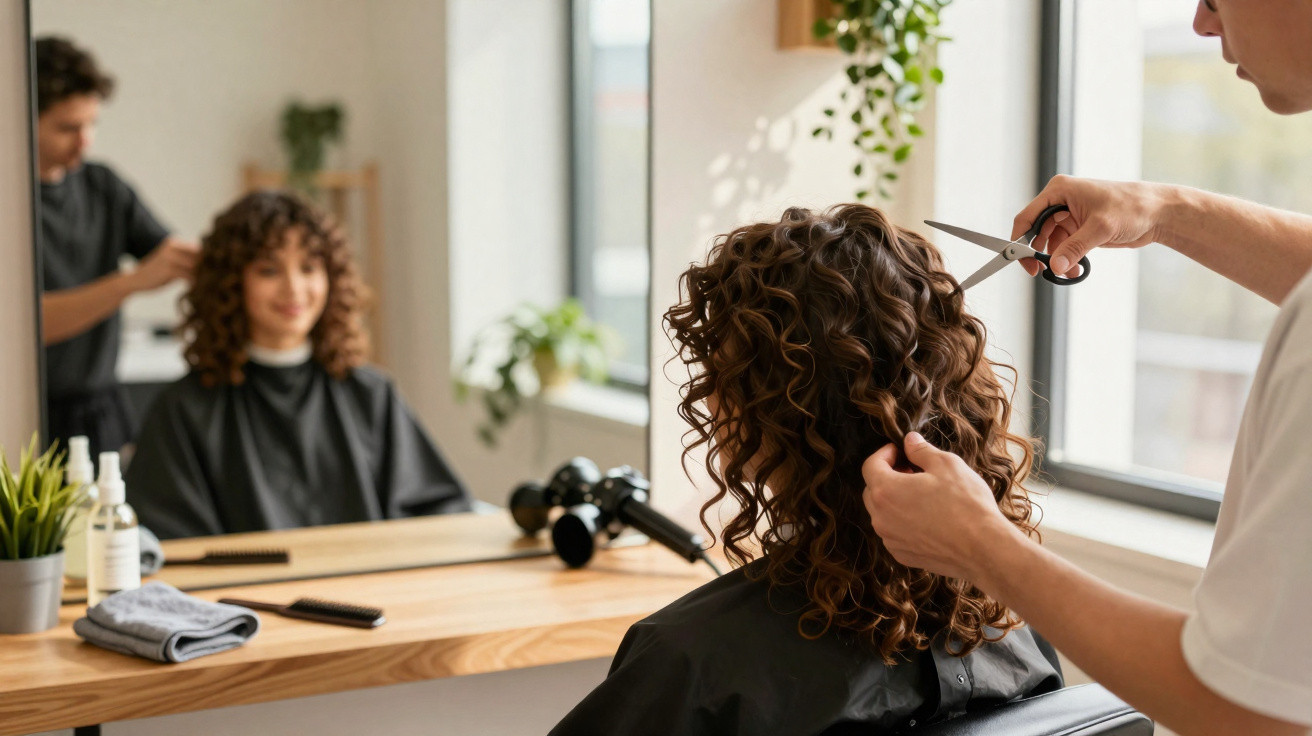
Curly haircuts can balance the weight of the strands more effectively, lift the roots and give each curl greater room to take shape freely. Layers, rounded outlines and carefully chosen lengths do not alter the natural curl pattern, but they can stop the crown from becoming flat and prevent all the volume from gathering at the ends.
Why does a haircut have such a strong effect on curl volume?
When hair is allowed to grow without a defined shape, the weight of its length may pull on curls near the roots. A well-planned cut removes weight from selected areas and introduces varied heights, helping the hair regain movement while retaining density at the ends.
- Short layers can lift the upper section;
- Rounded sides spread volume around the face;
- Ends cut too bluntly may create a triangular shape;
- Shorter lengths make fine curls feel lighter;
- Clearly shaped outlines enhance the natural texture.
What are the six recommended cuts for curly hair?
Haircuts that bring out curl volume and texture include short, medium and long styles. The choice should take account of dry-hair shrinkage, hair density and the area where more volume is wanted.
A curly bob adds body around chin level; a long bob retains more length around the shoulders; a shag features pronounced layers and a fringe; a curly pixie focuses texture at the top; a rounded cut distributes hair around the head; and long layered hair keeps the length while removing excess weight.
How does each curly haircut shape the way the hair falls?
A layered cut can be tailored to create a range of results. Short layers at the crown raise the roots, whereas longer sections retain the overall outline and lower the chance of too much volume at the sides.
- Curly bob: defines the outline and places volume at the sides;
- Long bob: creates movement without removing too much length;
- Shag: pairs a voluminous crown with layers and a deliberately disconnected finish;
- Curly pixie: keeps the nape and sides short, with texture on top;
- Rounded cut: spreads volume evenly;
- Long layered cut: removes weight while preserving length.
Should curly hair be cut dry or wet?
Dry cutting makes it possible to see the true length of every curl and manage shrinkage more accurately. It can be particularly helpful where several curl patterns are present on the same head, as each section can be adjusted according to its natural position.
Wet cutting can work too when the stylist understands how the hair behaves once dry. The key is not to stretch the strands excessively during the process, as a section that looks long may become several centimetres shorter when its curl pattern returns.
How can volume and definition be maintained after the cut?
When styling curls, avoid applying too much cream at the roots, since the product's weight can undo the effect created by the layers. Applying styling product through the lengths, scrunching the hair and drying it with a diffuser on a moderate temperature help to maintain the intended shape.
The cut also needs refreshing once the layers no longer sit properly and the ends begin to hold weight again. Hydration, gentle detangling and friction-free drying protect the texture, while the chosen shape keeps volume distributed between the roots, sides and lengths.





Comments
No comments yet. Be the first to comment!
Leave a Comment