
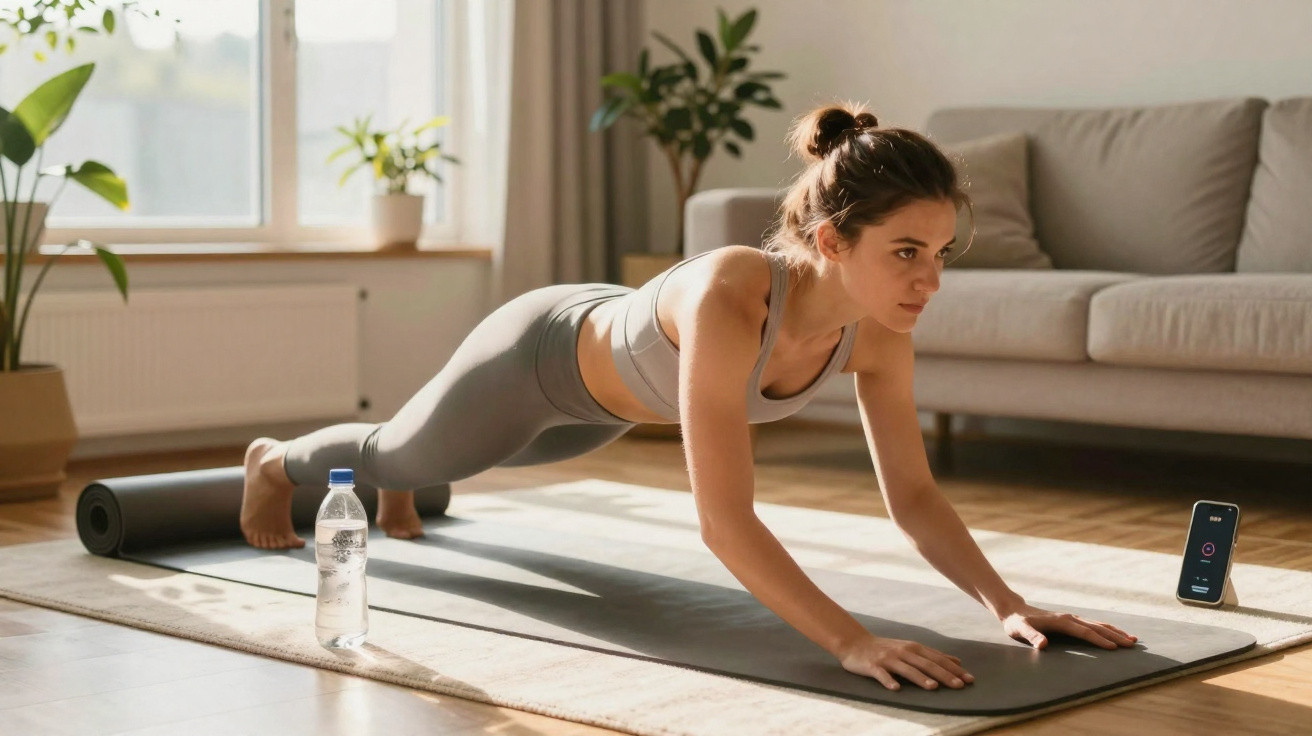
When it comes to training at home, most people immediately think of squats, press-ups or sit-ups. However, there is a lesser-known movement that can engage several muscle groups at once and deliver excellent results without any equipment. The bear crawl, also known as the Bear Crawl, has been gaining recognition among training professionals because it combines strength, endurance, coordination and stability in a single exercise. As well as being straightforward to perform, it can be adapted to suit different fitness levels.
What is the bear crawl?
The bear crawl is a functional exercise performed with the hands and feet on the floor, while keeping the knees close to the ground without allowing them to touch it. As you move, you travel forwards or backwards in a controlled way.
Holding this position requires continuous activation of the shoulders, chest, back, abdominal muscles, glutes and legs. For this reason, it is regarded as one of the most comprehensive bodyweight training exercises.
Which muscles does the bear crawl work?
One of this exercise's key advantages is its ability to stimulate several areas of the body at the same time. This is because the movement demands stability, strength and coordination from start to finish.
The main muscle groups involved include:
- Shoulders and arms to support body weight.
- Chest and back to stabilise the torso.
- Abdominal muscles to maintain body alignment.
- Glutes and quadriceps while moving.
- Calves to assist with the movement.
How to perform the bear crawl correctly
Performing the movement properly is essential if you are to gain all of the exercise's benefits. Correct positioning limits compensatory movements and improves muscle engagement throughout the exercise.
To see this movement pattern performed perfectly, the professional behind the @Bárbara Gosling Fisioterapia channel has prepared a quick, precise demonstration of the ‘Bear Crawl’ exercise. Watch it below:
How many repetitions are ideal for beginners?
People who have never trained can begin with sets of 20 to 30 seconds of continuous movement. The most important thing is to maintain correct technique throughout the exercise, rather than increasing the pace before mastering the movement.
As fitness improves, the duration can gradually rise to 40 or 60 seconds per set. You can also add more sets or move in different directions. This progression safely develops strength, endurance and coordination, making the bear crawl an excellent option for anyone seeking a complete home workout without relying on equipment.





Comments
No comments yet. Be the first to comment!
Leave a Comment